Historic lanes, fine art and a Mediterranean port with its own rhythm.
Walk Montpellier’s Écusson, make time for the Musée Fabre and spend a separate day beside Sète’s canals. Build your stay around culture, markets and the meals you want to remember.
Christian Ferrer · Wikimedia Commons ↗ · CC BY 4.0 ↗. Resized and orientation corrected where needed; display crops may apply. Share-alike terms apply where stated.
Montpellier & Sète at a glance
Best forCulture & coastal lifeArt, old-town walks, canals and seasonal food.
Stay3–4 nightsTwo Montpellier days and a full Sète outing.
Getting aroundRail & walkingPlan the hill and hotel transfers separately.
Good seasonsSpring & autumnComfortable walks with indoor alternatives.
Montpellier and Sète work well together because they offer different kinds of southern French city life. Montpellier brings a largely pedestrian historic centre, a major art museum, university heritage and lively squares. Sète adds a working port, canals, a market hall and a hilltop perspective over the town, lagoon and sea. A rail connection makes a two-city trip practical, but the station-to-station journey is only one part of each day. Leave time to reach the centre, find your restaurant and return without rushing.
Montpellier is a useful main base for travellers arriving by train and wanting several cultural visits. Sète suits those who prefer evenings by the canals and a stronger coastal focus. A hotel outside Montpellier offers another rhythm, with more time on the property and transfers arranged in advance. Choose the base by how you want to spend mornings and evenings, rather than assuming every hotel listed here is within walking distance of the same sights.
For a first stay, allow at least two full sightseeing days, with Montpellier and Sète on separate days. Three to four nights give more space for the Musée Fabre, the botanical garden, a market morning and a longer restaurant meal. Beach time, an oyster-farm outing or an additional museum can extend the stay. This guide concentrates on the two centres and their practical connections; a canal-front hotel in Sète and a vineyard-side hotel near Montpellier are not beachfront stays.
Six places worth your time
These visits form two balanced city days. Use the opening calendars to decide their order, then leave space for food, shade and the journey between Montpellier and Sète.
Pierre-Félix Vautrin · Wikimedia Commons ↗ · CC0 1.0 ↗. Resized and orientation corrected where needed; display crops may apply. Share-alike terms apply where stated.
Start with the streets
Place de la Comédie & the Écusson
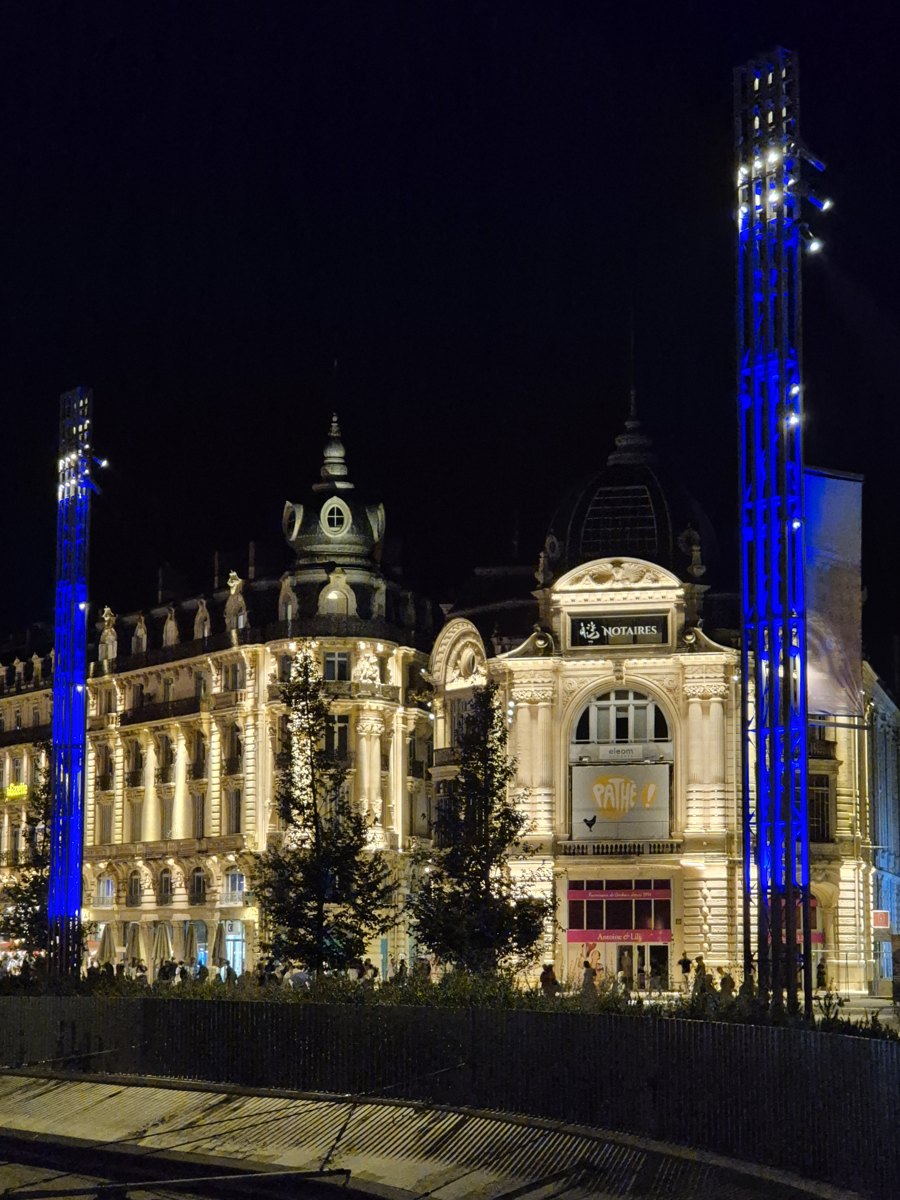
Place de la Comédie is a convenient orientation point before entering the Écusson’s smaller streets. Take in the opera façade and broad square, then follow a loose route through the historic centre towards Place de la Canourgue and the cathedral area. The change of scale is part of the pleasure: busy open spaces give way to lanes, courtyards and small cafés. A map helps, but leave room to choose a quieter turning rather than following every stop mechanically.
Allow about two hours for a first exterior walk, as a planning estimate, with longer if you include shopping or a café. Montpellier’s tourism office offers guided visits that can give context to architecture and places with controlled access. A visit to the medieval mikvé or an ascent of the Arc de Triomphe should be booked through the appropriate guided programme; do not assume these interiors are freely accessible. Cobbles, gradients and historic thresholds need consideration for mobility requirements.
Thomon · Wikimedia Commons ↗ · CC BY-SA 4.0 ↗. Resized and orientation corrected where needed; display crops may apply. Share-alike terms apply where stated.
Give the art time
Musée Fabre
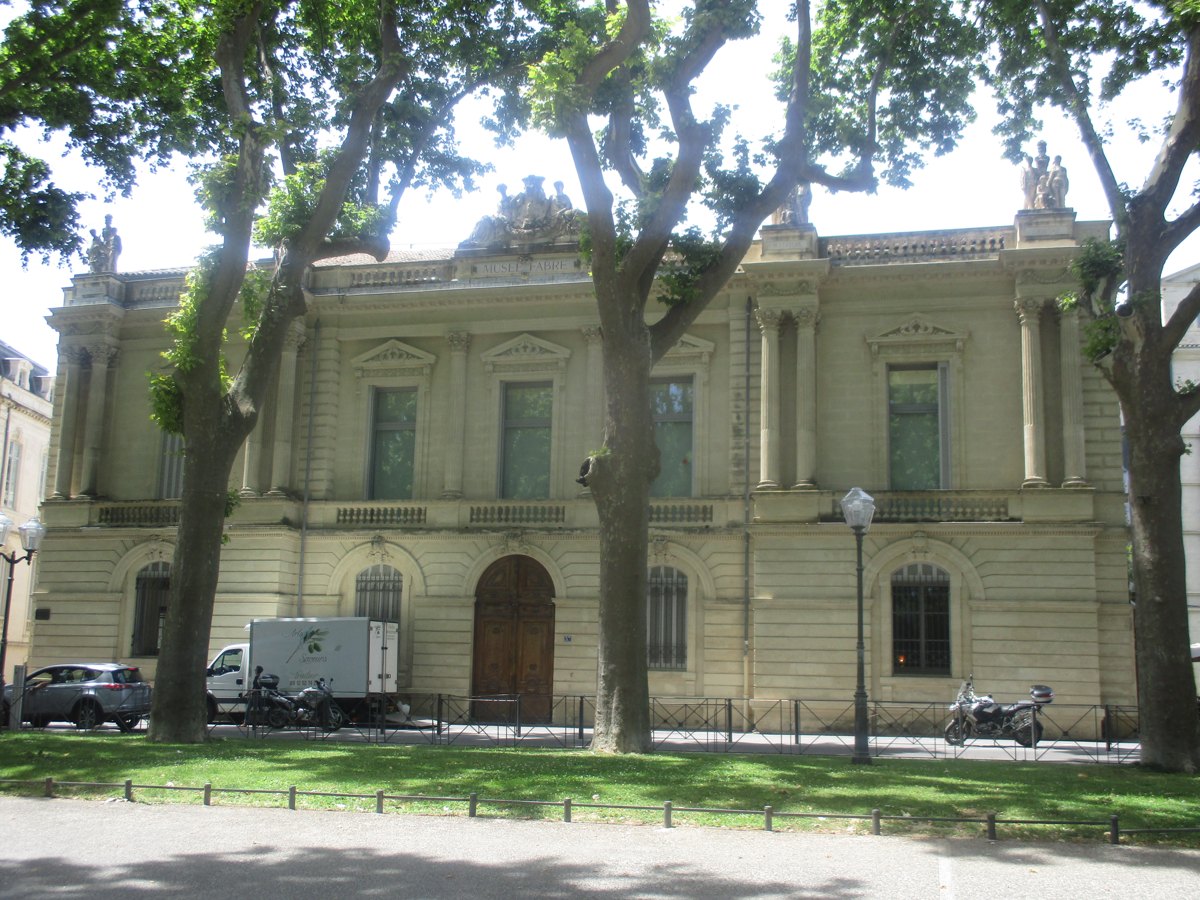
The Musée Fabre is the main indoor cultural anchor for a Montpellier stay. Its collections span European art from the Renaissance onwards, with an important modern component and a dedicated Soulages setting. Choose a few artists, periods or rooms you want to understand and allow time to look closely. A focused two- to three-hour visit usually feels more rewarding than trying to cover every gallery between other appointments. Check the current presentation, as loans and exhibitions can alter what is on view.
The museum’s practical page currently lists opening Tuesday to Sunday from 11:00 to 18:00, with Monday closed. The first Sunday of the month currently gives free access to the permanent collections; special exhibitions can have separate conditions. The current page also reports an outage affecting the main lift, so contact the museum about an adapted route if step-free access is essential. Decorative arts at Hôtel Sabatier d’Espeyran occupy a separate building and have their own schedule.
G.Mannaerts · Wikimedia Commons ↗ · CC BY-SA 4.0 ↗. Resized and orientation corrected where needed; display crops may apply. Share-alike terms apply where stated.
A broader city view
Peyrou & the Arc de Triomphe
Walk along Rue Foch towards the Arc de Triomphe, then continue into the Peyrou promenade. This offers a different view of Montpellier from the dense lanes of the Écusson: an open, ordered space, the equestrian statue and the water-tower setting above the aqueduct. Pause to understand how these elements connect rather than treating the arch as a stand-alone photo stop. Combine the walk with the cathedral quarter, or with the Arceaux market when its calendar matches your visit.
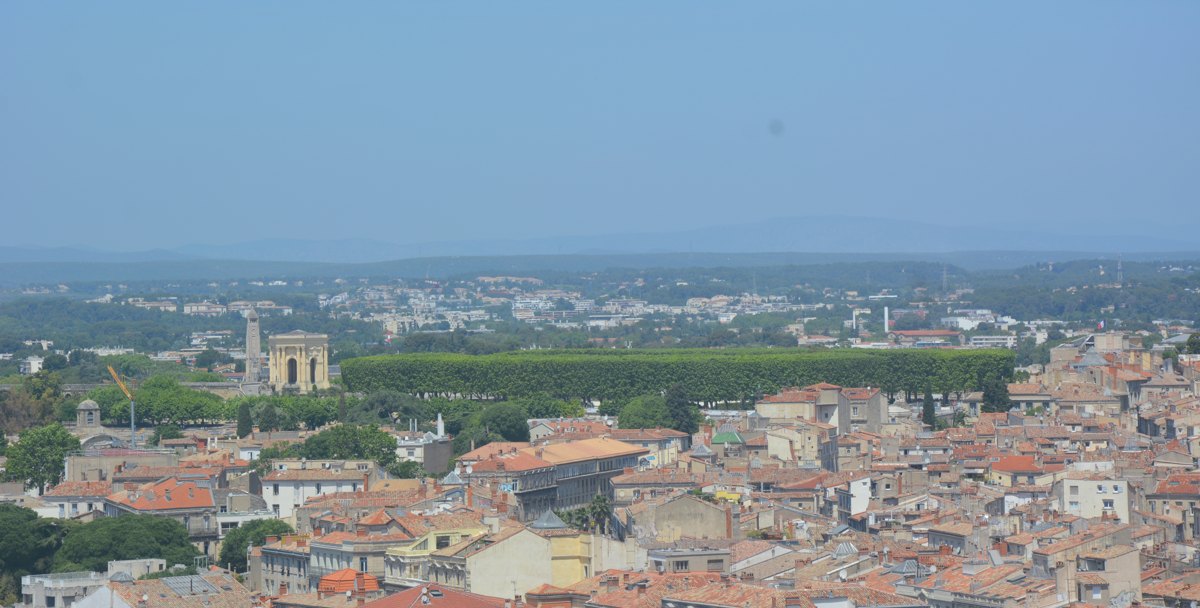
The promenade can be bright and exposed, so keep a shaded café or indoor visit in reserve on hot days. The exterior route and a guided ascent of the arch are different experiences; book the latter if it matters to you and ask about the steps involved. The documentary photograph shows a broad city panorama towards this setting, rather than promising that exact view from street level. Leave time for the return walk into the centre and avoid placing a fixed museum entry immediately after a leisurely market morning.
Esculapio · Wikimedia Commons ↗ · CC BY-SA 3.0 ↗. Resized and orientation corrected where needed; display crops may apply. Share-alike terms apply where stated.
A university botanical garden
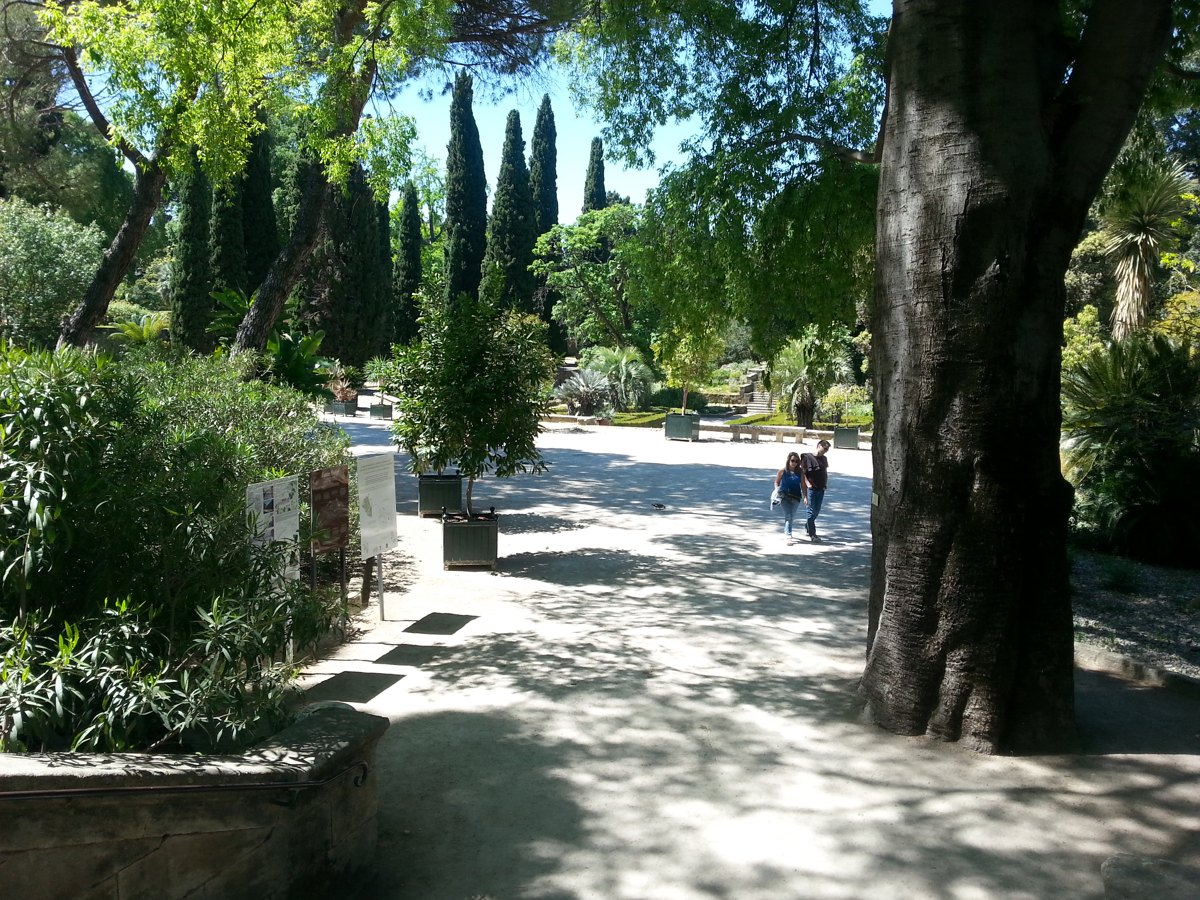
Jardin des Plantes
Founded in 1593, the Jardin des Plantes is closely connected with Montpellier’s medical and botanical history. It offers a quieter visit near the historic centre, with mature planting, paths and different botanical areas. Take it at walking pace, paying attention to the garden’s scientific purpose as well as the greenery. It is a good partner to a city walk, especially when you want an outdoor pause between architecture and a museum. Allow roughly an hour, more if plants and university heritage are a particular interest.
Plan this visit in the afternoon. The University of Montpellier currently lists public opening Tuesday to Sunday, 12:00–20:00 from 1 June to 30 September and 12:00–18:00 from 1 October to 31 May. Monday is closed and mornings are reserved for other activities. Check dated notices before travelling, respect signed restrictions and ask about the accessible route if needed. A shaded garden still requires water and sensible footwear; it should not be treated as a guaranteed all-day cooling refuge.
Christian Ferrer · Wikimedia Commons ↗ · CC BY 4.0 ↗. Resized and orientation corrected where needed; display crops may apply. Share-alike terms apply where stated.
A separate coastal day
Sète’s canals & working harbour
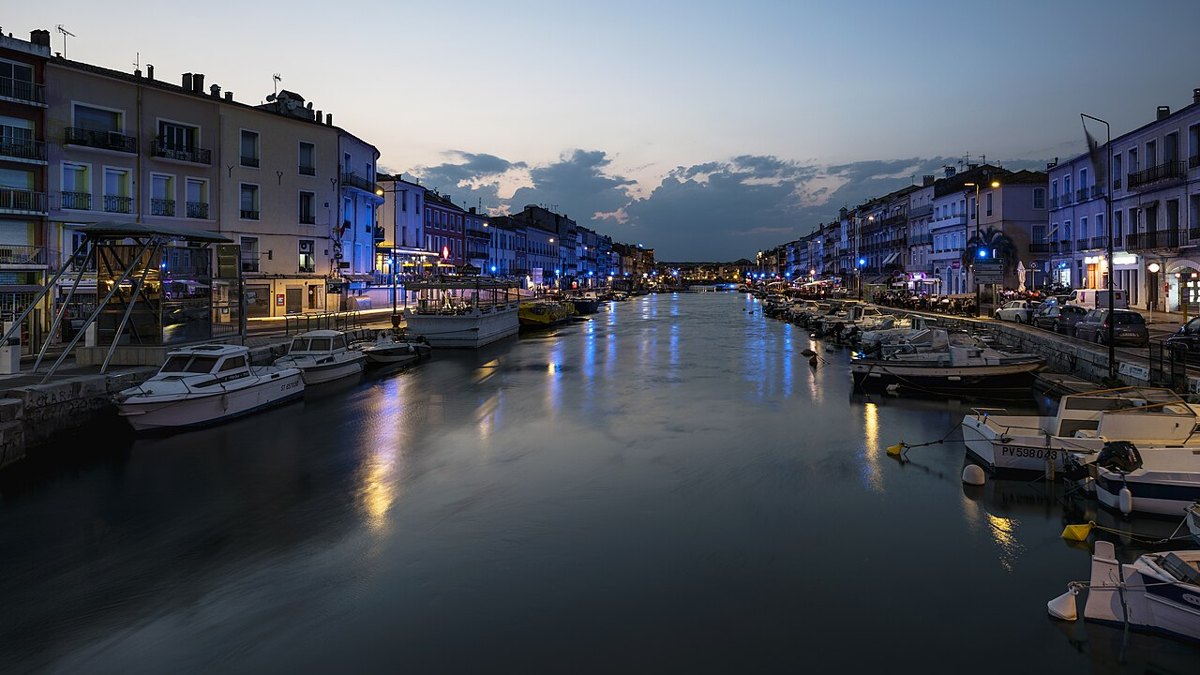
The canals are the best introduction to central Sète. Walk along the quays, look at the boats and bridges, and allow the working town to set the pace. The Canal Royal area, market hall and smaller streets make a coherent visit without a long list of distant stops. Keep harbour operations in mind: not every quay or port installation is a public promenade. The water-facing façades and restaurant terraces are part of an active place rather than a resort arranged solely around visitors.
Arrive with enough time for a morning market visit, a meal and a second walk before your return train. Check the walk from the station to your first stop and use local transport if appropriate. A canal or coastal boat trip can add another perspective, but routes, seasons, embarkation points and weather conditions vary by operator. Book the exact departure that fits your day and check cancellation terms. Sète’s beaches lie beyond this central canal circuit and need a separate transport and time allowance.
Einaz80 · Wikimedia Commons ↗ · CC BY-SA 4.0 ↗. Resized and orientation corrected where needed; display crops may apply. Share-alike terms apply where stated.
Understand the landscape
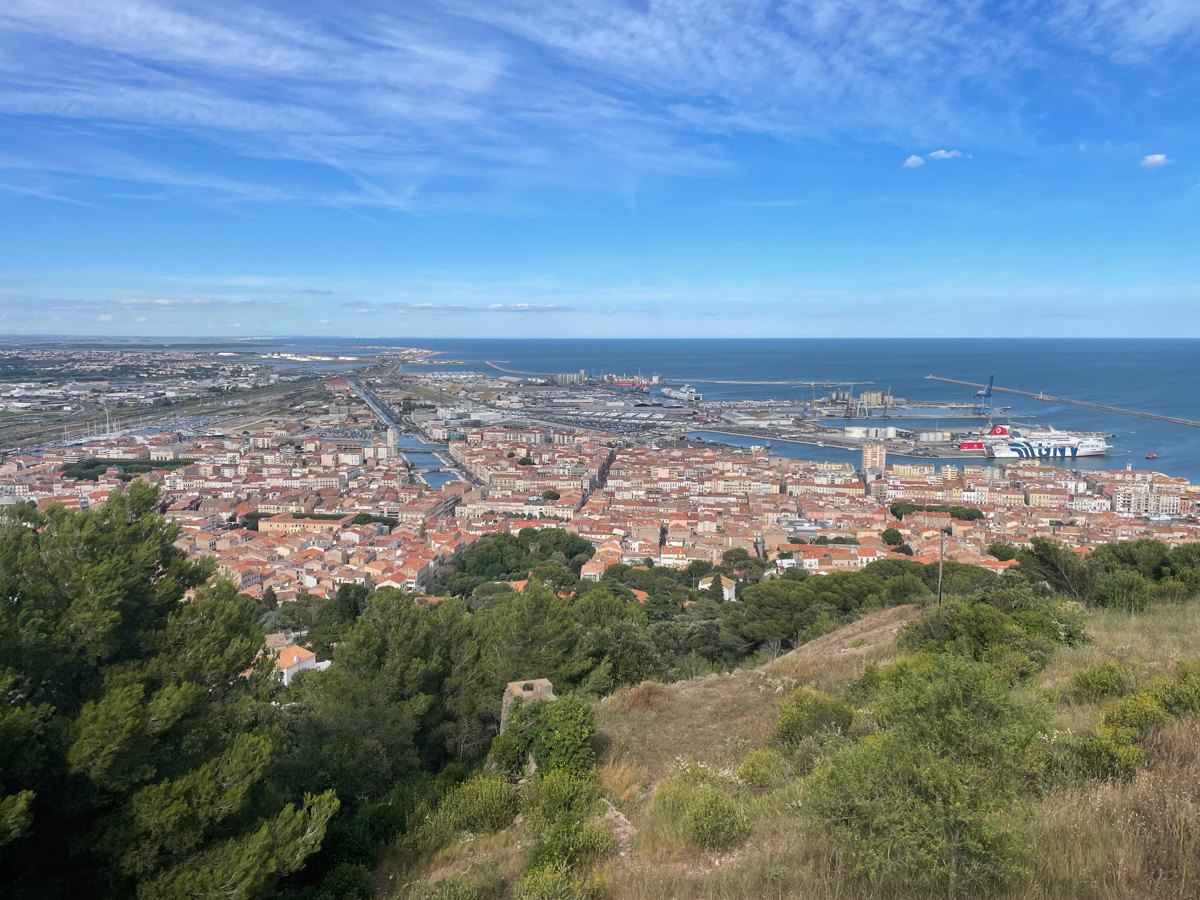
Mont Saint-Clair
Mont Saint-Clair rises above Sète and gives a useful sense of the relationship between the city, the port, the Mediterranean and the Étang de Thau. The tourism office describes the hill at 183 metres. On a clear day, the panorama helps explain why a town of canals also feels surrounded by larger bodies of water. Treat it as a planned outing rather than a casual extension of a flat quay walk, and leave time to enjoy the view instead of arriving just before a return connection.
Walking routes climb steeply and may involve steps or exposed sections. Decide whether the ascent suits your group, weather and footwear. Sète Agglopôle’s mobility service lists a bus option via La Croix Saint Clair on line 5; check the current timetable and return journey for your date. A bus stop does not guarantee step-free access to every viewpoint. In heat or strong wind, adapt the plan. The panoramic photograph is documentary and does not imply that all parts of the hill share the same outlook.
Pierre-Félix Vautrin · Wikimedia Commons ↗ · CC0 1.0 ↗. Resized and orientation corrected where needed; display crops may apply. Share-alike terms apply where stated.
Heritage in context
A guided Écusson walk
A guided walk is useful when you want to understand Montpellier’s architecture, university history and changing public spaces. Look at the tourism office’s dated programme and choose the theme that interests you. Some tours focus on the historic centre, while others include places that cannot simply be entered during an independent stroll. Confirm the language, meeting point, duration and what the ticket includes before booking.
Keep the rest of the morning or afternoon flexible around the tour. If you want an arch ascent or a mikvé visit, check that it is explicitly included rather than assuming every guided walk offers it. Ask about stairs and walking distance. Finish with a café or a return to a favourite square, so the information has time to settle instead of immediately hurrying to a second appointment.
Thomon · Wikimedia Commons ↗ · CC BY-SA 4.0 ↗. Resized and orientation corrected where needed; display crops may apply. Share-alike terms apply where stated.
An art-led afternoon
A focused Musée Fabre visit
Build a museum session around a smaller selection: one period, a favourite artist or the contrast between historic painting and the modern galleries. Read the current collection and exhibition information before arriving, then choose an audio guide or guided activity if available for your visit. This makes the museum a central experience rather than a wet-weather box to tick.
Schedule it on an open day and give yourself a real break afterwards. Exhibition tickets, tours and the permanent collection can have different booking arrangements. Families may prefer an age-appropriate activity and a shorter selection of rooms. For access needs, discuss the museum’s current lift notice before committing to a particular route. A substantial art visit pairs well with an evening restaurant booking in Montpellier.
Christian Ferrer · Wikimedia Commons ↗ · CC BY 4.0 ↗. Resized and orientation corrected where needed; display crops may apply. Share-alike terms apply where stated.
Food and port life
A Sète market-to-quays walk
Start at the Halles de Sète while stalls are active, then continue towards the canals for a walk and lunch. Browse before choosing what to eat, ask vendors about their products and keep purchases manageable for the day ahead. This is a good way to connect the town’s food culture with its port setting without needing to drive to several separate addresses.
The market hall currently lists daily opening from 07:00 to 15:00, but individual stalls and food counters may keep their own hours. An earlier arrival gives more choice than the end of service. If a boat trip follows, check the embarkation point and leave a margin after lunch. Alternatively, stay on land and add the hilltop view when weather, mobility and transport make it comfortable.
Markets & local food
Christian Ferrer · Wikimedia Commons ↗ · CC BY 4.0 ↗. Resized and orientation corrected where needed; display crops may apply. Share-alike terms apply where stated.
Daily market hall
Halles de Sète
The covered market is a useful morning anchor for a Sète day. Its current visitor listing gives daily opening from 07:00 to 15:00. Go earlier for the fullest choice and check individual counters before planning a fixed late lunch. Buy only what you can carry and keep fresh: seafood and chilled purchases need proper handling, especially before a long walk or train journey.
Montpellier’s Arceaux market currently takes place on Tuesday and Saturday, 07:00–13:30, on Boulevard des Arceaux. Pair it with the aqueduct and Peyrou area, then return into the Écusson. The market day changes the feel of the neighbourhood, so keep parking and crowd levels in mind. Have a reusable bag and some cash, although payment arrangements vary by trader.
In Sète, look for local bakery and fish-counter specialities and ask what is freshly made that day. A tielle can be a practical light lunch, while a seafood meal deserves a table and time of its own. In Montpellier, market produce and seasonal menus offer a different way to explore the region. Verify ingredients and allergens directly; a local name does not guarantee one standard recipe.
A market morning and a gastronomic lunch are competing uses of time and appetite. Choose one as the main food experience for the day, leaving the other as a shorter browse. The waterfront photograph above sets the Sète location and is not presented as an image of market stalls.
Three restaurants to consider
Reserve the meal that matters most first, then shape the day around it. These are considered restaurant choices; simpler cafés, bakeries and markets can fill the other pauses. Menus, prices and service calendars should be checked directly.
AI-generated illustration based on inspected official visual references. Representative setting; consult the establishment’s current photographs for your booking.
Montpellier · a deliberate meal
Jardin des Sens
Jardin des Sens, associated with Jacques and Laurent Pourcel, sits within Hôtel Richer de Belleval on Place de la Canourgue. It suits a trip where one meal is a major part of the experience, with the historic centre close by before and after dinner. The hotel’s other dining offers, including La Canourgue, have different menus and settings; book the restaurant you actually want.
Reserve directly and check the current menu, service calendar, expected duration and dietary arrangements. Leave enough time to reach the hotel through the historic centre, especially if arriving by taxi or car. A tasting meal works best with a lighter sightseeing schedule around it. The illustration follows an inspected official dining-room reference and is labelled representative, rather than guaranteeing a particular table or current menu.
AI-generated illustration based on inspected official visual references. Representative setting; consult the establishment’s current photographs for your booking.
Montpellier · seasonal Occitanie
Reflet d’Obione
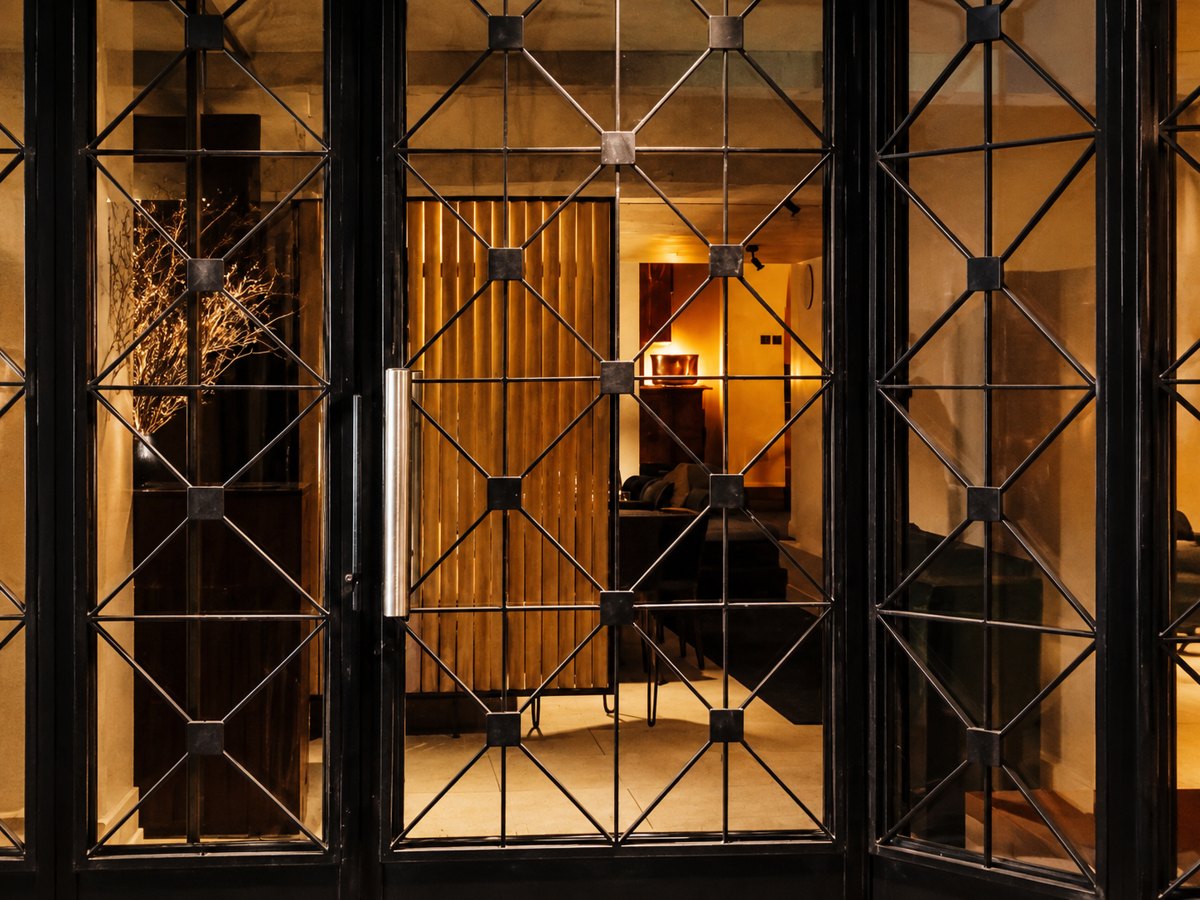
Laurent Cherchi’s Reflet d’Obione is at 29 Rue Jean-Jacques Rousseau in the Écusson. Its official information describes contemporary cooking rooted in Occitanie and a strong focus on sourcing and sustainability. It is a good choice for travellers who want a meal with a clear regional approach, within walking distance of several historic-centre visits. The entrance illustration reflects the inspected black geometric glazing and warm interior beyond.
The restaurant currently lists dinner Tuesday to Saturday and lunch Friday and Saturday. Its website offers vegetarian and vegan arrangements within the Alcalin menu, and an alcohol-free pairing option. Confirm your requirements when reserving rather than assuming adaptations can be improvised on arrival. Read the booking and cancellation conditions carefully. The restaurant recommends the covered Pitot parking option for drivers; use current directions and leave a walking margin.
AI-generated illustration based on inspected official visual references. Representative setting; consult the establishment’s current photographs for your booking.
Sète · Mediterranean cooking
Quai 17
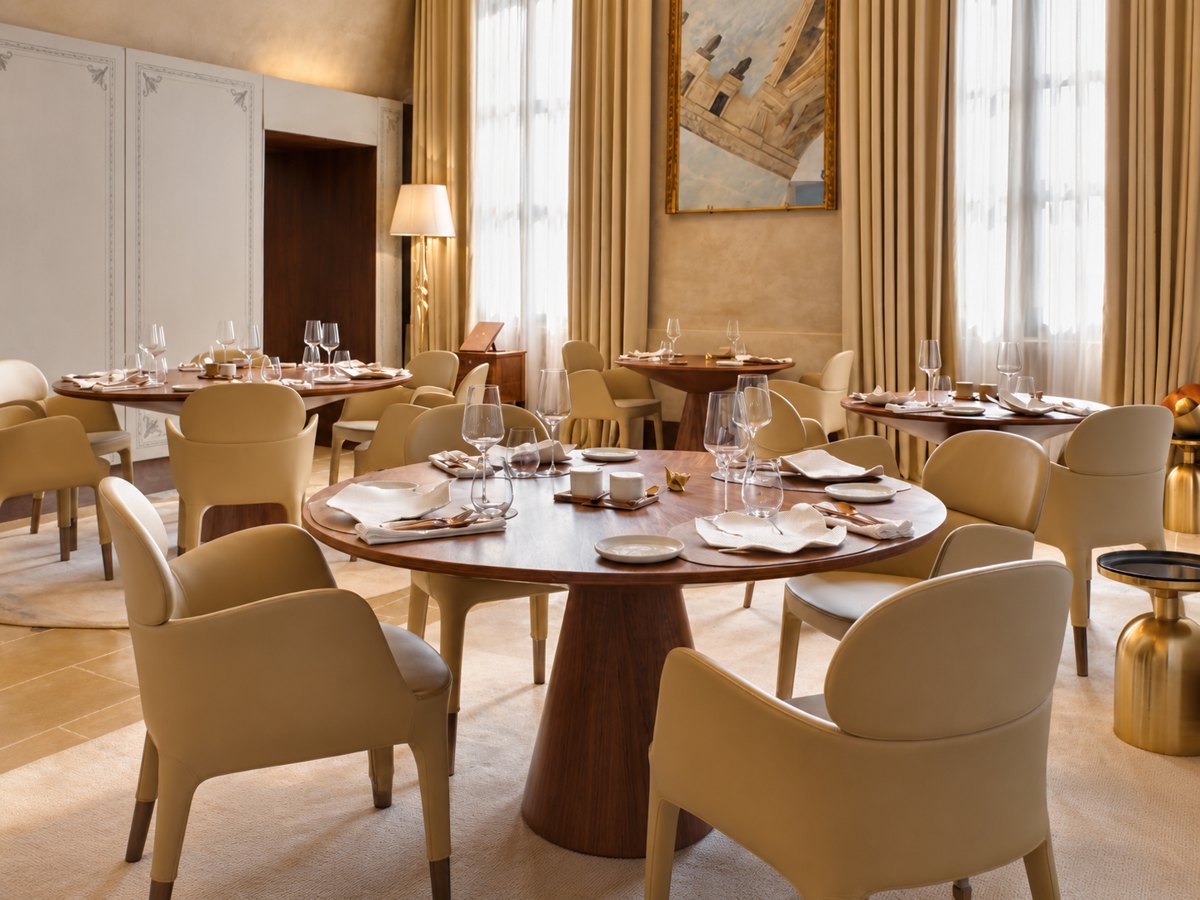
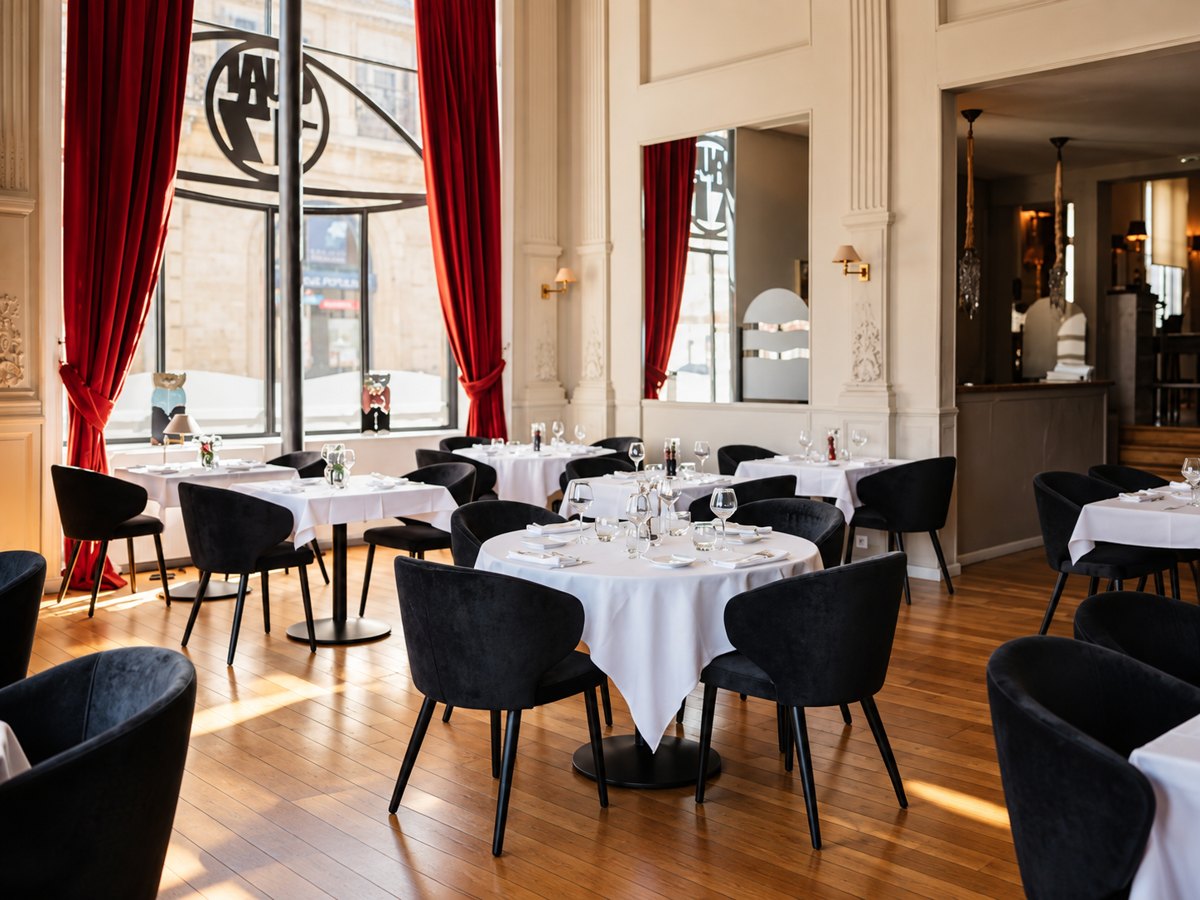
Quai 17 is the restaurant of Le Grand Hôtel de Sète, beside the central canals. Chef Jean-Pascal Hamet’s cooking gives seafood and Mediterranean ingredients a prominent place. The dining room’s white-clothed tables, tall windows and red curtains make it a different experience from a quick quay-side snack. Choose it for a Sète day that leaves enough room for a substantial lunch or an overnight stay.
Check the current service calendar, menu and reservation options with the restaurant. Ask about dietary needs and the table setting if a canal-facing position matters to you; it is not guaranteed by a booking alone. If returning to Montpellier afterwards, check the evening train and station transfer before choosing dinner. The illustration is based on the inspected official room reference and should not be used to infer a specific table allocation.
A central Montpellier hotel, an estate outside the city and a Sète canal base support different trips. Choose by the evenings you want, transport and actual room arrangements. Hotel and restaurant illustrations are clearly identified as representative.
AI-generated illustration based on inspected official visual references. Representative setting; consult the establishment’s current photographs for your booking.
Five-star · historic Montpellier
Hôtel Richer de Belleval
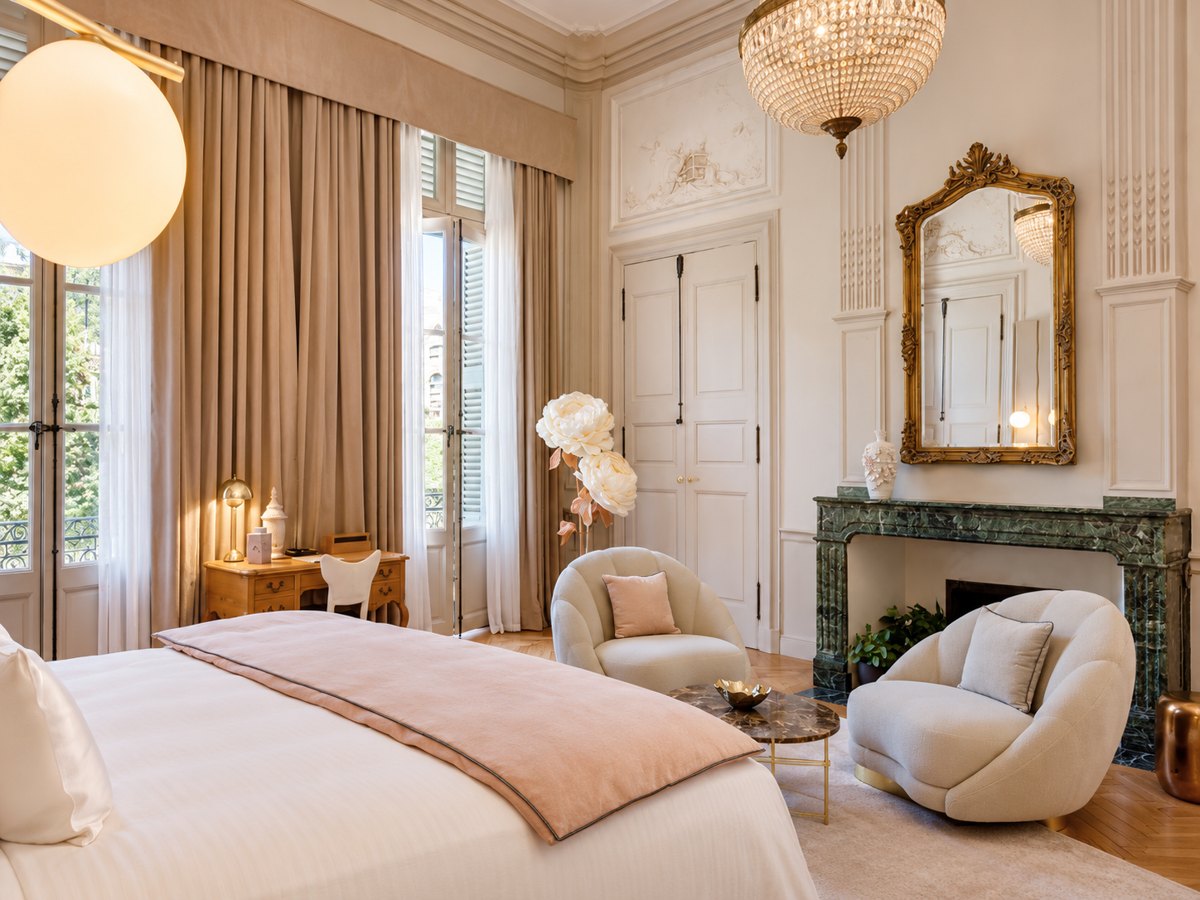
Richer de Belleval is a five-star hotel in a restored historic mansion on Place de la Canourgue. Choose it for an Écusson base with art, architectural character and access to the centre on foot. The hotel combines historic fabric and contemporary artistic interventions, with Jardin des Sens among its dining options. Its central location suits returning between visits rather than planning every day as one long excursion.
Compare the exact room category and current photographs before booking. Discuss room access, steps, lift arrangements, noise preferences and bathroom requirements with the hotel. Drivers should obtain arrival and parking instructions in advance: a historic-centre address does not mean you can freely drive to every doorway. The representative bedroom illustration follows one official reference and does not show every category or guarantee the pictured fireplace, outlook or furnishings.
AI-generated illustration based on inspected official visual references. Representative setting; consult the establishment’s current photographs for your booking.
Five-star · near Montpellier
Domaine de Verchant
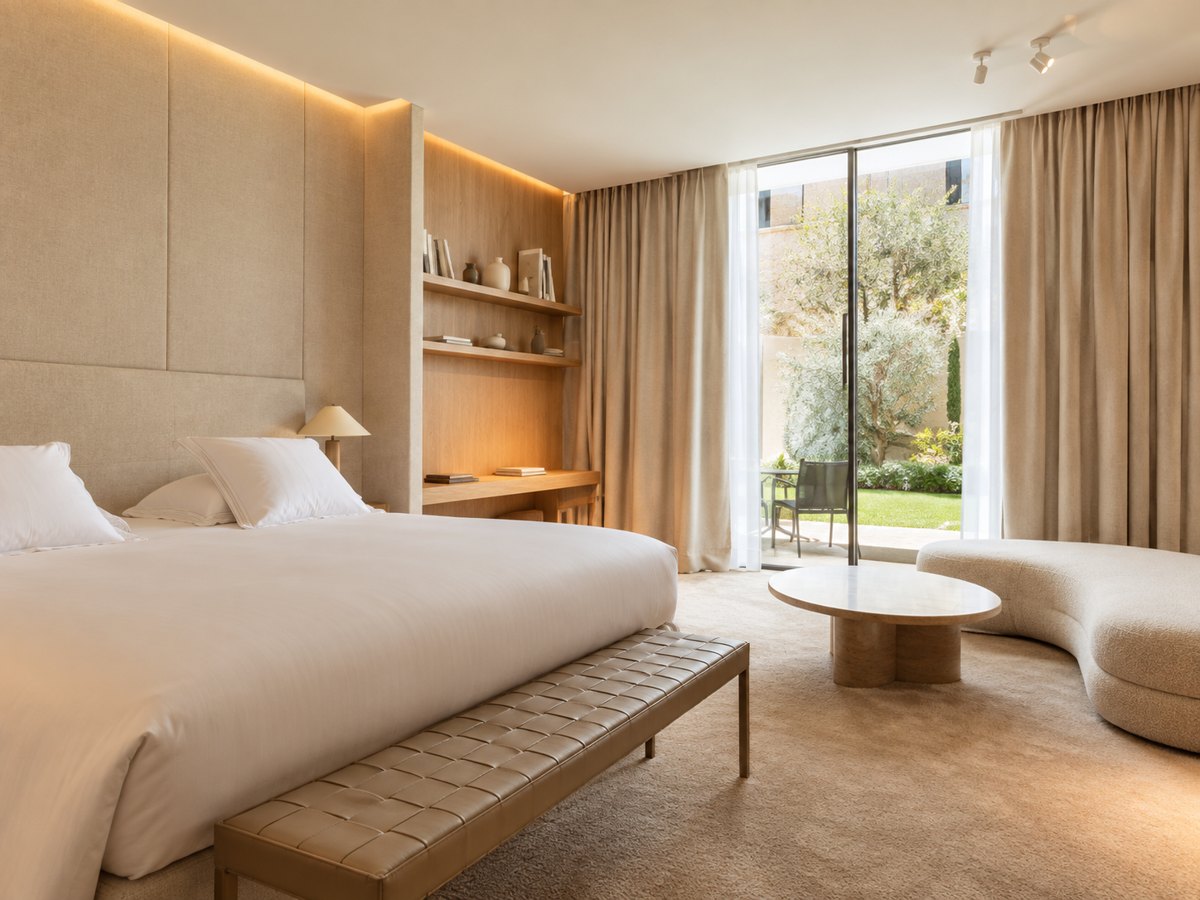
Domaine de Verchant offers a five-star stay in a green estate setting outside Montpellier’s historic centre, in Castelnau-le-Lez. Its accommodation combines historic and contemporary spaces, with restaurants and a spa on the property. It suits travellers who want time enjoying the hotel as well as city visits. The restaurant named La Plage is in the vineyard setting; the name should not be read as a beachfront location.
Arrange city transfers, parking and late returns before booking a stay built around Écusson dinners. Confirm the exact room, spa and pool access included in your rate, seasonal operation and any separate reservations or charges. Different accommodation offers on the estate can have different arrangements. The illustration reflects a contemporary bedroom reference, not a promise of a specific garden view or private pool. Allow at least some unscheduled time on the property if its setting is the reason for choosing it.
AI-generated illustration based on inspected official visual references. Representative setting; consult the establishment’s current photographs for your booking.
Three-star · canal-front Sète
Le Grand Hôtel de Sète
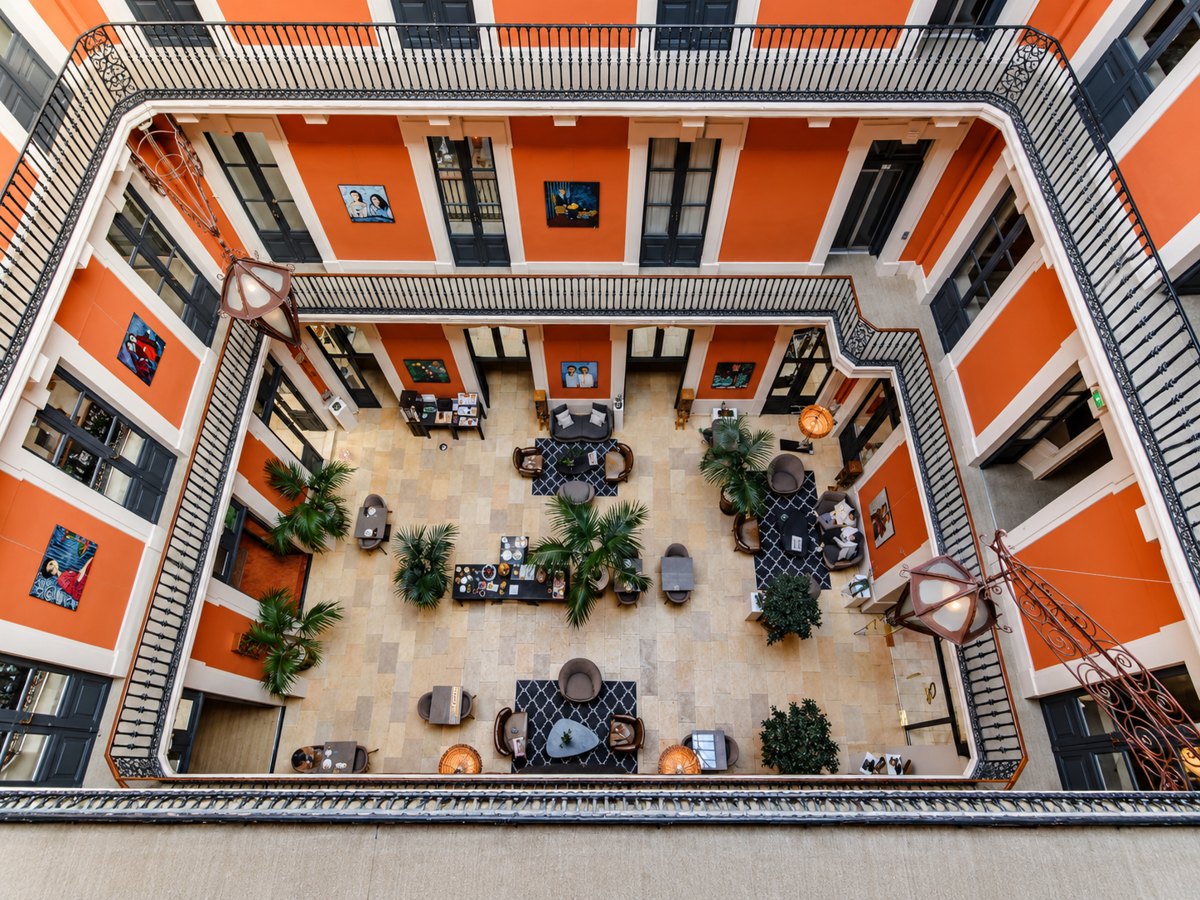
Le Grand Hôtel is a three-star hotel on Quai Maréchal de Lattre de Tassigny, with a central canal setting and an interior atrium. Choose it for evenings in Sète and a stay that keeps the quays, market hall and restaurant within the town’s daily rhythm. Quai 17 is on the property. This is a city hotel by the canals, with beaches reached separately, rather than a seafront resort.
Room outlooks differ: canal-facing rooms and rooms oriented towards the patio offer different experiences. Request the category and view you want, then check current photographs and air-conditioning, access and bathroom details. The hotel lists private parking, which should be arranged directly with availability, charges and arrival instructions confirmed. Plan the station transfer if arriving by rail. The generated visual follows the atrium reference and is not presented as a bedroom view.
Longer daylight and generally comfortable walking make spring useful for a first cultural stay. Keep a rain alternative, especially for the exposed hill and quays. A museum visit and an afternoon garden walk can balance the day. Public holidays and school breaks can affect demand, so reserve important meals and hotel nights ahead.
June–August
Summer
Plan around heat, shade and the busiest coastal periods. Put strenuous walking earlier when suitable, use indoor visits during hot hours and carry water. The Jardin des Plantes has an afternoon public schedule, so it cannot anchor an early morning route. Boat trips and beach transport need their own weather and return plans.
September–February
Autumn & winter
Autumn can offer a comfortable city rhythm, while winter suits art and restaurant-focused visits with shorter outdoor walks. Heavy rain or strong wind can change a coastal day quickly. Check reduced boat services, seasonal facilities and dated closures. A hotel pool photograph does not establish that the pool operates year-round.
Choose dates around the experience that matters most: a particular restaurant, exhibition or market day. Avoid assuming that all gardens, museums and tours share the same weekly closing day. Keep one flexible half-day so weather changes do not force you to abandon the entire plan.
How long to stay
A compact introduction
Two nights
Choose one main base and two full days if arrival and departure times allow it. Give Montpellier the Écusson and one substantial indoor visit, then use a separate day for central Sète. Keep Mont Saint-Clair optional. An ambitious gastronomic lunch will reduce the time available for extra sights.
Recommended first visit
Three to four nights
This is the most balanced first-stay format: a historic-centre day, an art-and-garden day and a Sète day, with flexible space for weather or a market. Stay in one hotel if you want simple logistics. Split the nights only when Sète evenings are an important part of the trip.
A slower regional stay
Five nights or more
Add a slower hotel day, a separately planned beach outing or another regional food experience. Avoid filling every morning with a departure and every evening with a formal meal. A longer stay gives room to revisit a favourite neighbourhood and follow current exhibitions or events without compressing the main visits.
Getting there & getting around
Two distinct stations
Arrive at the right Montpellier station
Montpellier Saint-Roch is the central station, useful for many hotels and the historic centre. Montpellier Sud de France is a separate station outside the centre. Check the exact arrival station on your ticket before arranging a hotel transfer. Current network information shows tram line 1 serving Gare Sud de France; use the current TaM journey planner and disruption notices rather than an older shuttle description.
Check a direct regional train for your date, departure station and return time. The rail journey is relatively short, but allow for walking or local transport at both ends. Reserve longer-distance journeys separately. Do not choose a restaurant finishing time before confirming the last useful return connection. Accessible station routes and assistance should be checked with the rail operator when needed.
Walk the Écusson and central quays where that suits your group, using local transport for longer links. Montpellier and Sète have different networks and tickets. Visitors should check their applicable fares; resident travel schemes are not automatically visitor entitlements. For Mont Saint-Clair, check the current hill bus service and walking route rather than assuming the entire outing is flat.
For an airport arrival, check the airport’s current ground-transport information and your hotel’s exact address. A rental car is useful for a wider regional trip but adds parking and arrival constraints in the historic centres. An estate hotel outside Montpellier needs its own transfer plan; the city tram network does not remove the need to check the final connection to the property.
Parking & hotel arrivals
Montpellier
Choose a signed public car park that fits your first stop, then walk or use transport within the centre. The Écusson includes pedestrian and restricted streets, so follow current signs and hotel instructions rather than driving towards a map pin. Check opening, height limits and pedestrian exit before arrival. Ask your hotel how luggage drop-off works, especially if mobility or heavy bags are involved.
Sète
Central canal streets can be busy, particularly on market and event days. Choose parking before entering the tightest part of the centre and allow time to walk. The station area, centre and beaches are different parking decisions. Do not assume an informal stop beside a quay is permitted or safe for unloading. Follow restrictions and never obstruct harbour access.
Hotel parking
Private parking is an arrangement to confirm, not a guaranteed inclusion. Ask about availability, reservation, charges, vehicle size and access instructions. Le Grand Hôtel lists private parking; an advance discussion is still useful. For Richer de Belleval, obtain the historic-centre arrival route directly. At Verchant, confirm the parking and transfer arrangements associated with your accommodation category.
Four sample itineraries
A first historic-centre day
One day in Montpellier
Begin with Place de la Comédie and a relaxed Écusson walk towards Place de la Canourgue and the cathedral quarter. Add a guided visit only if booked and compatible with your pace. Choose a simple lunch before the afternoon cultural visit, or make the restaurant the main event and reduce the sightseeing accordingly.
On an open day, spend the afternoon at the Musée Fabre, selecting a few galleries rather than racing through the collection. If you prefer outdoors, use Peyrou and the Jardin des Plantes after its midday opening. These are alternative afternoon emphases, not a requirement to complete both in full. Finish with dinner in the centre and a short evening walk.
Market, canals and a considered extra
One day in Sète
Arrive early enough to browse the Halles, then walk the central quays and bridges. Take time to notice boats and harbour activity. Have lunch at the restaurant that matches your priorities, allowing a longer slot for Quai 17 or another booked meal. Keep fresh purchases limited unless you can store them properly.
Choose one afternoon extension: Mont Saint-Clair with a planned ascent or bus journey, a confirmed boat departure, or a slower canal walk. Leave a margin for the journey back to the station. Beach time is a separate outing and should replace another part of this day rather than being squeezed in at the end.
One main base
Three-day cultural stay
Day one: Montpellier’s historic centre, Peyrou and an evening meal. Day two: the Musée Fabre and the botanical garden, ordered around opening times; include the Arceaux market only if it is Tuesday or Saturday and it fits the morning. Avoid Monday for a plan relying on both the museum and garden.
Day three: Sète’s Halles and canals, with a single afternoon extension. Use regional rail if the timetable suits your return, or arrange a car day with parking chosen in advance. Staying in Montpellier throughout simplifies luggage logistics. Swap days for weather and restaurant availability instead of holding rigidly to this order.
More room for evenings
Four-day stay with a Sète night
Spend the first two days in Montpellier, with a clear distinction between the historic walk and the art-and-garden day. Make one restaurant a priority and leave another evening open. Transfer to Sète on day three, storing luggage at the hotel by arrangement before walking the canals or visiting the market.
Use the Sète overnight for a relaxed dinner and a morning without a return-train deadline. On day four, choose the hill, a boat outing or a slower waterfront visit before departure. Confirm luggage storage and transport times with the hotel. Splitting hotels is worthwhile when these evenings matter; it is optional for the same core sightseeing.
Practical tips before you go
Opening calendars
Check the museum, garden, tours and restaurants individually. The Musée Fabre and Jardin des Plantes currently close on Monday, but their daily opening times differ. Sète’s market hall lists daily opening, with stall-level exceptions possible. Recheck the dates a few days before arrival and keep a flexible alternative for an unexpected closure.
Heat, water & walking
Carry drinking water and use comfortable footwear for paving, gradients and the hill. A central city route may be mostly pedestrian but still includes uneven surfaces and crossings. In summer, reduce uphill walking in the hottest part of the day. Strong coastal wind and heavy rain can affect comfort and boat operation even when an inland city walk remains possible.
Access & family needs
Ask about the actual route, including hotel entrances, bathrooms, historic steps and viewpoint access. The Musée Fabre currently reports a main-lift outage, so confirm an adapted visit. Families can shorten museum sessions and add a garden or quay pause. Keep children close beside open water; a canal promenade is a public urban space with traffic and working activity nearby.
Take booking confirmations, hotel arrival instructions and return-transport details with you. Keep restaurant dietary requests explicit and confirmed. For payment and cancellation terms, use the establishment’s current conditions rather than general expectations. Ticket prices, local transport fares and seasonal facilities can change, so this guide links to current official information instead of fixing amounts that may become outdated.
Finding a comfortable local rhythm
Return to a square or stretch of quay at a different time of day. Montpellier’s large public spaces, smaller Écusson lanes and garden areas feel different from morning to evening. In Sète, the changing light on boats and façades can make a second short walk more rewarding than adding another distant attraction. Leave enough room to notice these changes, especially if photography is part of your trip.
A market works best early, while the botanical garden is an afternoon visit under its current public schedule. These rhythms can help structure the day without overplanning it. Choose a café pause when you need one and keep your formal meal as a separate experience. Do not assume all kitchens serve continuously or that every market counter remains active until the building closes.
The hilltop view is most useful when visibility is good and the weather feels comfortable. If conditions change, stay in central Sète and spend longer by the canals instead. In Montpellier, an extra museum hour or a quieter lane can be a good substitute for an exposed promenade. A flexible itinerary gives each place its own pace and reduces the pressure to collect every stop in a single visit.
Frequently asked questions
Can I visit Montpellier and Sète without a car?
Yes, a stay centred on the two cities can work with rail, local transport and walking. Check your Montpellier arrival station, the Sète connection and the final transfer to each hotel. An estate outside Montpellier or a beach outing may need an additional transfer. The hill route should be planned separately.
Which Montpellier station should I choose?
Saint-Roch is central; Sud de France is a separate station outside the centre. Choose the train that fits your journey and compare the onward connection. Current network information shows line 1 serving Gare Sud de France. Check live routes and disruptions before travelling.
Is Sète a beach destination from the town centre?
Sète has beaches, but the central canal circuit and the beach areas are different outings. A canal-front hotel does not imply beachfront access. Allow transport time, check the seasonal service and plan the return if you want beach time.
Can I visit the Jardin des Plantes in the morning?
Under its current public schedule, no. It opens from midday Tuesday to Sunday, with seasonal closing times, and closes on Monday. Check the university page for dated changes. Pair it with an afternoon city walk rather than an early market route.
How much time does the Musée Fabre need?
Allow roughly two to three hours as a planning estimate for a focused first visit, and more for a special exhibition or deeper interest. Choose a few galleries rather than trying to cover everything. Confirm current access arrangements if the lift notice affects your visit.
Is Mont Saint-Clair an easy walk?
The ascent is steep and can involve steps and exposed sections. Decide whether it suits your group and weather. Local bus information lists an option via La Croix Saint Clair on line 5, but check the current timetable and the remaining route to the viewpoint.
Are the hotel and restaurant images booking photographs?
No. The six hotel and restaurant cards use clearly labelled AI-generated representative illustrations based on inspected official references. Consult each establishment’s current photographs and confirm your exact room, table, view and included facilities before booking. The sightseeing images are credited documentary photographs.
Plan a Montpellier & Sète stay that fits you
Tell us your arrival point, the time you have, the pace you enjoy and the meals or cultural visits that matter most. We can shape the city days, hotel base and onward journeys into a practical plan, with room for weather and unhurried discoveries.
Practical details were checked against official tourism, museum, university, transport and establishment information on 4 October 2026. Recheck dated calendars before booking. Times used for visit lengths are planning estimates, not official limits. Documentary photographs show their recorded settings and dates; they may not reflect current works or décor. Hotel and restaurant illustrations are explicitly representative.
Photo credits and licence links appear beside each documentary image. Resizing and orientation corrections are disclosed; display crops may apply. Where a share-alike licence applies, any adaptations are offered under that same licence. No establishment is represented as guaranteeing the room, table or view in an illustration.