Grand Champagne houses, vineyard horizons and a walkable wine-country base
Walk the Avenue de Champagne, descend into the cellars and leave time for the villages beyond. Épernay is at its best when a few well-chosen visits are balanced with unhurried meals and a view of the vines.
Best forChampagne & countrysideCellars, architecture, food and vineyard villages
Ideal stay2–3 nightsOne town day and one or two countryside outings
Getting aroundWalk + planned transportCentral visits on foot; arrange village transfers
Good to knowBook the key visitsChoose the language, tasting and access arrangements
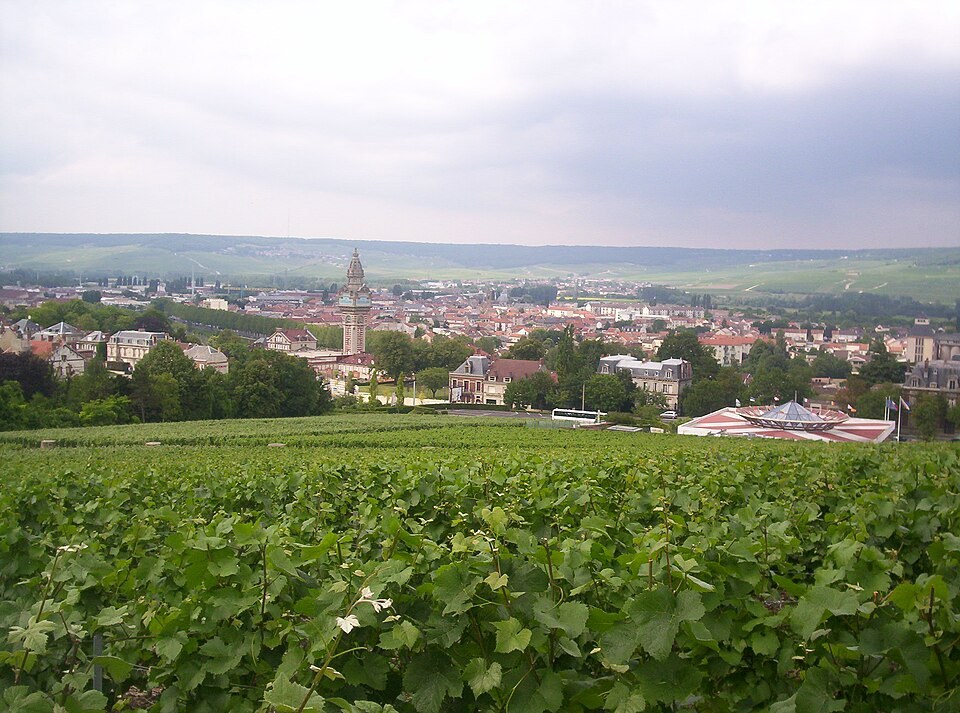
Épernay makes a focused introduction to Champagne. Its famous avenue gathers imposing houses and visitor experiences into a manageable town setting, while the surrounding slopes make it easy to understand that the wine begins outside the cellar. You can come for a single major house, but an overnight stay gives the place a gentler rhythm: a market morning, a museum visit and dinner without watching the return train.
Build your stay around the experience you actually want. A first visit benefits from one clear explanation of the production process; enthusiasts may prefer comparing a large house with a smaller producer. Travellers less interested in tasting can concentrate on architecture, local history, gardens and countryside walks. The most satisfying programme usually leaves space between appointments.
Where to Go & What to See
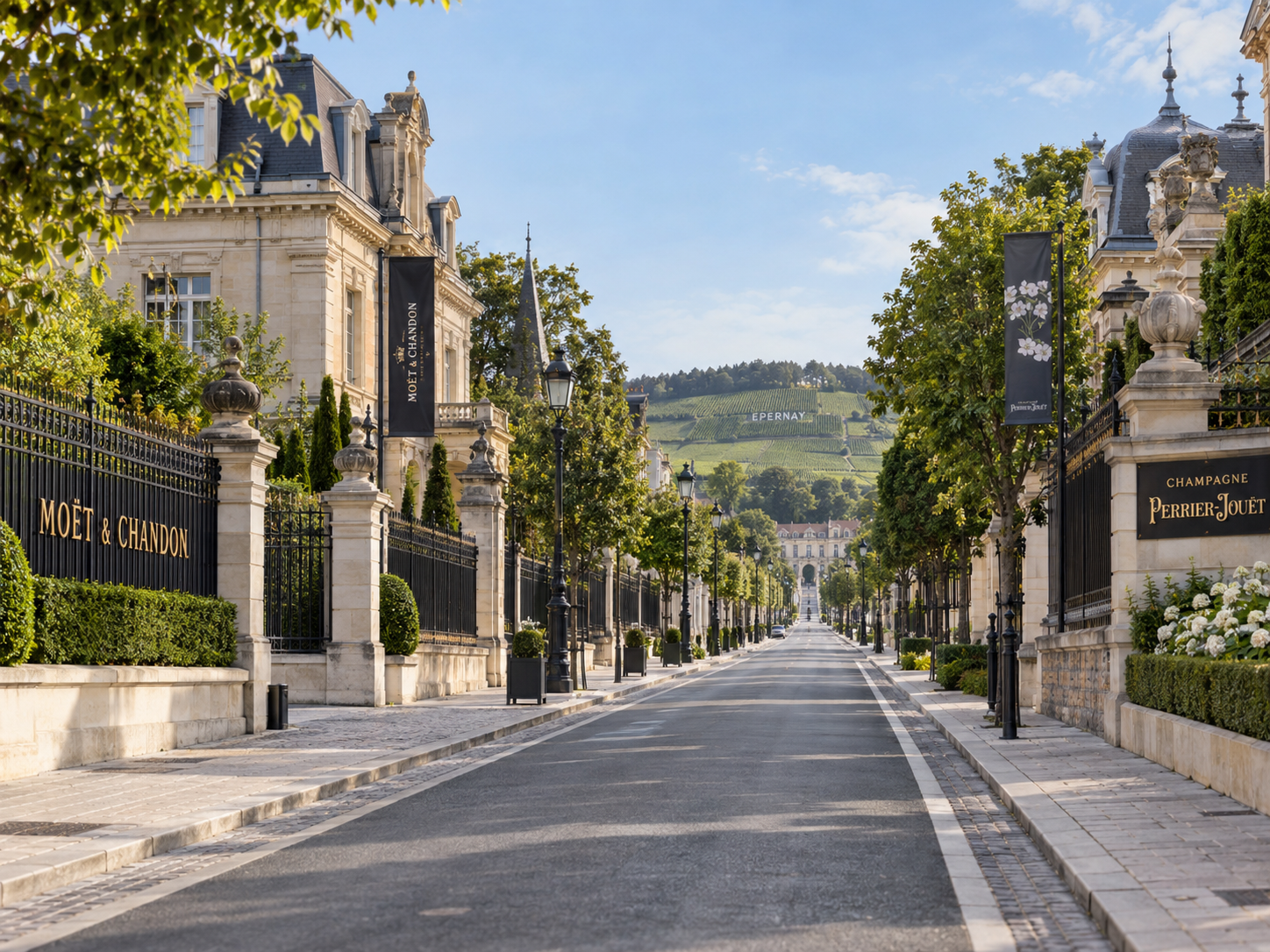
AI-generated photorealistic view.
The essential walk
Avenue de Champagne
The avenue is the natural starting point: a sequence of distinguished Champagne-house buildings, gates and gardens that makes the scale of the trade visible above ground. Walk it before your booked visit so the cellar experience has a setting, and return later if you want a quieter look at the architecture.
Treat the public street and the houses as different experiences. Walking the avenue does not give access to private courtyards, gardens or cellars. Check the entrance named on your ticket rather than assuming every visitor reception is behind the most impressive gate.
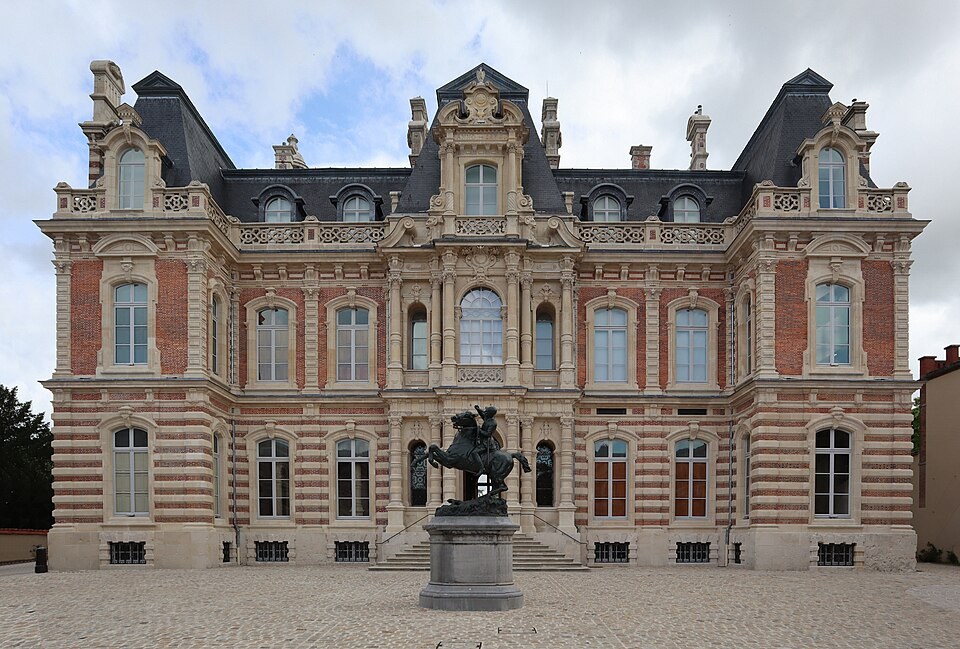
The Musée du vin de Champagne et d’Archéologie régionale occupies Château Perrier. It connects the region’s geology and archaeology with the history of Champagne, making it a useful complement to a commercial cellar tour. The setting and park add interest even for visitors who do not want a tasting-led day.
Choose the galleries that match your interests and leave time to absorb them. This is a good anchor for wet weather, but check the current calendar: Tuesday is the regular closing day listed by the tourism office.
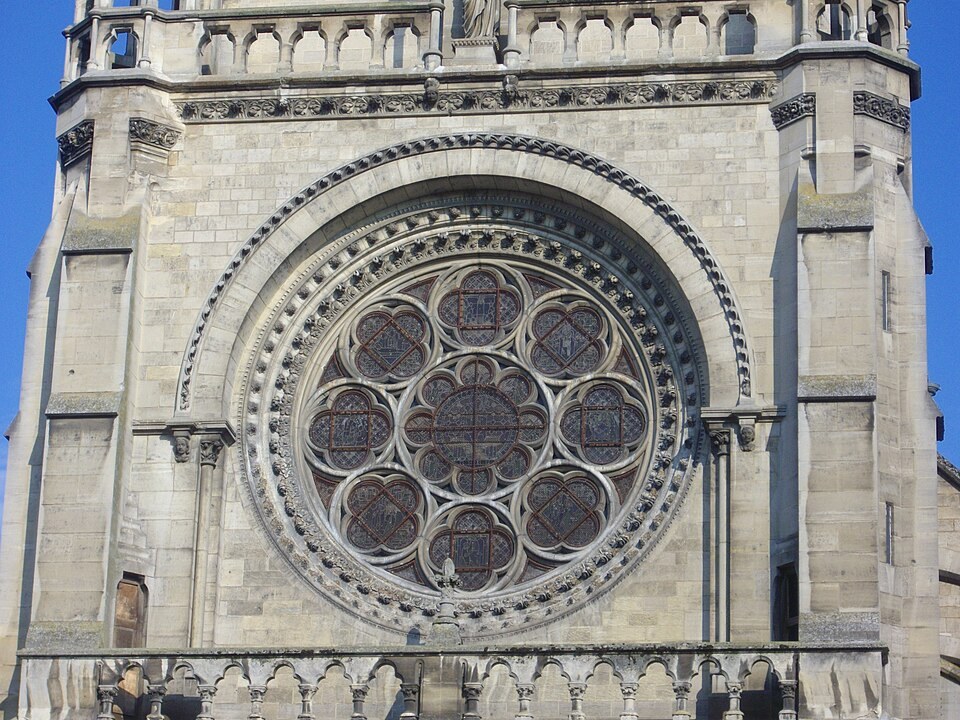
Notre-Dame adds another layer to the town beyond its Champagne façades. Built around the turn of the twentieth century and repeatedly damaged and restored, it contains older artworks, stained glass and an organ transferred from the former Saint-Martin church.
Include it in a central walk rather than making an inflexible appointment around it. Respect services and any restricted areas; a short, attentive visit is often more rewarding than rushing through to keep a crowded schedule.
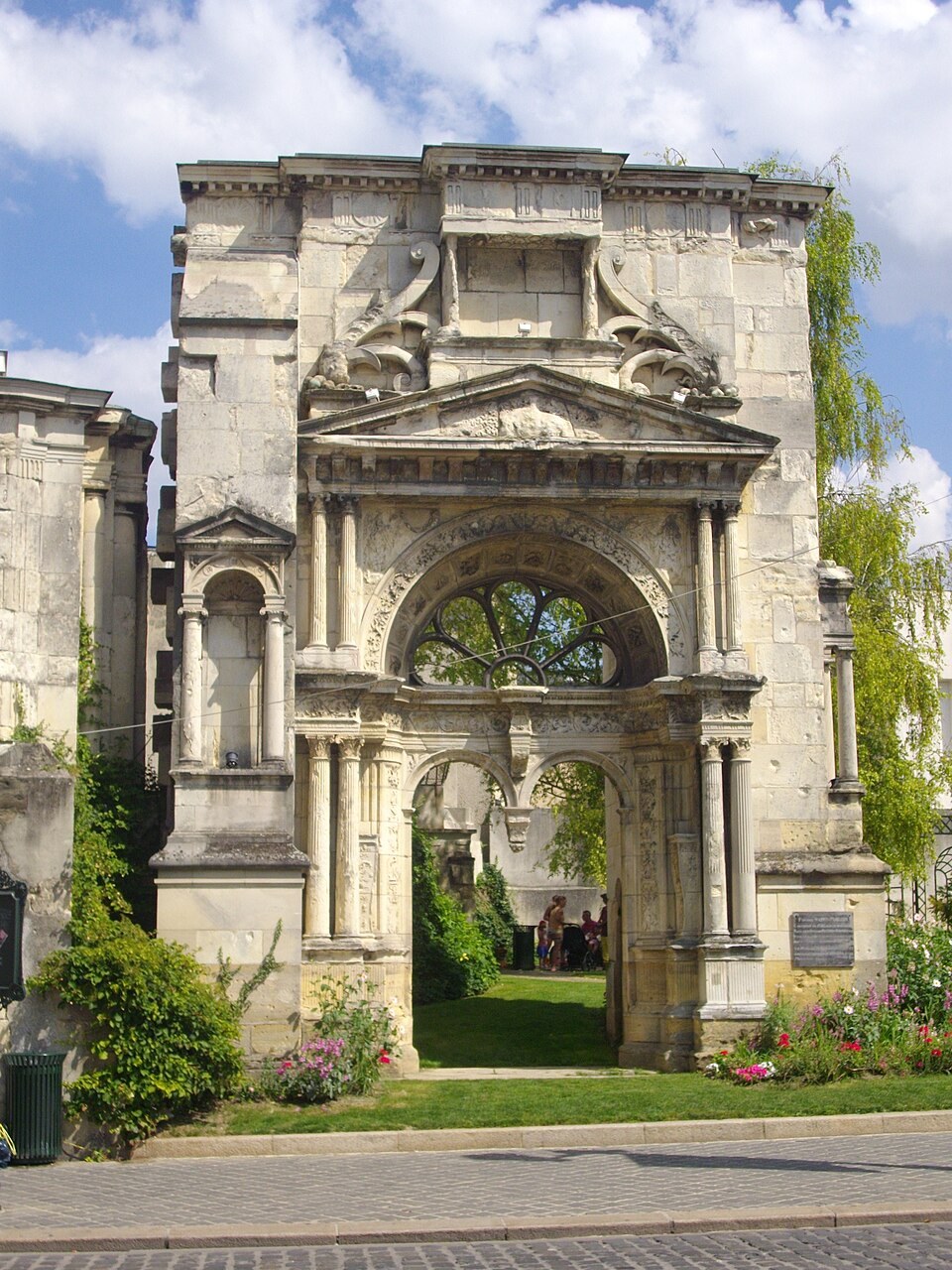
Near Place Hugues-Plomb, this ornate Renaissance portal survives from the former Saint-Martin church. Its carved details offer a small-scale contrast with the larger Champagne houses and help reveal a history of Épernay that predates its best-known avenue.
Use it as a brief pause while exploring the centre. Look closely at the decorative carving, then continue towards the shops and cafés rather than treating it as a separate half-day attraction.
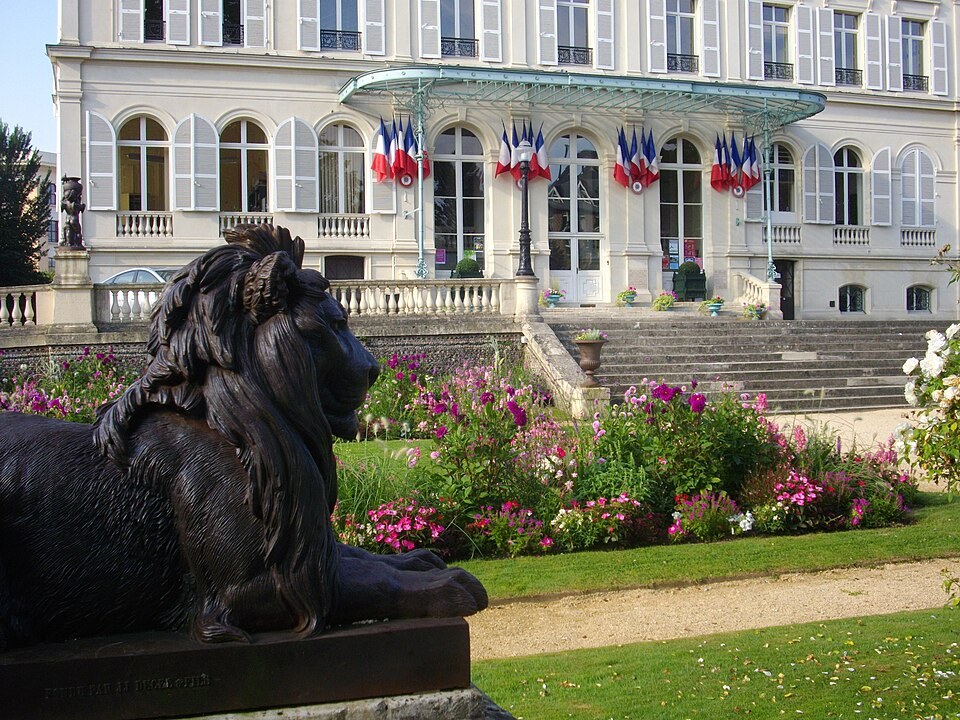
The town hall and its park give the central area a welcome open space. The tourism office identifies the park as a Jardin Remarquable, and it fits naturally into a gentle walk between the station area and the Avenue de Champagne.
Keep this part of the day flexible. A garden pause is particularly useful between an indoor visit and lunch, or for companions who want a break from cellars. Respect opening signs and municipal events that may change access.
Photo: Sand~commonswiki · Public domain. Resized, compressed; display crop.
Understand the landscape
Mont Bernon & the Pierre-Cheval viewpoint
For a view beyond the avenue, consider the official walking circuit linking the centre with Mont Bernon and its belvedere. The published loop is 5.7 kilometres and connects urban heritage with the slopes above Épernay.
This is a proper walk rather than a short detour in smart shoes. Allow additional time for stops, carry water and check the route and weather. If a cellar appointment is fixed, put the walk in a separate part of the day so a slippery path or slow climb does not make you late.
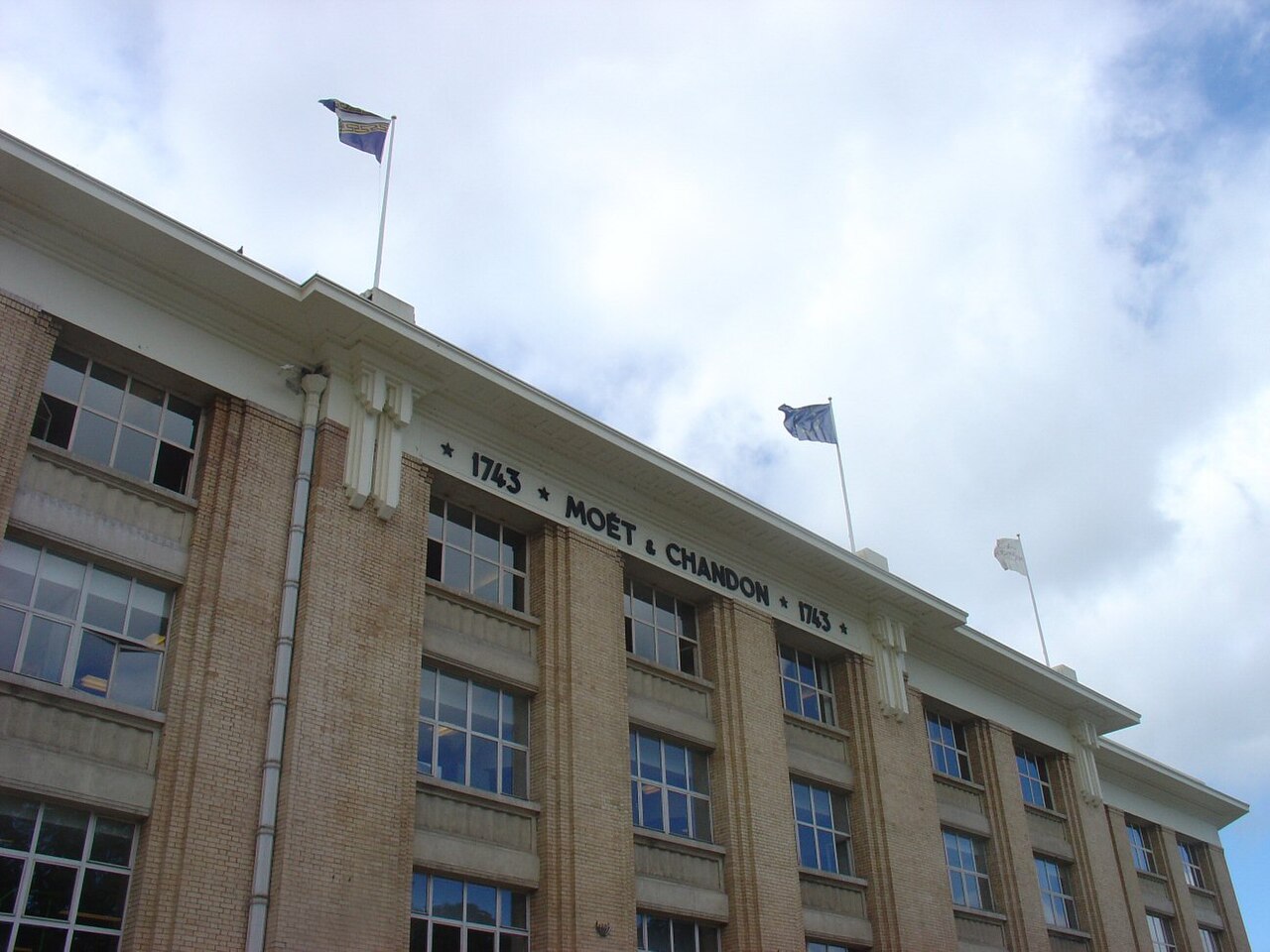
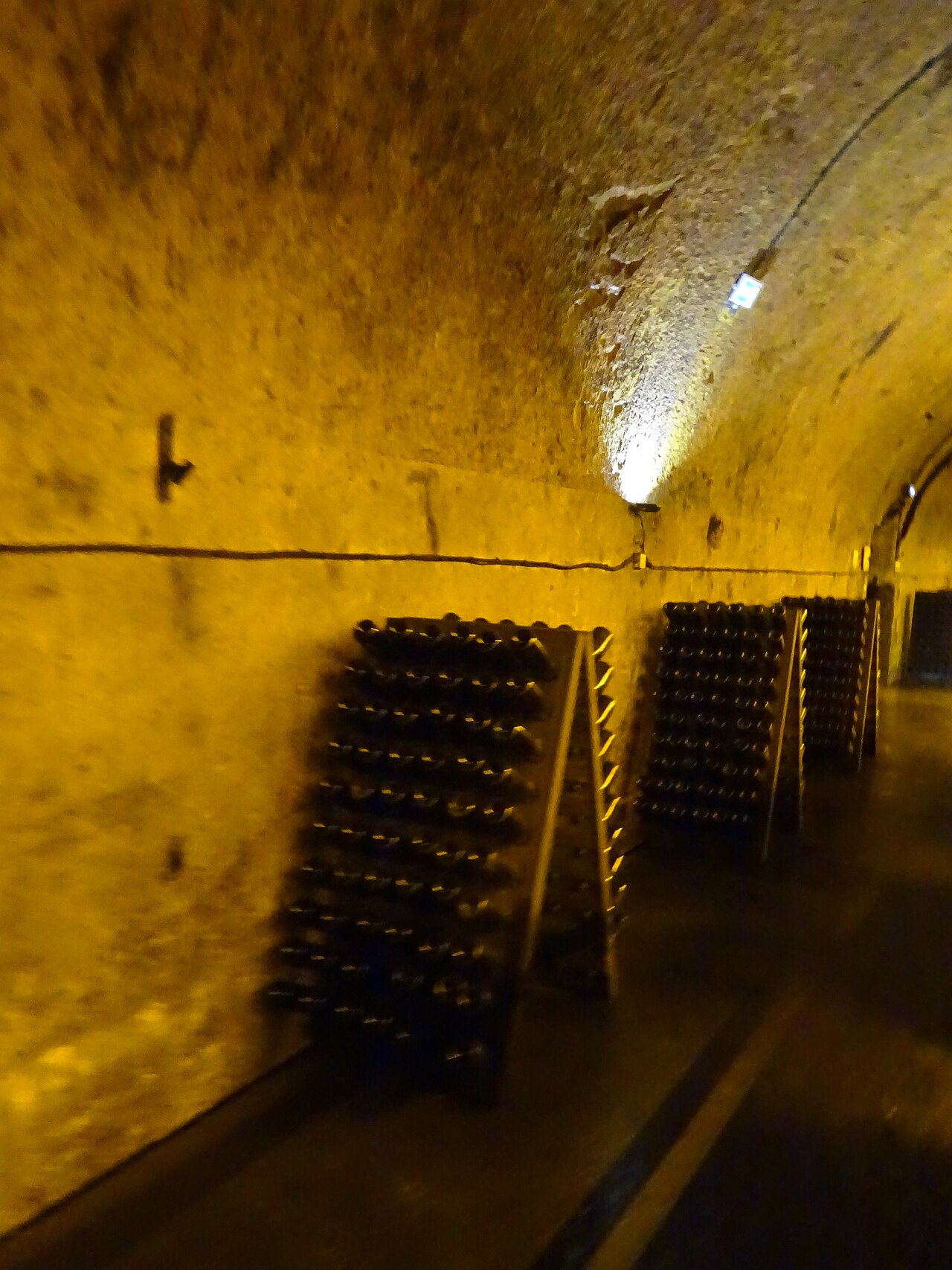
Moët & Chandon offers guided cellar experiences on the Avenue de Champagne, with different tasting formats. Choose your preferred language and the experience itself before booking; the most expensive option is not automatically the best introduction. Bring a warm layer for the underground visit.
The house describes a dedicated lift and access arrangement for wheelchair users. Confirm your needs directly when booking rather than assuming every tour format follows the same route. Leave a comfortable interval before your next reservation.
Mercier’s underground train gives the cellar visit a distinctive format and may suit a mixed-interest group. The house states that its visits are accessible to people with reduced mobility and offers an alternative to Champagne for children and teenagers.
Check the precise programme, language support and practical requirements before booking. This can be a useful alternative to a second walking tour, but avoid scheduling several similar cellar visits simply to collect famous names.
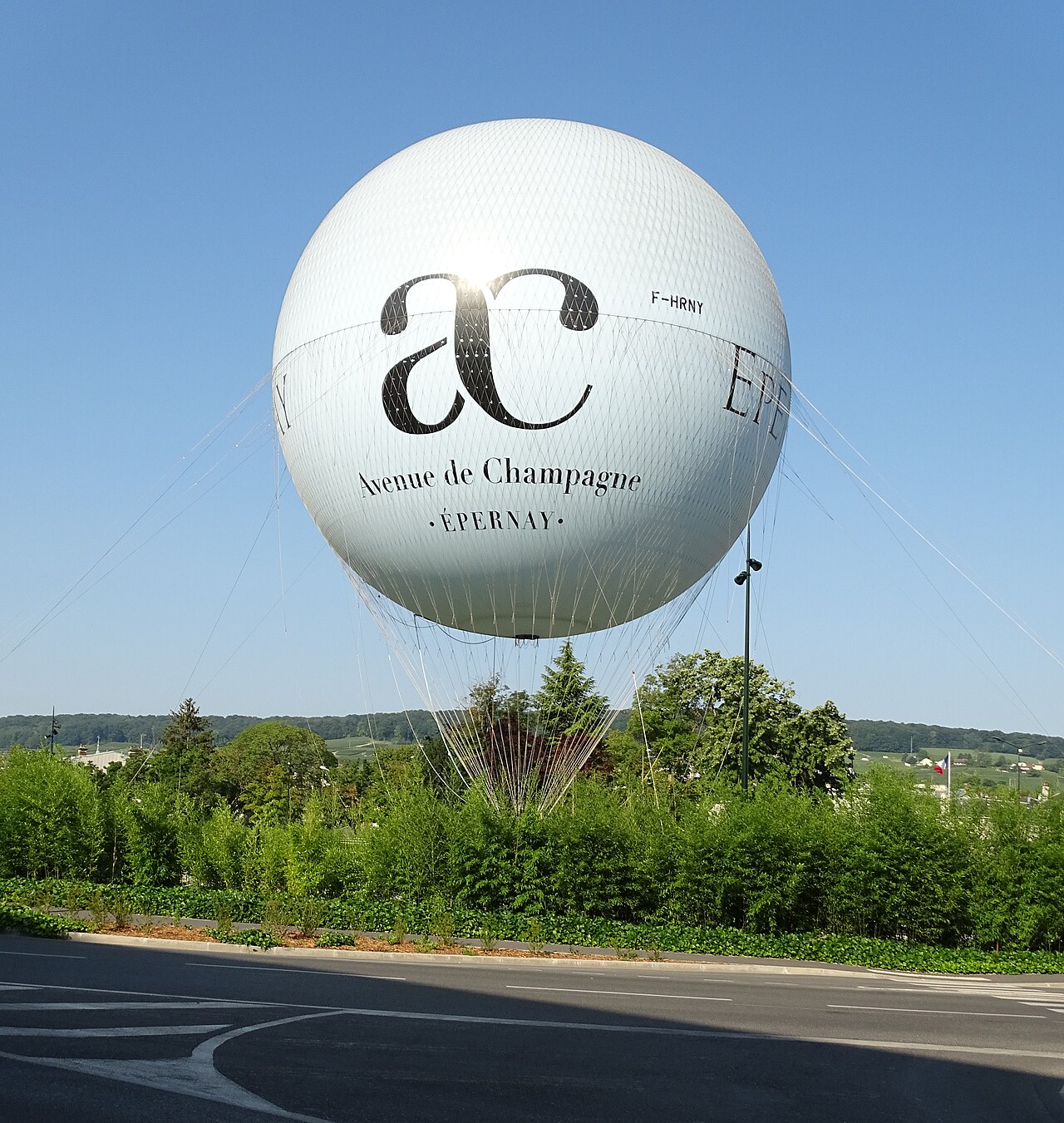
The tethered balloon rises above the town when conditions permit, offering a broad view of Épernay and the surrounding slopes. It is an optional extra best fitted around the day’s weather, rather than the foundation of a tightly timed itinerary.
The operator asks visitors to call on the day to confirm flights and does not take ordinary reservations. It also lists an annual January closure and passenger restrictions, including no flights for pregnant visitors. Check the current entrance and conditions before going.
IA Generated — illustrative image; not a photograph of this venue or its products.
Wednesday & Saturday mornings
Halle Saint-Thibault
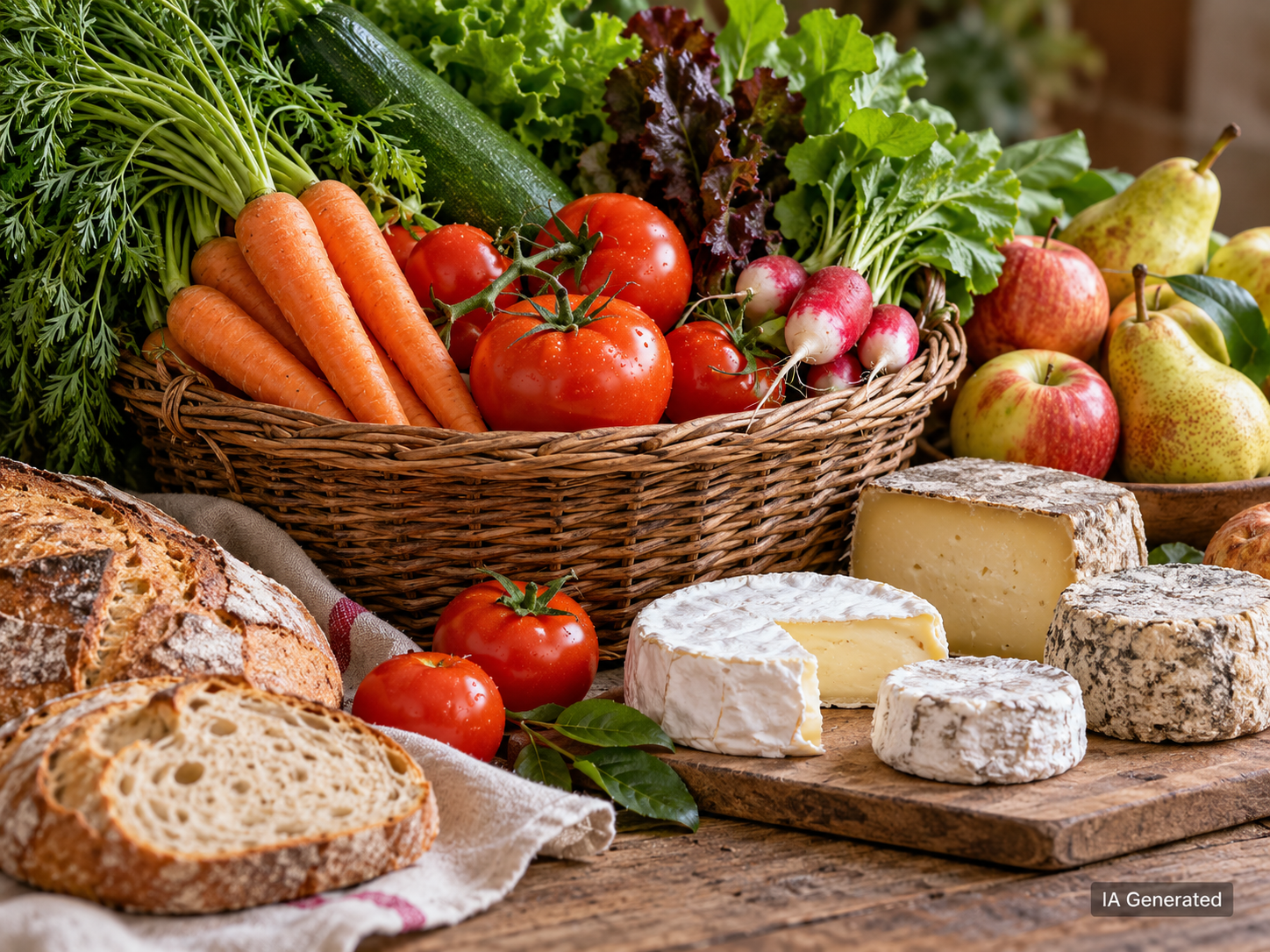
The food market is held on Wednesday and Saturday mornings, with the larger gathering on Saturday. It is a useful place to begin a day with local food shopping and a sense of everyday Épernay before the avenue becomes the focus.
Come before your cellar visit, carry a manageable bag and buy only what you can keep properly during the rest of the day. Allow time for breakfast or coffee rather than fitting the market into the last minutes before a reservation.
IA Generated — regional food illustration; not a photograph of a named restaurant, dish or market.
Match the market to your plans
Other market days
The town also lists a Wednesday-morning market at Place Fada N’Gourma and a Sunday-morning market at Place Auban-Moët. The Tuesday and Saturday market on Rue de la Poste is a textiles market, so do not confuse it with the main food hall.
Choose the location that fits your walking route and check holiday changes locally. A market visit works best when it has a purpose: picnic ingredients, a few regional purchases or simply time to browse.
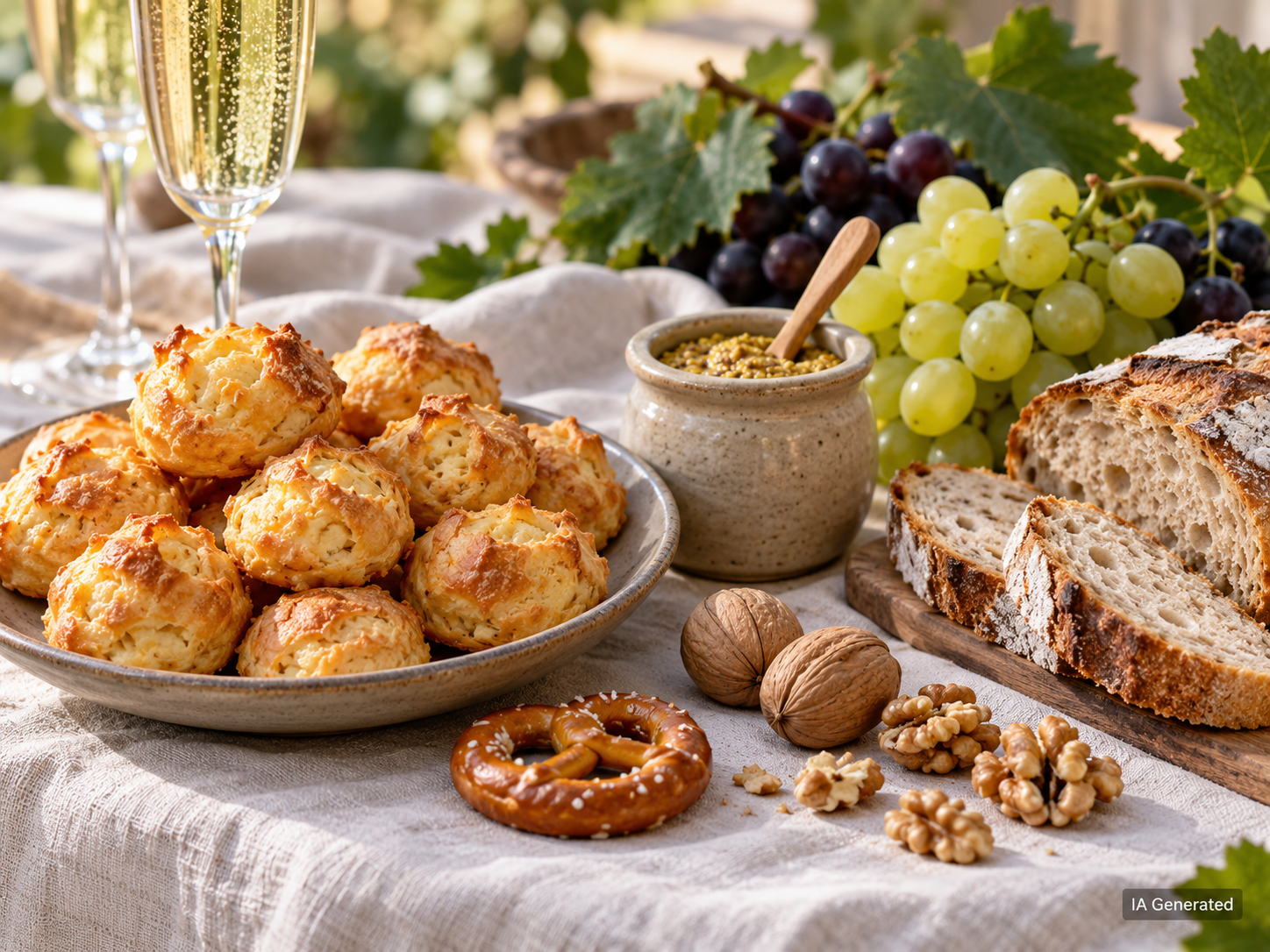
IA Generated — regional food illustration; not a photograph of a named restaurant, dish or market.
Traditional dining in a period setting
La Table Kobus
A central address with a dining room inspired by the brasserie atmosphere of the early twentieth century. It suits travellers who want a proper restaurant meal as part of the stay, with enough time to enjoy the setting rather than eat between two rushed appointments.
Reserve your table and confirm the service for your chosen day. If you already have several tastings planned, a relaxed lunch and a lighter evening may make more sense than another elaborate pairing menu.
IA Generated — regional food illustration; not a photograph of a named restaurant, dish or market.
A former bank in the centre
Brasserie La Banque
La Banque occupies a historic banking setting on Rue du Général-Leclerc. The surviving atmosphere of the building is part of the appeal, alongside a brasserie menu and a Champagne selection. It is a convenient option for a central evening.
Check the current menu and reserve for popular periods. Tell the restaurant about dietary needs when booking, and decide whether you want a quick meal or a longer dinner before choosing the service time.
IA Generated — regional food illustration; not a photograph of a named restaurant, dish or market.
A countryside dining excursion
Les Avisés, Avize
In Avize, Les Avisés offers a more deliberate dining destination associated with the Selosse family’s property. Its small restaurant makes advance planning important and fits best into a Côte des Blancs outing with transport already arranged.
This is outside Épernay, so include the return journey in the reservation plan. A restaurant booking should shape the surrounding day, with fewer village stops and enough margin to arrive comfortably.
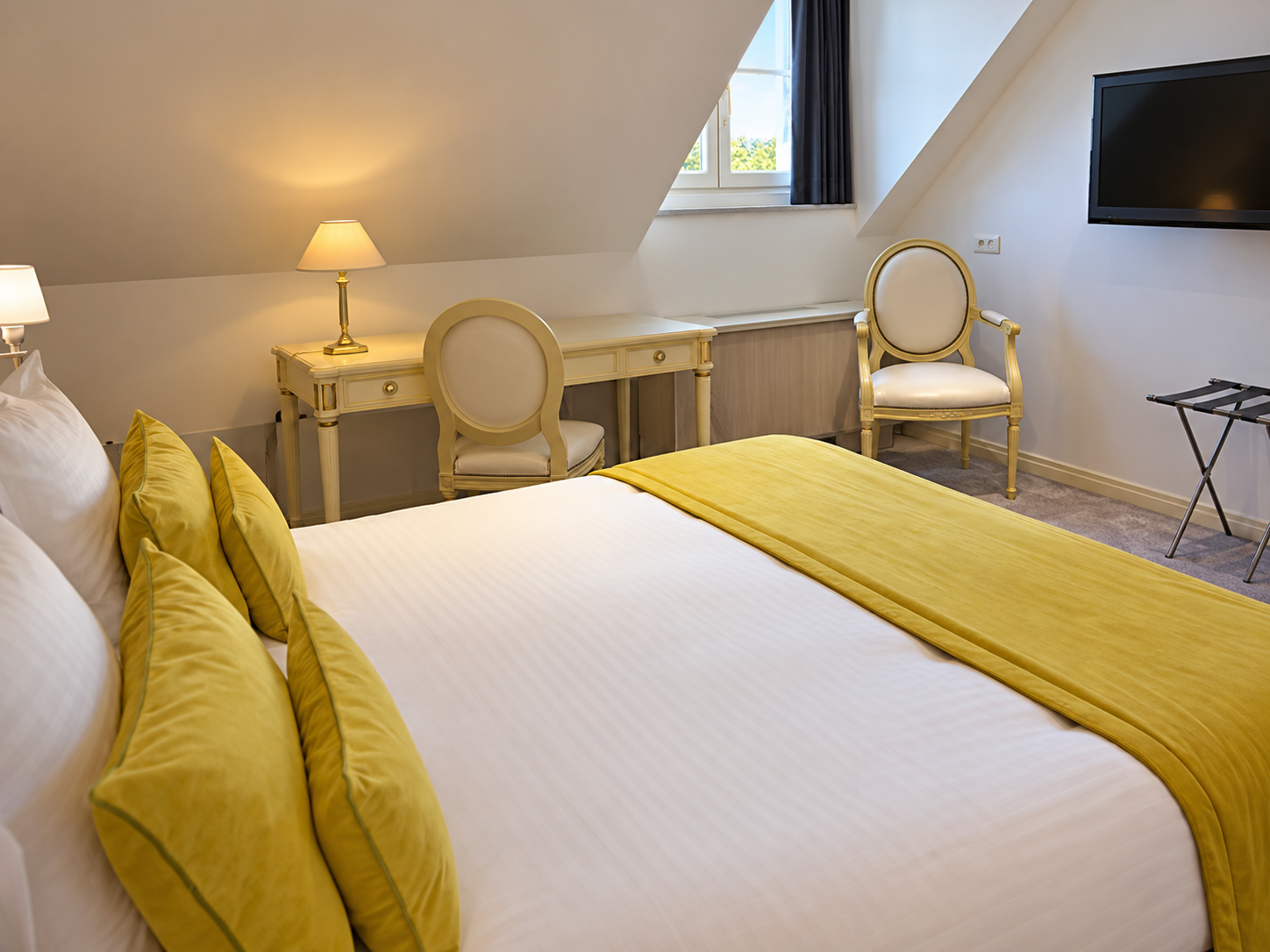
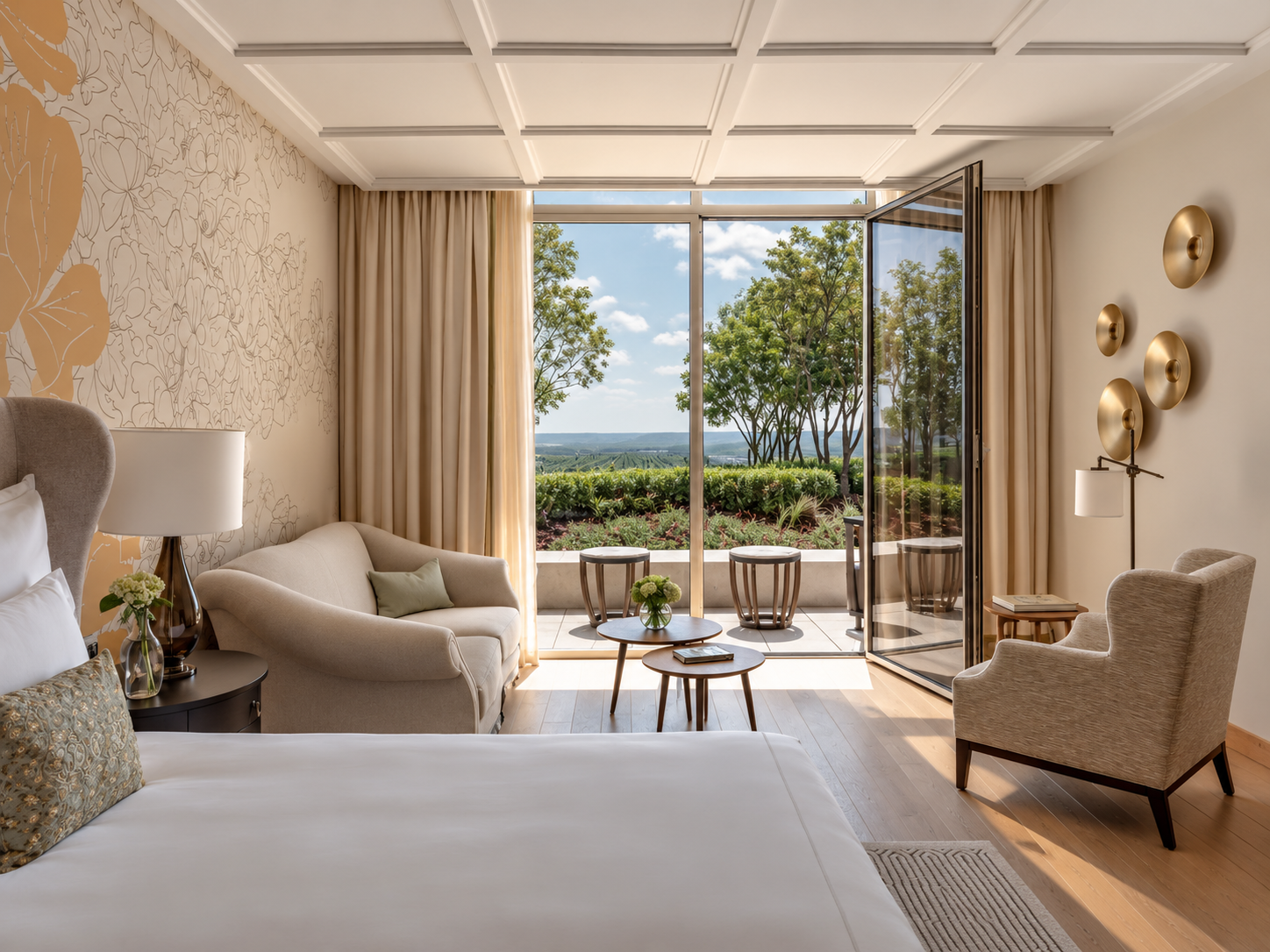
Three verified four- and five-star options offer different bases: a small central hotel, a historic house on the Avenue de Champagne, and a countryside spa hotel in Champillon. Compare the location and exact room category as carefully as the facilities.
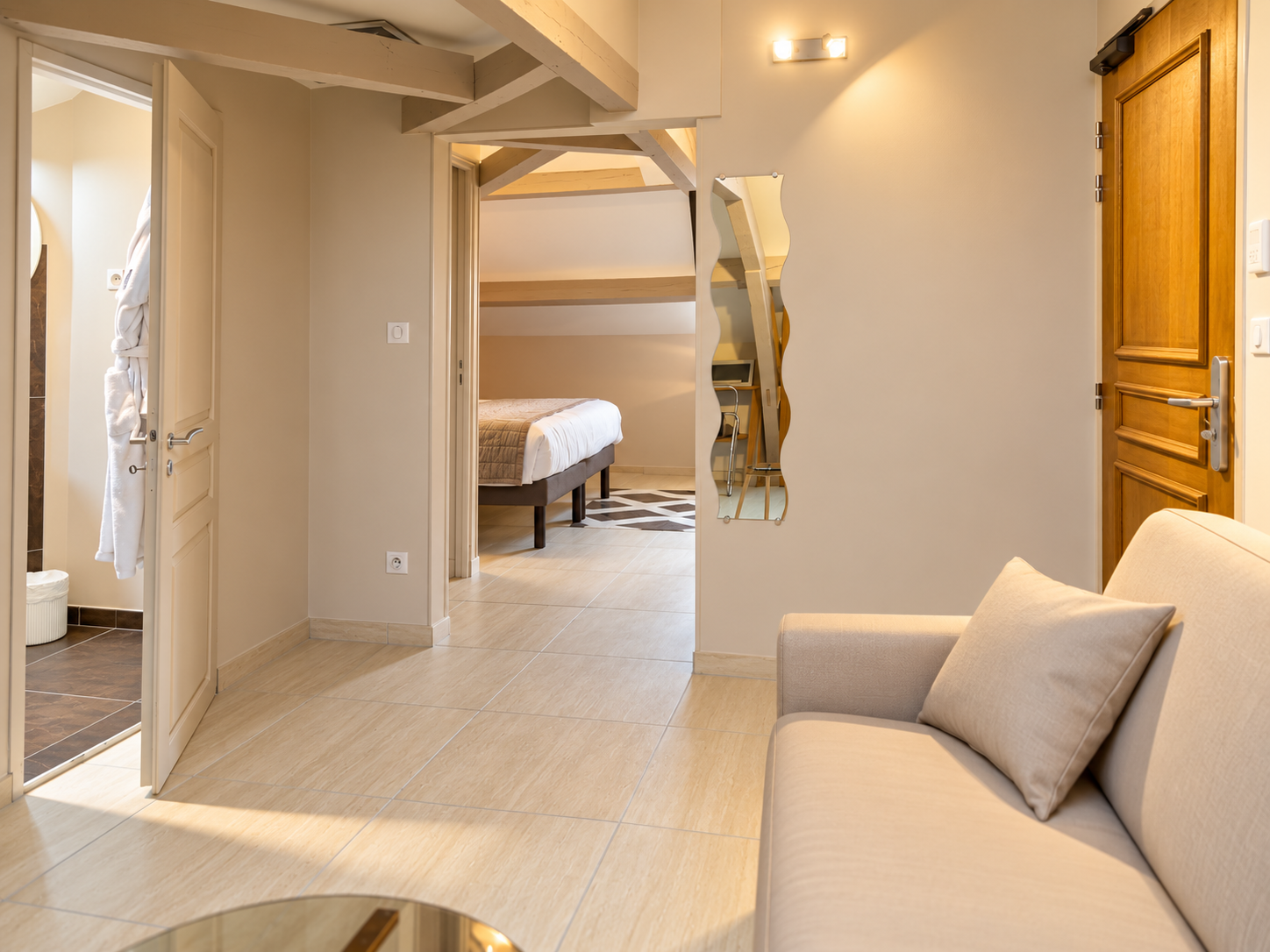
AI-generated photorealistic view.
4-star hotel · Rue Jean Moët · central Épernay
Hôtel Jean Moët
An intimate hotel with twelve rooms in a central historic house. Its scale and position suit travellers arriving by train who want restaurants and the start of the Avenue de Champagne within an easy walk.
Best for: A compact town stay with personal service and little need for a car.
Facilities: Air-conditioned rooms, a Champagne bar, lounges and breakfast beneath a glass roof.
Room layouts vary, including attic categories. The ground-floor Rehoboam room is intended for reduced-mobility guests; confirm the exact arrangement and any nearby parking needs directly.
5-star hotel · Avenue de Champagne · eastern end of the avenue
La Villa Eugène
A nineteenth-century house with a garden setting and individually styled rooms. It suits visitors who prefer a quieter return after touring the houses, with time set aside to enjoy the property.
Best for: A characterful stay combining Champagne visits and a relaxed hotel afternoon.
Facilities: Outdoor heated pool, orangerie, garden, jacuzzi and sauna; the latter facilities require reservation.
Confirm seasonal pool availability and the room’s size, floor and outlook. The hotel recommends restaurants in town for meals, so organise dinner and the return journey in advance.
5-star hotel · Champillon · countryside outside Épernay
Royal Champagne Hôtel & Spa
A contemporary luxury base overlooking the Champagne landscape, with rooms and suites designed around the setting. This is a destination hotel for travellers who want to spend substantial time at the property as well as exploring the region.
Best for: A longer or special-occasion stay with spa time and countryside views.
Facilities: Indoor and outdoor pools, spa treatment rooms, sauna, hammam, fitness facilities and dining options.
Champillon is a separate village, not a central Épernay address. Arrange transfers for tastings and dinners, and check spa access, treatment reservations and the precise view of your room.
Spring suits visitors who enjoy walking and quieter pauses between indoor visits. Keep a weather alternative for the viewpoint or villages, and bring layers: a bright afternoon above ground does not make the cellars warm.
Longer evenings
Summer
Long days allow an avenue walk, a booked visit and dinner without packing everything into the morning. Reserve the key experiences early for weekends, carry water for hillside walks and leave some hotel time during the warmest part of the day.
A working landscape
Harvest & autumn
The harvest period varies from year to year. It can be an interesting time to see the countryside, but producers are working and visits may be limited. Never assume you can enter vineyard rows or join harvest activity without an organised invitation.
Choose the indoor anchors
Winter
A winter stay can focus on museums, restaurants and confirmed cellar appointments. Check seasonal closures and daylight before planning village walks. Book the experiences you most want first, then choose accommodation and transport around the actual opening calendar.
How Long to Spend
One full day is enough for an avenue walk, one substantial visit and a relaxed meal. Choose either the museum or a second experience according to your interests, and keep the balloon as an optional addition if it is operating.
Two or three nights allow a more balanced stay: a town day, a village outing and time to enjoy your hotel. If you are also visiting Reims, decide whether one base or a split stay will reduce transfers for your particular reservations.
Getting There
A practical car-free base
Arriving by train
Épernay has a central railway station with services from Paris-Est and connections with Reims. Check the live timetable and the exact station on each ticket; Champagne-Ardenne TGV, Reims Centre and Épernay are different stations.
For a town-focused stay, walk from the station or arrange a short hotel transfer with luggage. Do not book a cellar tour immediately after your train’s scheduled arrival: a little margin makes the whole day more comfortable.
A car is most useful when your programme includes several villages or a countryside hotel. Ask the hotel for its arrival and parking instructions before entering central streets, then leave the car parked for the town day.
Plan tasting days with a designated non-drinking driver or pre-booked transport. The convenience of having a car should not decide how many tastings you schedule.
The local bus network serves several nearby villages, and seasonal tourism shuttles are also advertised. Check the current route, operating dates and return service before relying on them for a booked appointment.
For independent village visits, a pre-arranged transfer can be simpler than hoping to find a taxi afterwards. Cyclists should choose a suitable marked route and account for hills, weather and tasting plans.
The municipal Jard and Centre-ville car parks are useful options for leaving the car while exploring on foot. Their vehicle-entry hours differ from exit availability, so check the official page if arriving late. Confirm height limits and EV charging compatibility before choosing a covered car park.
Épernay’s red street-parking zone is intended for short stays, while the green zone allows longer parking. Blue-disc areas have their own signed limits. Read the signs where you actually park; a quiet street or Sunday visit does not establish the rules for every space.
If using a municipal day or multi-day package, the town says it must be arranged at arrival or beforehand. Hotel parking may offer a simpler solution, but verify availability, access and any charge directly rather than assuming it is included.
Hautvillers is a rewarding village outing associated with Dom Pérignon. Plan a walk through the village and its surroundings, with any producer visit booked separately. The tourism office explicitly notes that the abbey itself is not open for visits; do not build an itinerary around entering the private complex.
Allow time to enjoy the setting instead of combining it with several distant villages. Confirm transport both ways before leaving Épernay.
Pressoria uses an interactive, sensory approach to explain the landscape and wine-making process. It offers a useful contrast with a cellar tour and can suit a group with different levels of interest in wine.
Combine the visit with a village walk and lunch, checking the opening calendar first. Avoid assuming that every Champagne-related attraction is open on the same weekday.
Avize gives a different perspective on the vineyard landscape. The Parc Vix nature stop offers views and an educational setting, and a booked meal or producer appointment can provide a clear focus for the outing.
Choose a small number of places and enjoy the route between them. Country roads, village parking and appointments make a long list of stops less realistic than it looks on a map.
Start with the centre and the Avenue de Champagne, then take one pre-booked cellar tour. Have lunch without a tight connection afterwards. Spend the afternoon at Château Perrier or exploring the town’s heritage, depending on the opening calendar.
If the balloon is operating and the timing works, add it as a bonus. Leave a generous interval before your train or dinner, especially if collecting luggage from a hotel.
A balanced first stay
Two days · town & a village
Use day one for the main Épernay sights, a cellar visit and dinner. On day two, choose Hautvillers for a village-and-landscape focus or Aÿ for Pressoria and another view of Champagne culture.
Organise that second day around one confirmed appointment and reliable transport. Keeping one base works well when the return journey is planned before you leave.
Time for the hotel too
Three days · add the countryside
Add a Côte des Blancs outing, a carefully chosen producer visit or a longer countryside lunch. Keep part of a day free for a walk, the market or hotel facilities rather than adding a third sequence of cellar tours.
If continuing to Reims, consider visiting it on the onward journey. The right order depends on train times, hotel location and the reservations that matter most to you.
Accessibility & Practical Advice
Reservations: choose the language, format and tasting inclusions of each experience. Keep booking confirmations available offline, and contact the venue directly about mobility requirements, children or non-alcoholic alternatives.
Accessibility: a walkable town does not mean every cellar, garden or historic room is step-free. Confirm the complete route from arrival point to visit, toilet and departure; accessible arrangements can depend on a particular entrance or advance notice.
Clothing and luggage: bring a warm layer for cellars and comfortable shoes for town walks. Keep larger bags at the hotel where possible. For vineyard outings, add weather protection and enough water rather than relying on finding a shop at each stop.
Buying bottles: consider how you will carry purchases on the rest of your trip. Ask the producer about packaging or shipping, check your own transport and import rules, and avoid leaving bottles in a hot car.
FWP Insider Advice
Choose one visit that teaches you something, then give the rest of the day variety. A museum, a village walk and a good meal often create a richer memory than several similar tastings in succession.
Select accommodation by how you want to spend the evening. Central Épernay suits walking to dinner; a countryside hotel suits a slower stay with planned transfers and time to use its facilities.
Do not confuse a famous name with a complete itinerary. Check the actual visit content, the available language and the travel between bookings. A modest programme that works comfortably is better value than an ambitious list that leaves no time to enjoy the place.
Frequently Asked Questions
How long should I stay in Épernay?
Allow one full day for a first introduction, or two to three nights for the town, a village outing and a more relaxed hotel stay.
Can I visit Épernay without a car?
Yes for the central sights and major avenue visits. For countryside outings, check current buses or arrange transfers before booking appointments.
Should I stay in Reims or Épernay?
Choose Épernay for a concentrated Champagne-house and vineyard stay; Reims adds a broader city heritage programme. Match the base to your reservations and preferred evenings.
Do Champagne cellars need booking?
Advance booking is strongly recommended. Confirm the visit language, tasting format and accessibility arrangements directly with the house.
Is Épernay worthwhile if I do not drink?
Yes. The museum, architecture, gardens, heritage stops and countryside provide alternatives. Ask each experience about non-alcoholic options rather than assuming they are included.
What should I wear for a cellar visit?
Comfortable shoes and a warm layer are sensible even on a sunny day. Ask the operator about stairs or other route requirements if needed.
Can I rely on the balloon for a fixed time?
No. Flights depend on operating conditions; call the operator on the day and keep it optional within your programme.
Plan Your Stay
France. Well Planned.
Plan Épernay around the experiences you want to remember.
We plan. You choose. You book.
We help you choose the right base, balance cellar visits with countryside time and organise a Champagne stay with clear transport and booking arrangements.
Last reviewed: 4 October 2026. Practical information, schedules and services may change. Use the linked operators to confirm your dates. Travel times in this guide are planning estimates, not timetables.
Destination imagery is an AI-generated editorial illustration. Hotel images are AI-generated photorealistic views based on real official reference photographs and are labelled accordingly. They illustrate atmosphere and do not guarantee a particular room, view or current furnishing. Confirm these details directly with the hotel.