Best forVillage life & foodBasque houses, producers and foothill scenery
Ideal stay2–3 nightsAdd a night for both La Rhune and the caves
Choose a baseOne villageEnjoy the quieter hours before day visitors arrive
Getting aroundCar or planned transfersCheck each bus connection and return separately
Espelette, Ainhoa and Sare share whitewashed houses, coloured shutters and green surroundings, yet each rewards a different kind of visit. Espelette is the natural starting point for pepper producers and food shopping. Ainhoa reveals its history along a distinctive village street. Sare offers a lively centre, heritage walks and access to caves and mountain scenery.
The best way to connect them is to choose one or two substantial visits each day. A producer appointment, a good lunch and a village walk already make a satisfying programme. La Rhune and the Grottes de Sare deserve their own blocks of time, including the approach, parking and required arrival margin.
Stay inland if village evenings and slow breakfasts appeal. A coastal base also works for a day trip, but trying to visit all three villages, take the mountain train and tour the caves in one day leaves little time for any of them. Two to three nights gives the area a more comfortable rhythm, with an extra night useful for walkers.
Where to Go & What to See
Destination image from the FWP collection.
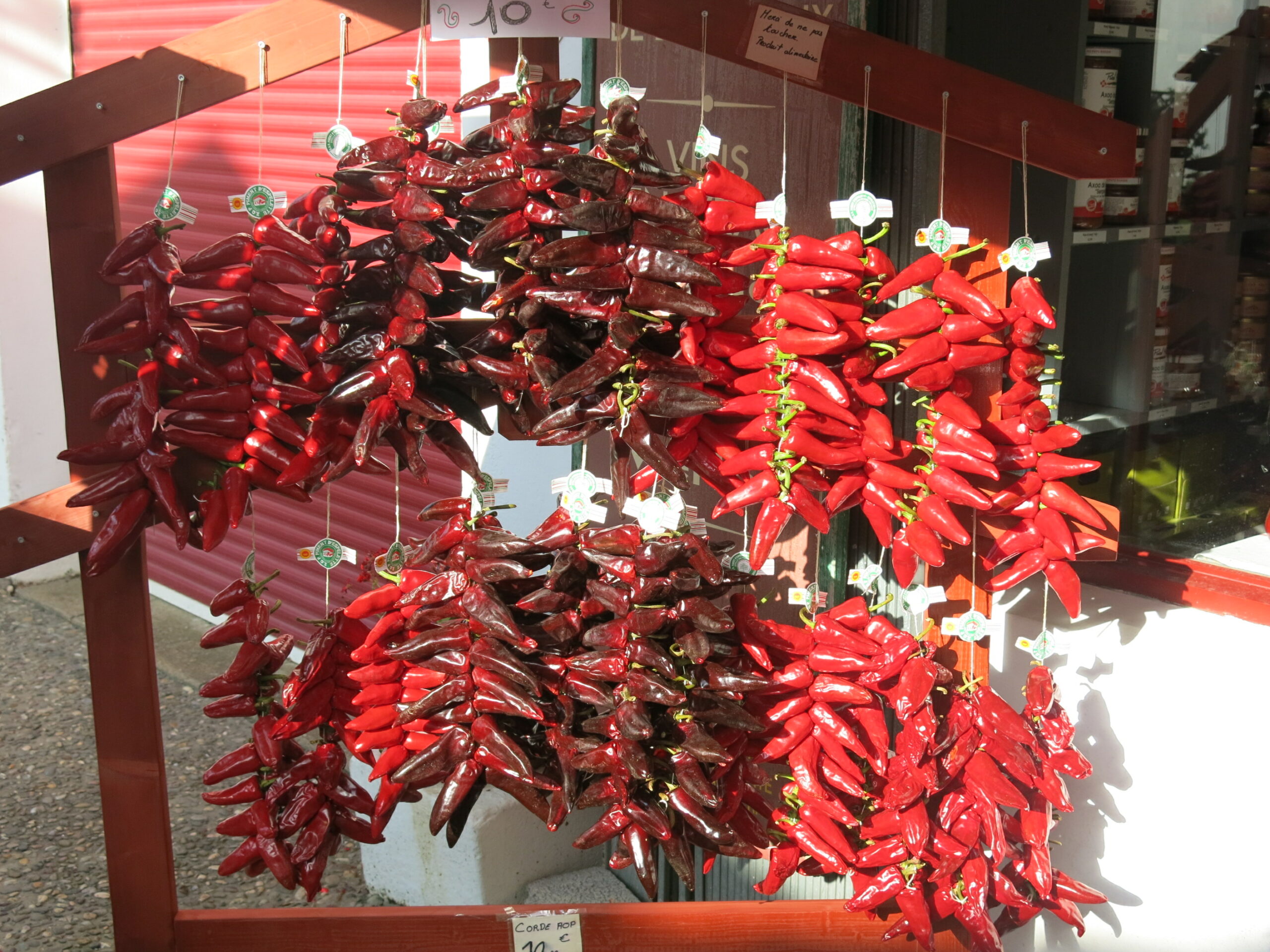
Pepper façades and a working food culture
Espelette village
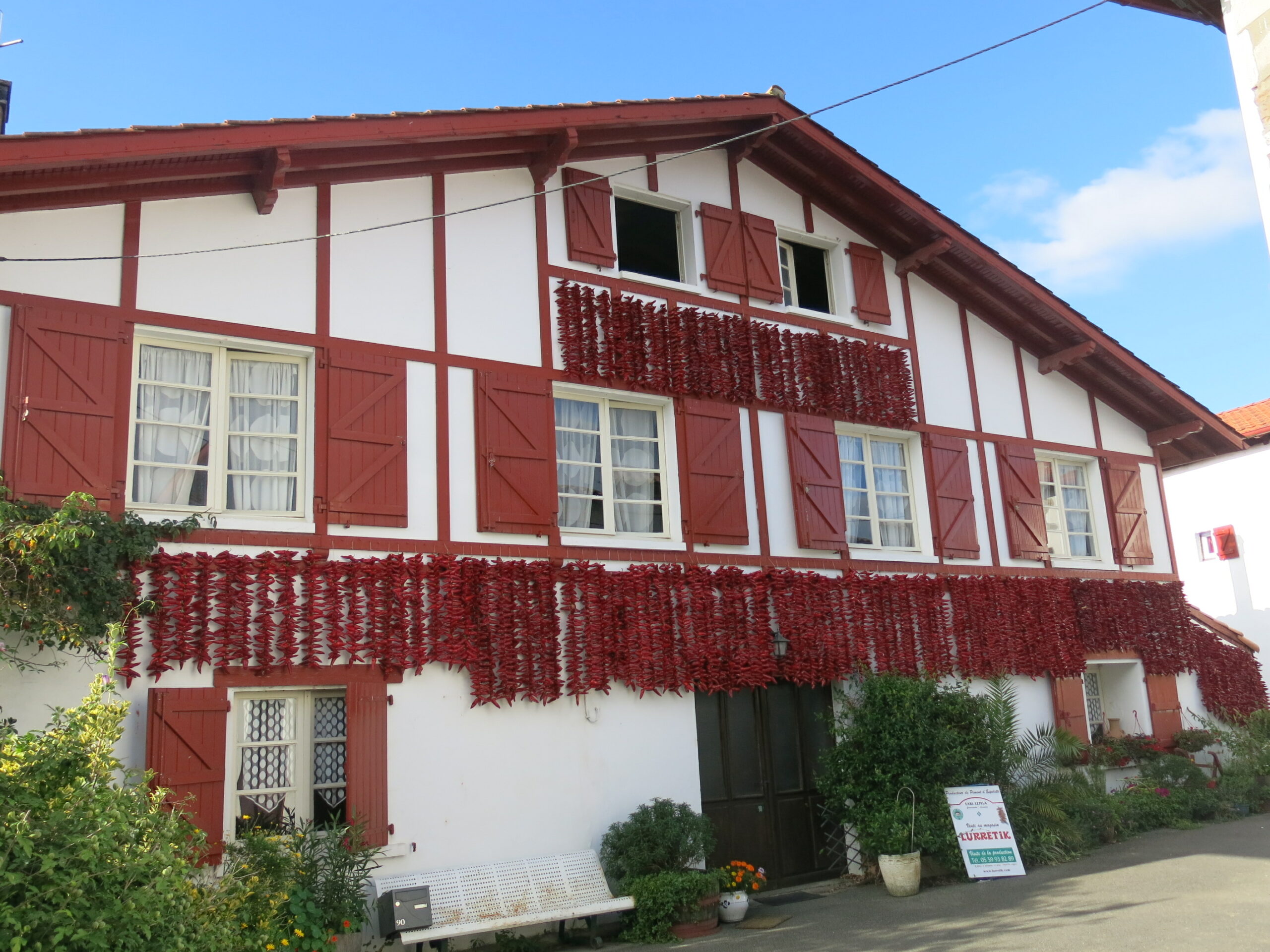
Explore the pedestrian centre on foot, looking beyond the strings of peppers to the houses, small streets and shops. The former castle of the Ezpeleta family, with its surviving tower, now accommodates civic and visitor services. Use the tourism office as a starting point for the village and surrounding producers.
Espelette is most interesting when shopping becomes a conversation. Ask where a product was grown or made, and distinguish the protected pepper itself from sauces, preserves and other recipes that contain it. A visit to the AOP interpretation centre or a producer adds useful context to the colourful façades.
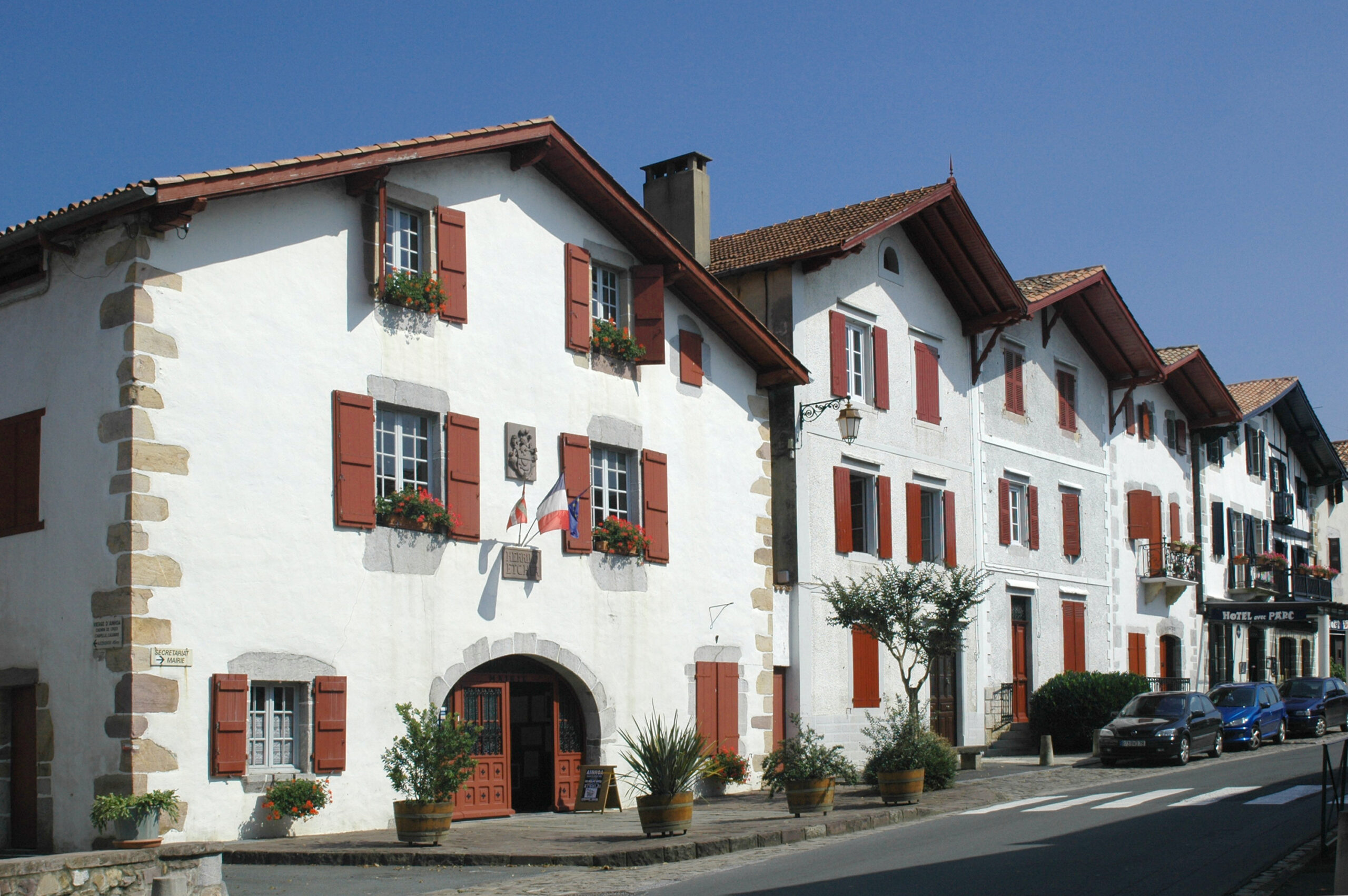
Ainhoa’s main street forms the heart of this former bastide settlement. Walk slowly past the traditional houses, looking at carved door lintels and the relationship between the façades, church and village spaces. The tourism office’s heritage presentation can help turn a short walk into a more informed visit.
The church and its wooden galleries are part of a living place of worship. Enter when visiting is possible, allowing for services and ceremonies. Ainhoa is compact enough for an unhurried introduction, but a restaurant lunch or the climb towards the chapel can easily make it the focus of a longer day.
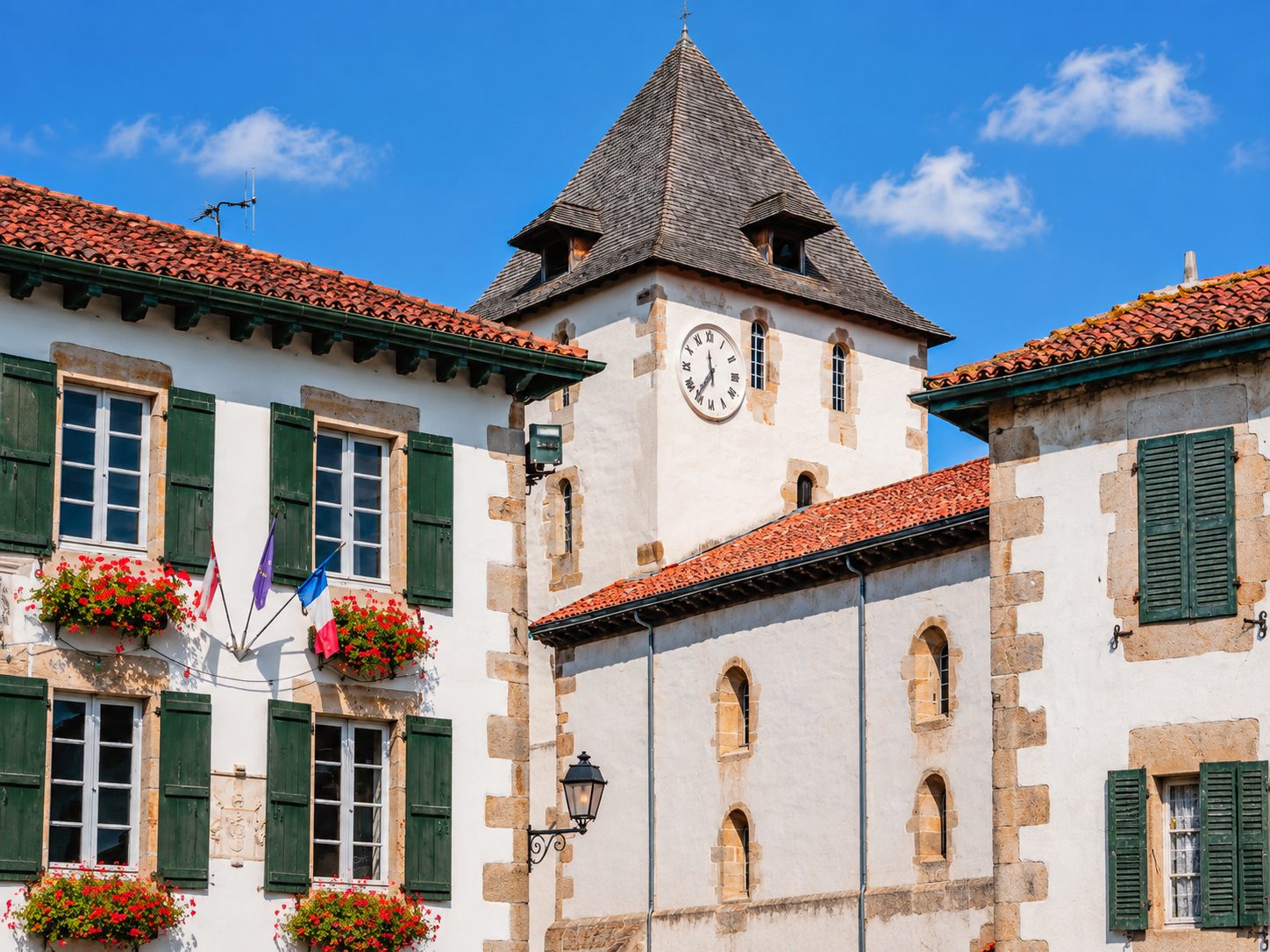
Sare sits beneath the foothills of La Rhune, Axuria and Ibanteli. Its centre brings together the church, traditional houses and the fronton, the wall used for Basque pelota. Notice how everyday village life and the surrounding countryside meet, rather than treating the square as a quick photographic stop.
Ask the tourism office about heritage walks and the older paths linking neighbourhoods. Some routes extend well beyond the centre and require proper walking preparation. The village, caves and mountain railway are separate stops: arriving in Sare does not mean you have reached either attraction’s entrance.
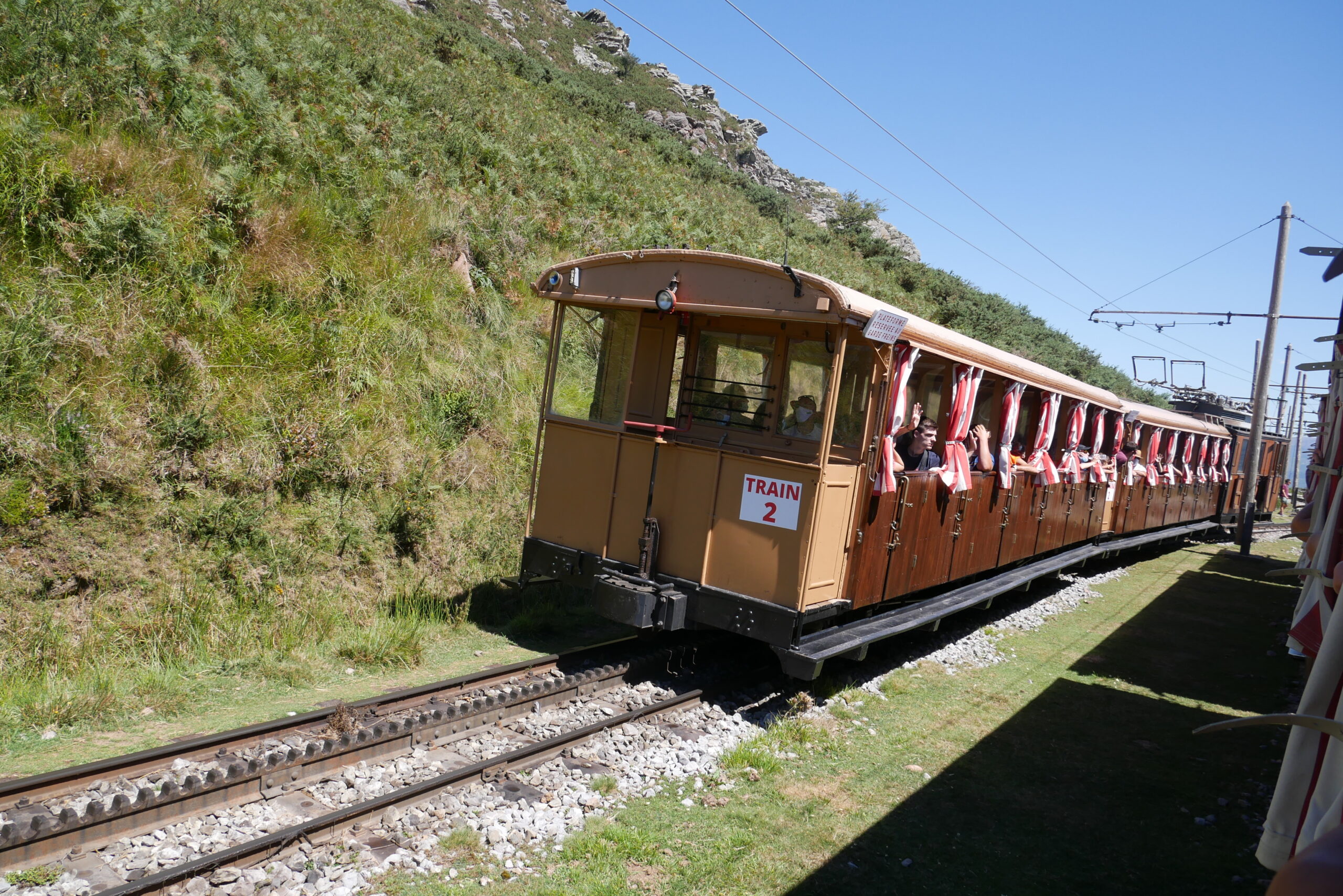
The rack railway climbs from the Col de Saint-Ignace through the Basque foothills towards the summit of La Rhune. Choose a day with a useful visibility forecast and take a warm layer even when the villages feel mild. Mountain weather can change the experience dramatically.
Book through the official operator and arrive around 30 minutes before departure. The normal round-trip excursion occupies roughly two and a half hours, but use the return time on your own ticket. An ascent-only ticket is not offered; descent-only tickets sold at the summit depend on availability, so a hike up must never rely on a guaranteed train down.
A guided underground visit and a wider heritage site
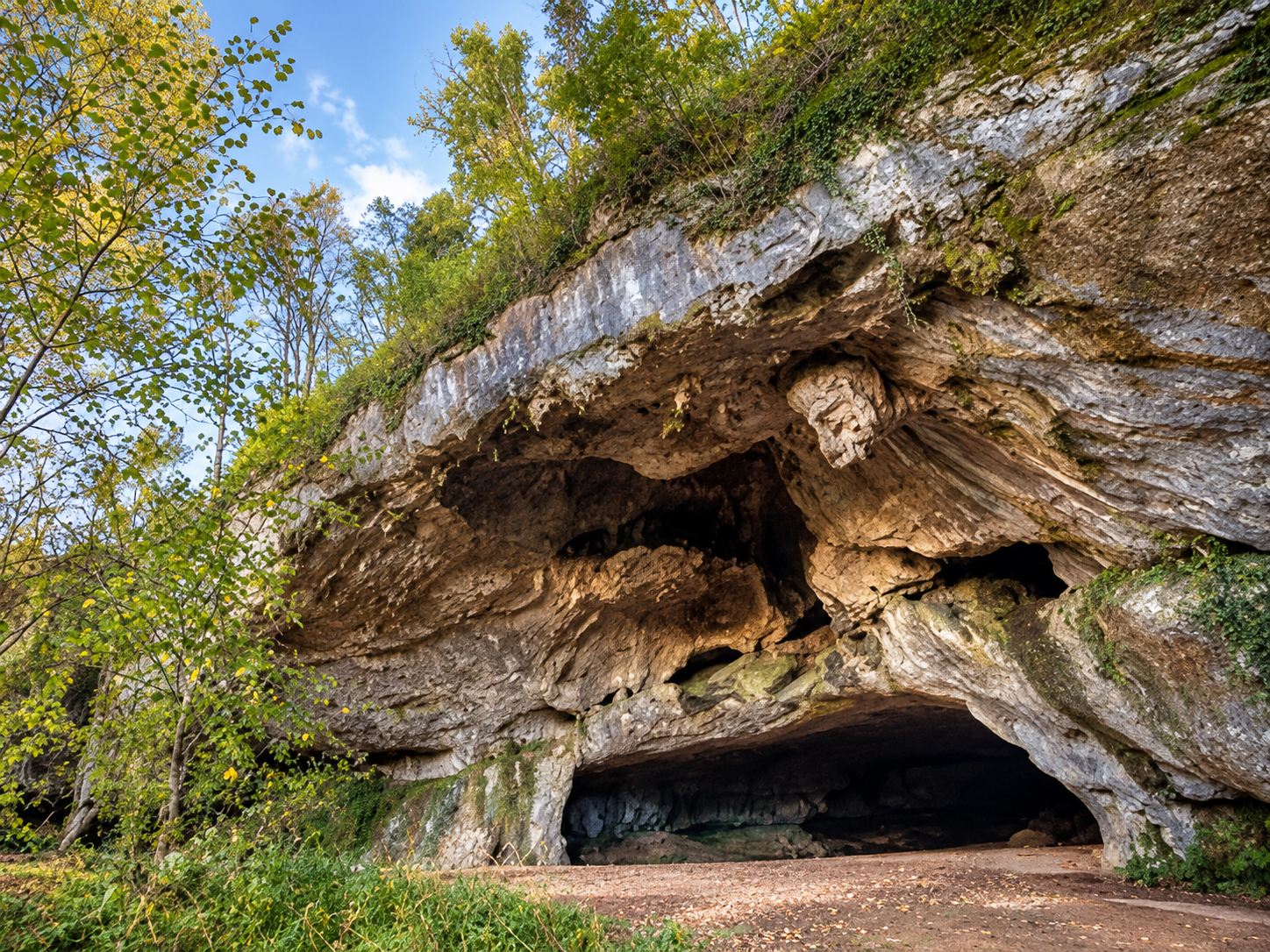
Grottes de Sare
The guided tour through the Lezea cave lasts about an hour, with a museum and megalithic park adding context above ground. Reserve a suitable slot and arrive 20 minutes early. Leave time before or after the tour for the rest of the site rather than planning another fixed appointment immediately afterwards.
The regular route covers about 900 metres on two levels, with steps. A partial lower-level visit may be arranged for visitors with reduced mobility by contacting the team at least two days ahead. Pets, pushchairs, photography and video are not allowed inside. Check special closures as well as the seasonal timetable.
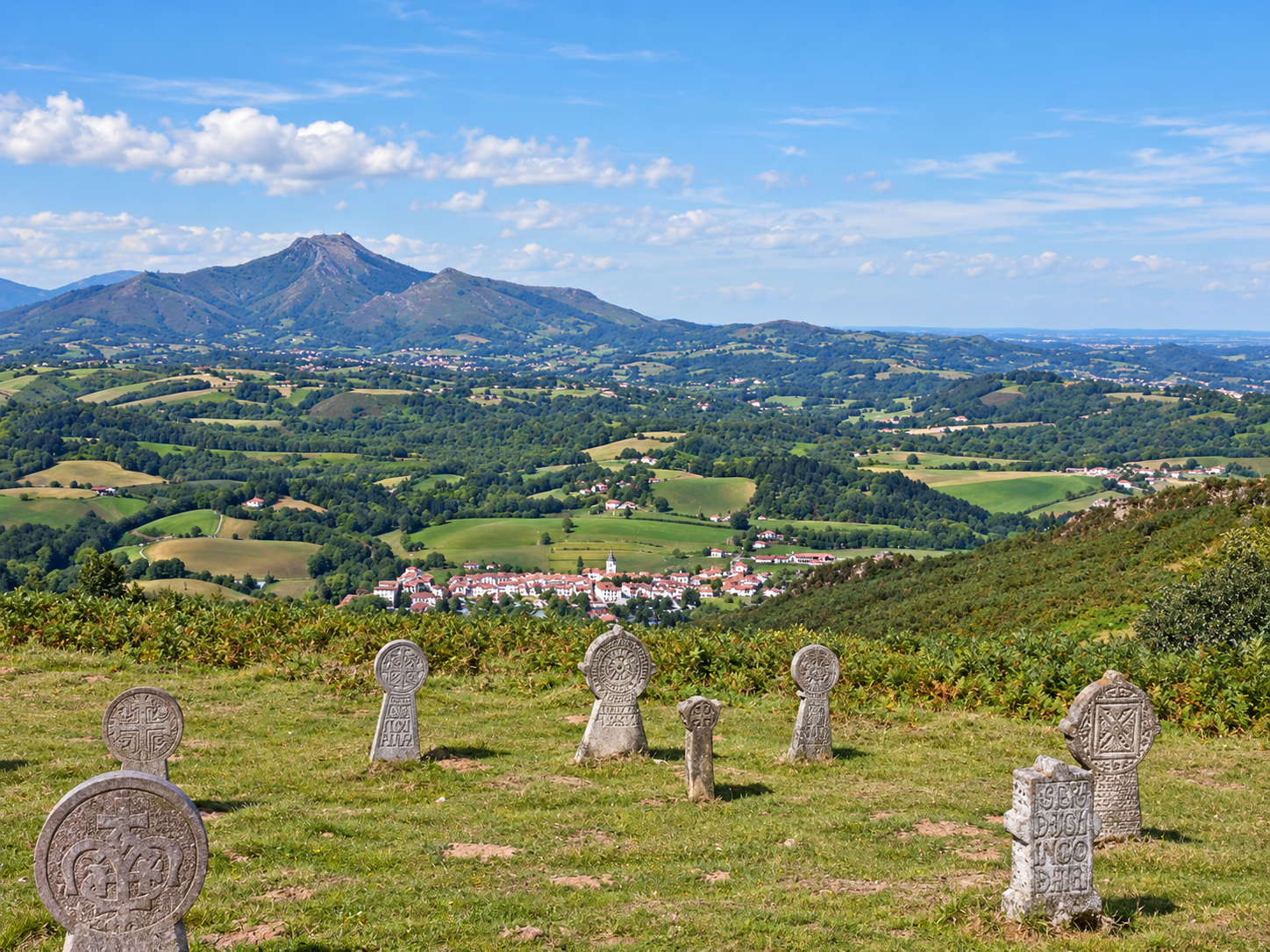
The chapel of Notre-Dame-de-l’Aubépine, also called Aranzazu, stands on the slopes above Ainhoa. The setting includes crosses and disc-shaped stelae, with views across the village and surrounding hills. The illustration shows the viewpoint beside the chapel, rather than the chapel building itself.
Allow approximately 45 minutes to one hour for the ascent, plus the descent and time at the top. This is a steep walk, not a flat village extension. Wear suitable shoes, take water and choose the outing for the conditions and your group’s ability. Turn back if weather or footing makes continuing uncomfortable.
Begin at ETXEA, the AOP pepper interpretation centre in Espelette, for an introduction to the growing area, production and protected designation. Entry is free, with a short film and tasting among the visitor features. The centre is seasonal and closes from December through February, so check its current calendar.
A producer visit offers a different perspective. L’Atelier du Piment runs visits and tastings, with the format changing through the year: indoor and video interpretation in early spring, and farm or production visits from May. Ask what will actually be available on your date rather than expecting peppers in the fields in every season.
Choose Ainhoa or Sare for a walk that concentrates on architecture and village life. Look at timberwork, stone surrounds, dated lintels and the scale of the central square. A guided visit can explain details that are easy to miss when simply following the prettiest street.
Ask about the current heritage programme, artisan visits and pelota events without assuming a workshop or match takes place daily. The blue-pottok route connects villages across the Xareta area, including the Spanish side of the border, but the complete circuit is a substantial walk rather than a short town-centre stroll.
For a first stay, select a route that fits the day’s weather, daylight and walking experience. The climb above Ainhoa makes a clear goal for confident walkers; shorter village paths provide a gentler alternative. Obtain current route information locally and allow time to return before dinner.
Keep dogs controlled around livestock and leave gates as you find them. Pottoks and sheep are part of a working mountain landscape, not animals to approach for a photograph. If cloud or wind makes the higher ground unappealing, use the day for producers, heritage visits and a long lunch.
Espelette’s weekly market takes place on Wednesday morning, from 8 am to 12.30 pm according to the municipality. Food stalls use the covered market, while other traders occupy the outdoor market area. Arrive early enough to browse before lunch and keep the afternoon lighter if you plan several tastings.
Sare has a Thursday-morning market from May to September according to the regional tourism office. Treat this as a seasonal appointment and confirm local changes around holidays or events. A market morning can pair naturally with the village centre, while the caves are better visited with their own reserved slot.
The pepper is the obvious starting point, but look also for regional cheeses, charcuterie and Basque cakes. Ask the vendor about origin, storage and serving. The words “Basque” and “local” do not necessarily tell you where every ingredient was produced; a conversation often reveals more than a decorative label.
ETXEA explains the protected designation, while farm visits connect the product to its growing and processing cycle. Book groups according to the producer’s conditions and check the language of the visit. Carry chilled purchases appropriately, especially if a mountain outing or cave tour comes later in the day.
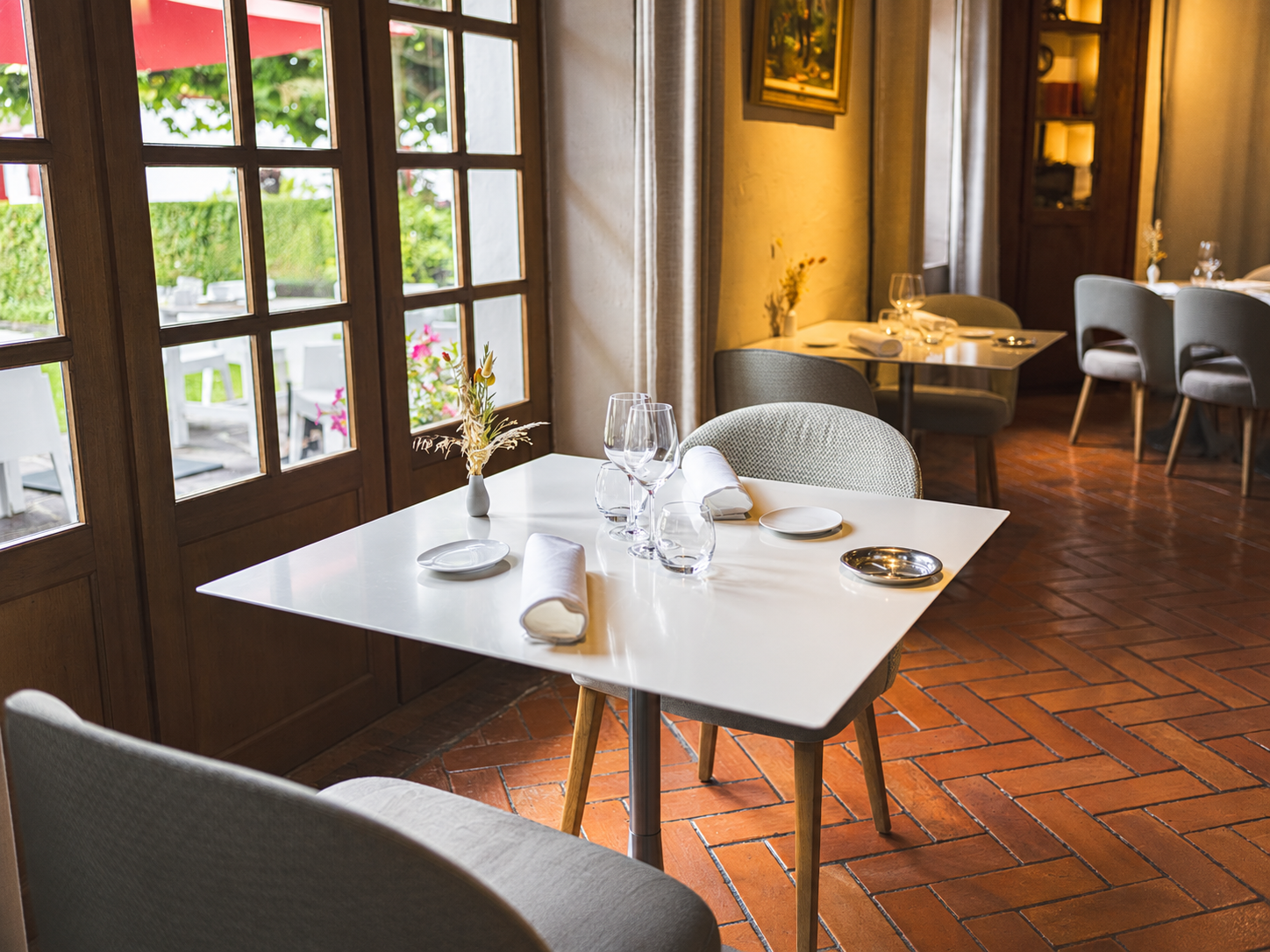
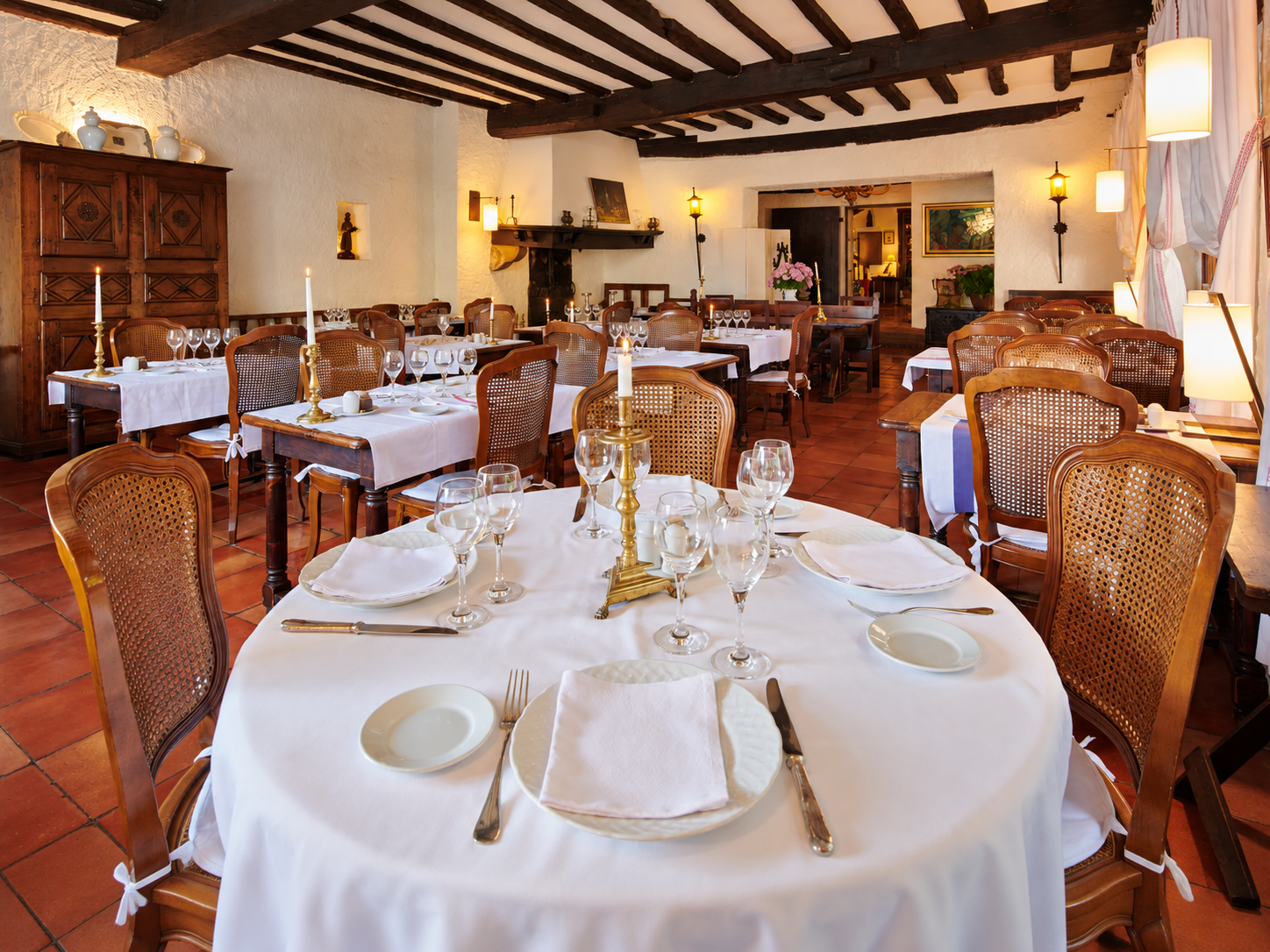
These three tables create a useful choice across the villages: generous regional cooking in Espelette, a destination restaurant in Ainhoa and an intimate hotel table in Sare. Reserve directly, mention dietary needs in advance and confirm the service you want. Weekly closing days and seasonal breaks can shape the itinerary.
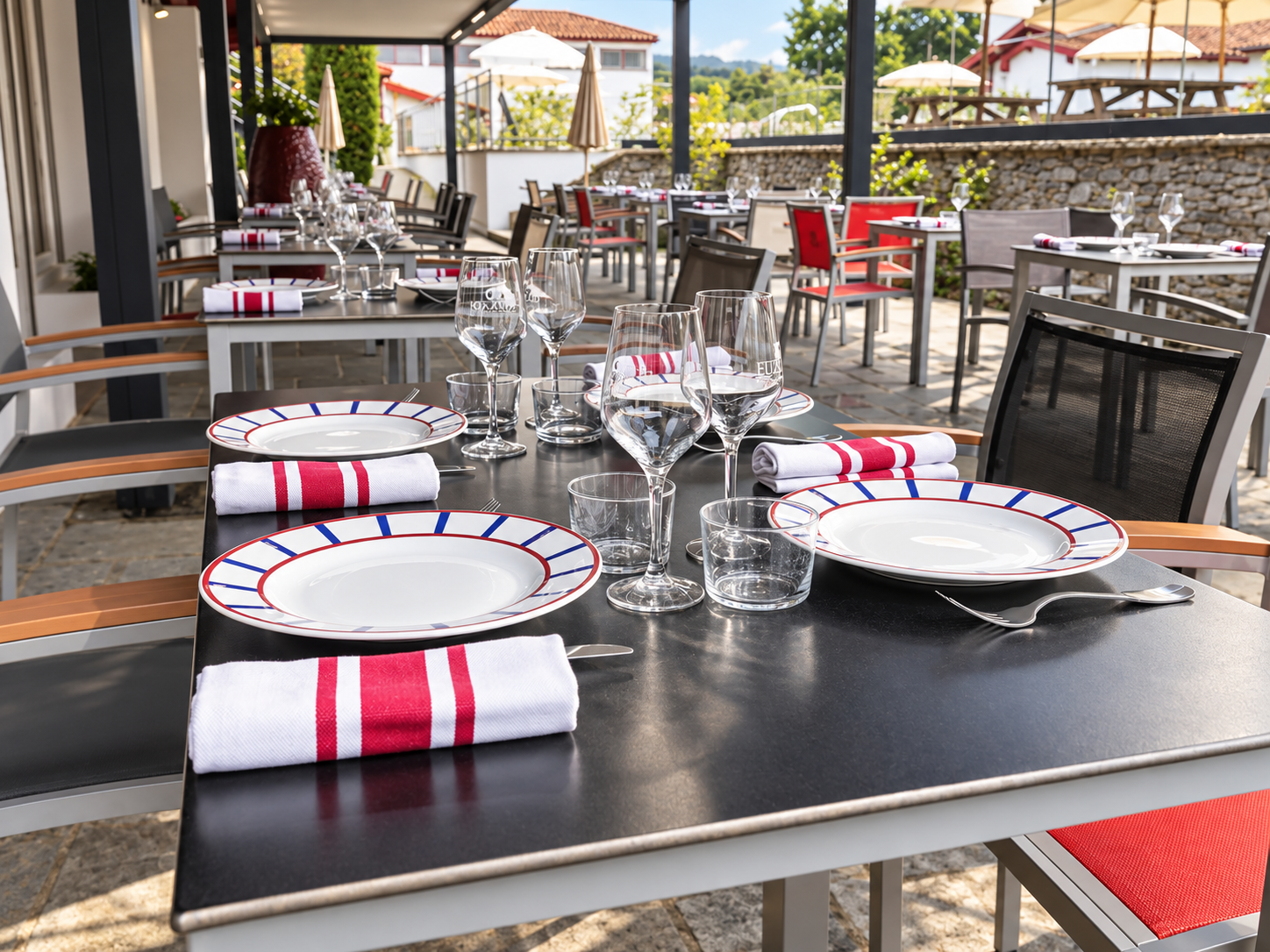
AI-generated photorealistic view.
Espelette · Generous Basque cooking
Restaurant Euzkadi
Euzkadi makes a natural meal stop in the village, with a long family history and a menu rooted in regional produce. Choose it when you want lunch or dinner to be a substantial part of the day. Its terrace offers an outdoor setting in suitable weather, while the restaurant also has indoor dining.
The published timetable includes several weekly closures and annual breaks. Check the current service before arranging a market visit or late arrival around it. Ask about the day’s dishes and portions; a generous traditional meal may call for a lighter programme of tastings afterwards.
Ithurria’s restaurant combines a Basque family tradition with the cooking and pastry work of the younger generation, Martin and Louis. Reserve time to enjoy the meal rather than fitting it between two fixed attractions. It suits a stay in which food is one of the main reasons for travelling inland.
The gastronomic restaurant and the more casual bistrot are distinct offerings. Confirm which table, menu and service you are booking, particularly when looking for a simpler lunch. The restaurant has weekly closures, and seasonal arrangements may change; ask directly rather than assuming the hotel’s opening guarantees dinner.
Arraya’s restaurant sits within the historic house on Sare’s village square. It works well as the centrepiece of an evening in the village, or as a reserved lunch when the current schedule allows. The atmosphere is intimate, making an unhurried meal more rewarding than a hurried stop between outings.
Check the hotel’s current restaurant calendar for lunch and dinner services. Reserve ahead and confirm any seasonal closure, even if staying elsewhere in the village. The illustration interprets a reference view of the dining room; the exact table arrangement and seasonal menu can change.
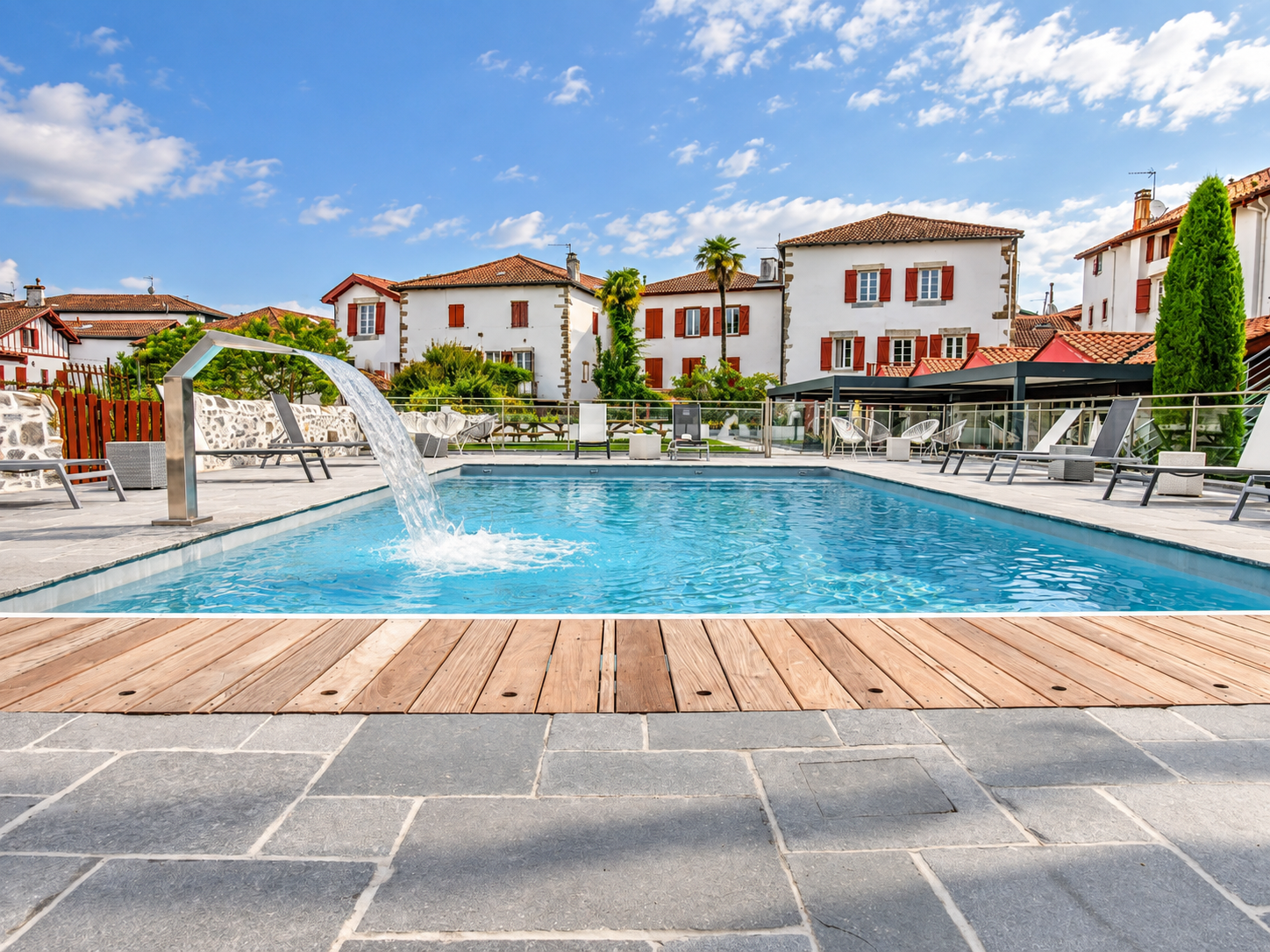
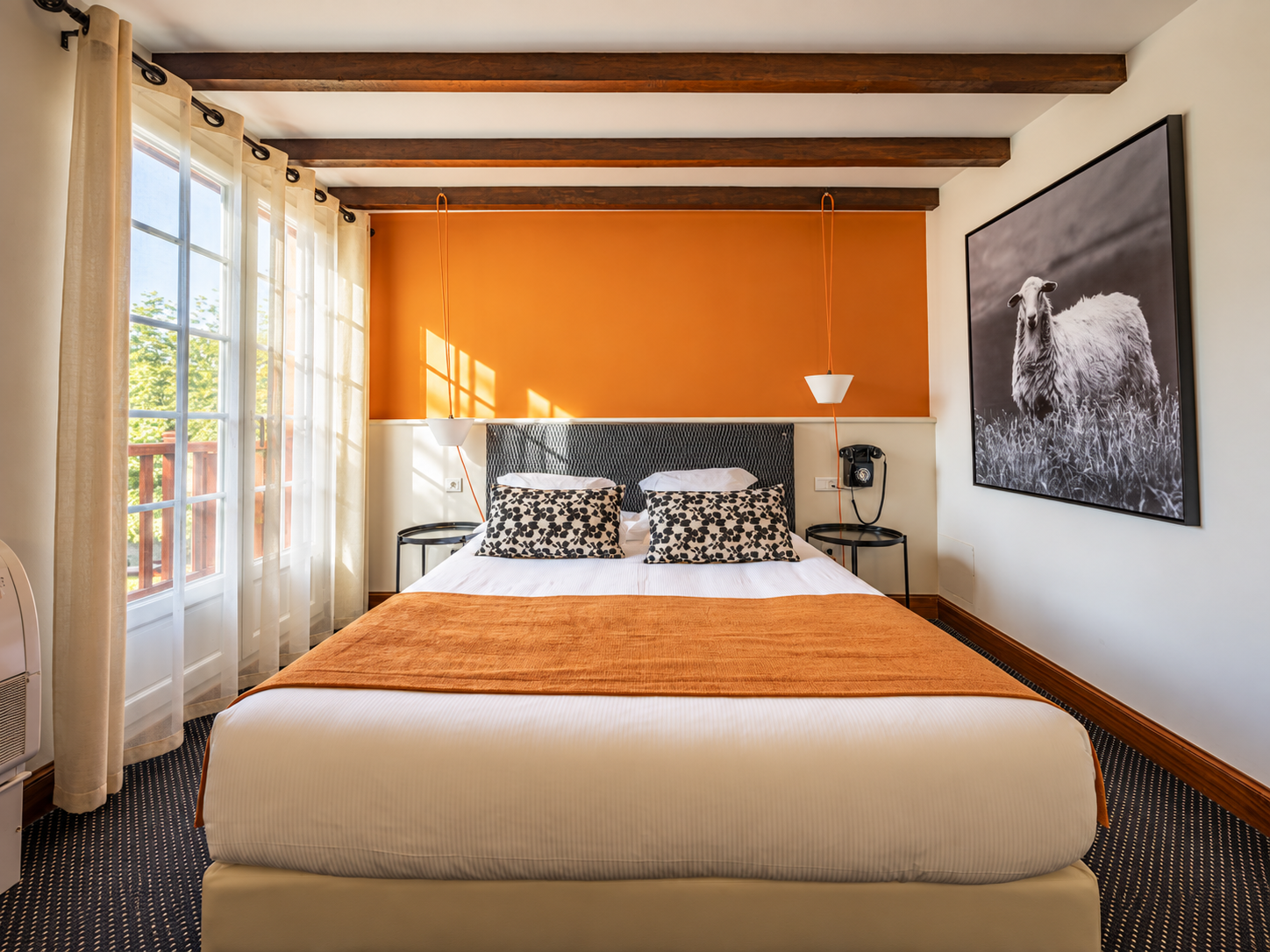
Choose the village that best matches your planned evenings. Staying in one base avoids repeated packing and gives time to enjoy the centre before and after the busiest visiting hours. These hotel selections cover three different settings; check the exact room category, access and seasonal facilities directly.
AI-generated photorealistic view.
3-star hotel · Central Espelette
Hôtel Euzkadi
Euzkadi has 27 rooms across two buildings, with a garden and pool offering space beyond the village streets. Its family history reaches back to 1873. It is a convenient choice when food shopping, producer visits and meals in Espelette are central to the stay.
Private parking is accessed by code, so obtain the arrival instructions before reaching the centre. Confirm check-in arrangements if arriving late, and ask which building and room you are reserving. The pool and grounds complement a touring stay, but check their seasonal availability rather than relying on the summer illustration.
Ithurria offers 26 rooms in a house shaped by Basque art, family history and individual furnishings. Its garden and pool give a quieter counterpoint to the main village street. Choose it for a stay that combines a comfortable inland base with a special restaurant meal.
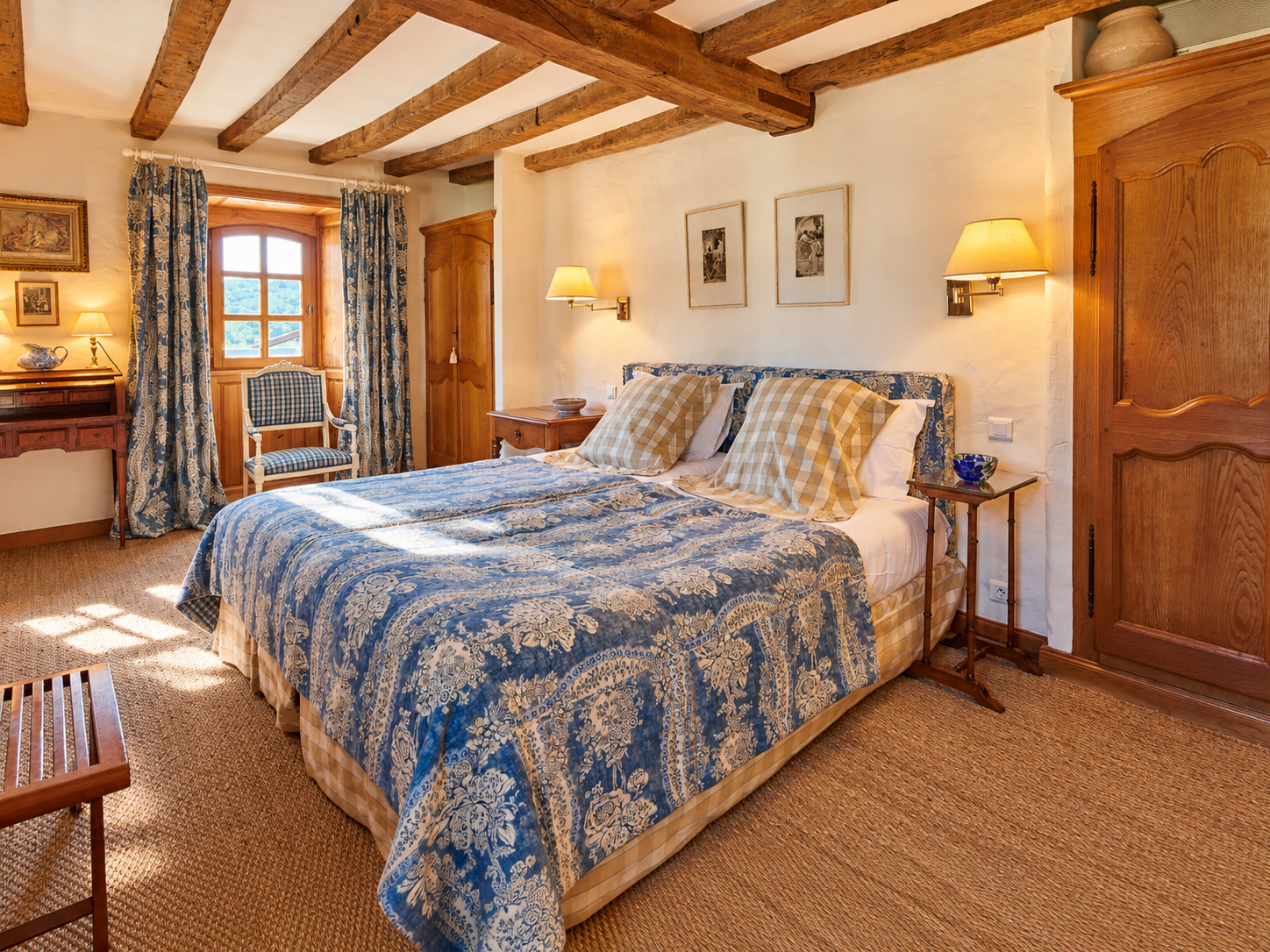
The hotel lists two adapted rooms; discuss the precise layout and route through the property if access matters. Room styles vary, so use the illustration as an example of the atmosphere rather than a guaranteed room category. Reserve the restaurant separately and confirm pool, leisure facilities and dining availability for your dates.
Arraya occupies a former sixteenth-century inn associated with the Compostela routes. Its 15 rooms, antique furnishings and garden create a small-house atmosphere beside the square. It is especially appealing if you want to explore Sare on foot and return to a quieter hotel setting between outings.
The property has a lift and private parking, with a heated swimming lane listed among its facilities. Ask about seasonal opening and the exact access to your chosen room. Confirm the restaurant timetable when planning an evening in the house, and request arrival directions if you need to unload near the entrance.
Spring suits village walks, heritage visits and good meals, with mountain outings chosen around the forecast. Check the railway’s seasonal opening before reserving accommodation around a La Rhune excursion.
Producer visits can still use an indoor format early in the season. Choose them for their explanations and tastings, while keeping expectations about fields and harvest realistic.
Reserve the timed visits first
Summer
Book La Rhune, the caves, accommodation and special meals early. Start village walks in the cooler part of the day and leave enough time to park and reach each meeting point.
Use the countryside with care: carry water, respect livestock and plan an indoor alternative for storms. A sunny morning in the village does not guarantee a clear or comfortable mountain summit.
Food traditions and changing colours
Autumn
Autumn can make a rewarding food-focused stay, with village visits and walks fitted around shorter days. Check local event dates when deciding whether you want a lively atmosphere or a quieter visit.
Seasonal services and restaurant breaks become particularly relevant. Confirm the railway’s final operating dates and the actual format of producer visits before building a full day around them.
Choose a compact inland break
Winter
Stay somewhere comfortable and arrange meals that are confirmed open. Short village walks can combine with food shops and cultural interpretation when available.
ETXEA closes from December through February, and the mountain railway has a seasonal operating calendar. Do not assume the full summer itinerary transfers to winter; confirm each indoor visit and leave time for relaxed meals.
How Many Days Do You Need?
Choose two villages or one major outing
One day
Pair Espelette with Ainhoa for village streets, food shopping and lunch, or make Sare and the caves the focus. Taking the mountain train can occupy the main half-day, so add only a light village stop.
A balanced introduction
Two to three nights
Allow one day for Espelette and Ainhoa, then another for Sare with either the caves or La Rhune. Leave a weather-dependent outing movable and choose one special meal rather than filling every service with a reservation.
More walking and less rushing
Four nights or more
Add the second major attraction, a producer appointment and a proper foothill walk. One free half-day makes it easier to respond to the forecast or return to a village you particularly enjoyed.
Getting There & Getting Around
The villages lie inland from the Basque coast. Bayonne and Saint-Jean-de-Luz provide useful rail arrival points for a wider trip, but the onward journey needs separate planning. Choose between a hire car, current local bus services and prearranged transfers according to the exact visits and accommodation.
The Txik Txak journey planner lists routes serving Espelette and Sare, including connections with Bayonne and Saint-Jean-de-Luz. Services, route numbers and connections have changed over time. Check the date, direction, stop and last return in the current planner rather than using an old timetable.
Ainhoa and rural attractions require particular attention: the available connection may involve reserved transport or a transfer rather than a frequent through bus. Being able to reach a village centre does not establish that a convenient service also reaches the caves or railway departure point. Verify the entire outward and return journey.
A car makes a multi-village stay easier to organise, especially with hotel luggage and evening meals. It also introduces parking and winding-road time. For a car-free visit, reduce the number of stops, choose accommodation with useful connections and book a transfer where the public timetable leaves a gap.
Use the signed visitor parking around each village and continue on foot. Espelette’s pedestrian centre is best approached with a clear plan for parking and any hotel luggage drop. Do not follow a navigation instruction into a restricted street without checking the local signs.
Sare lists several free parking areas around the centre, including Lur Berri, Omordia and Olhain. Central short-stay spaces serve a different purpose from an all-day visitor car park. Motorhomes have separate arrangements, so confirm the appropriate site and current conditions.
For La Rhune, use the operator’s arrival information for the Col de Saint-Ignace and allow the requested 30-minute margin before departure. The caves have their own on-site parking and request arrival 20 minutes before the booked visit. These margins are in addition to the drive, not substitutes for it.
Ask hotels for private parking instructions before arrival. Euzkadi uses an access code, and historic village entrances can make the final approach less obvious than a map suggests. If travelling with a large vehicle, confirm dimensions and unloading arrangements directly rather than assuming every private space will fit.
Begin in Espelette with a walk through the centre and either ETXEA or a producer visit. Wednesday morning can include the market. Reserve lunch where it best fits your interests, then continue to Ainhoa for its historic street and church when open.
Keep the chapel walk optional. It requires an uphill outing and return time, so do not add it automatically after a long lunch or late in the day. A slower village visit is a complete afternoon in its own right.
A village morning and a booked tour
Sare and the caves
Explore Sare’s centre, taking time around the church, square and fronton. Have lunch before driving or transferring to the caves with enough margin for the booked entry. Add the museum and park to the guided tour rather than leaving immediately afterwards.
In season, Thursday morning may include the village market. Confirm the cave’s special closures and visitor restrictions first, and arrange any adapted access at least two days in advance.
Keep La Rhune movable
Three days with a mountain window
Use one day for Espelette and Ainhoa, one for Sare and the caves, and one for La Rhune with a light village stop. Decide the order using the railway availability, restaurant closing days and forecast.
If visibility is poor, switch to a producer or heritage visit rather than treating the train as compulsory. An extra night gives room for a walk and lets the meals remain enjoyable pauses instead of deadlines between attractions.
Accessibility & Practical Advice
Assess each village route and building separately. Historic thresholds, paving, slopes and church steps can affect access even when the centre looks compact. Ask hotels for the route from parking to reception, lift details and the precise adapted-room layout you need.
The ordinary cave circuit includes steps and two levels. The team can discuss a partial lower-level visit, but this requires advance contact and is not equivalent to full access to the standard tour. Pushchairs are not permitted inside; ask about practical arrangements for young children before booking.
La Rhune’s summit includes uneven and sloping ground. Contact the operator about your mobility requirements, boarding and the areas you can comfortably reach. A ticket for the train does not make every summit path suitable for every visitor, and a folded pushchair or carrier may be more practical than expecting smooth paths.
For walks above the villages, carry water and a layer, use suitable shoes and check current local advice. The chapel climb is steep, while cross-border routes can be much longer than a village stroll. Match the outing to the least confident walker in the group and preserve enough daylight for the return.
Choose the meal before filling the day. A special lunch at Ithurria or a generous meal at Euzkadi deserves time. Place the visit that matters most around it, then leave another stop optional.
Keep the attraction entrances distinct. Sare village, the caves and the mountain railway departure are three separate places. Include the drive, parking and arrival margin for each; a map pin at the village centre is not enough.
Stay for the quieter hours. An inland overnight lets you see a village before the day visitors arrive and after they leave. Choose accommodation partly for the evening you want, whether that means dining in the house or walking back from a table nearby.
Frequently Asked Questions
Can I visit all three villages in one day?
Yes, as a brief introduction by car, but two villages with a proper lunch and one meaningful visit usually makes a more satisfying day. Add time for La Rhune or the caves on another day.
Do I need to book the La Rhune train?
Advance booking is strongly advisable. Arrive about 30 minutes before departure and follow the return time on your ticket. A descent-only place is not guaranteed for walkers arriving at the summit.
Is the walk to the chapel above Ainhoa easy?
It is steep. Allow roughly 45 minutes to one hour uphill, plus the descent and time at the viewpoint. Wear suitable shoes and choose the route for your group and the conditions.
Are the Grottes de Sare fully step-free?
No. The standard route has two levels and steps. Contact the team at least two days ahead to discuss a partial lower-level visit and your access needs.
When is the Espelette market?
Wednesday morning, from 8 am to 12.30 pm according to the municipality. Sare also has a Thursday-morning market from May to September.
Can I visit pepper producers in winter?
Some businesses offer indoor interpretation or tastings, but formats and opening vary. ETXEA closes from December through February. Check the individual producer rather than expecting a field visit year-round.
Can I explore the villages without a car?
It is possible with a carefully checked bus itinerary and, where needed, reserved transport or transfers. Confirm each attraction’s actual stop and the final return; a village bus connection does not cover every rural site.
Are Ithurria’s restaurant and bistrot the same booking?
No. They are distinct dining offerings. Confirm the restaurant, menu and service you want directly when reserving.
Plan Your Stay
France. Well Planned.
Make time for the villages between the views.
We plan. You choose. You book.
We help you choose an inland base, connect the visits and leave room for the producers, meals and walks that make the Basque Country memorable.
Visitor information checked on 4 October 2026. Opening, transport, services and access can change; consult the official links for your dates. Suggested durations and itineraries are editorial planning choices.
Images labelled AI-generated are photorealistic interpretations based on identifiable reference photographs from the establishments and official visitor sources. They are illustrative, not documentary photographs or guarantees of a current room, table or facility. The Espelette, Ainhoa, pepper and railway images are existing destination images from the FWP collection.