Medieval walls, a living lower town and the calm of the canal.
Explore the fortified Cité, give the castle time, then cross the Aude into the Bastide Saint-Louis. Our guide helps you enjoy Carcassonne beyond the first skyline photograph, with good meals, thoughtful hotel choices and an unhurried route.
Best forHeritage & atmosphereFortifications, old streets, local food and canal walks.
Stay1–2 nightsLonger for a slower pace or countryside excursions.
City rhythmThree distinct areasThe Cité, the Bastide and the Canal du Midi.
Good seasonsSpring & autumnComfortable exploring; check the seasonal calendar.
Carcassonne is more rewarding when you think of it as a whole town. The Cité is the famous fortified hilltop quarter, with the castle, basilica and streets within its walls. Across the Aude, the Bastide Saint-Louis has a different shape and rhythm: a street grid, shops, cafés and the market around Place Carnot. The canal and railway station lie on the lower-town side, giving a third setting for a quieter walk.
The historic fortified city was inscribed on UNESCO’s World Heritage List in 1997. Its buildings reflect several periods, including the restoration that helped create the silhouette visitors know today. A guided visit is useful if you want to understand those layers. Looking at the walls from outside before walking inside helps you appreciate the scale of the defences.
One full day can introduce the main sights, but an overnight stay makes it easier to see the Cité at different times and enjoy a proper dinner. Choose accommodation by its exact location: within the walls for atmosphere, near the main entrance for easier arrival, or in the lower town for station and everyday-city convenience. Each is a different version of a Carcassonne stay.
Enter through the Porte Narbonnaise and give yourself time to find your bearings before heading straight for the castle. The streets, small squares and views through the gates create the experience of the Cité. Explore the lices, the spaces between the two defensive walls, where access is open and suitable for your party.
The Cité is a living city quarter and entry to its streets is free. This is separate from the paid Château Comtal and rampart route. Allow a half-day if you want the castle, basilica and a meal; a short independent walk takes less time. The panoramic photograph is an archival view of the fortifications, not a promise of today’s surroundings or a suggested motorway walking route.
The castle and ticketed rampart route turn the skyline into an architectural experience. Courtyards, interior displays, towers and elevated views help explain how the defences worked. It is the substantial heritage visit to plan the day around, especially if you are interested in medieval building and the history of restoration.
The official monument recommends about two hours for the castle and ramparts. Reserve in advance and choose a slot that leaves time for the full route; the last slot may not give access to every space as closing begins. The visit includes narrow, irregular stairs and has no lift. Ask about the adapted visit if the complete route would be too demanding.
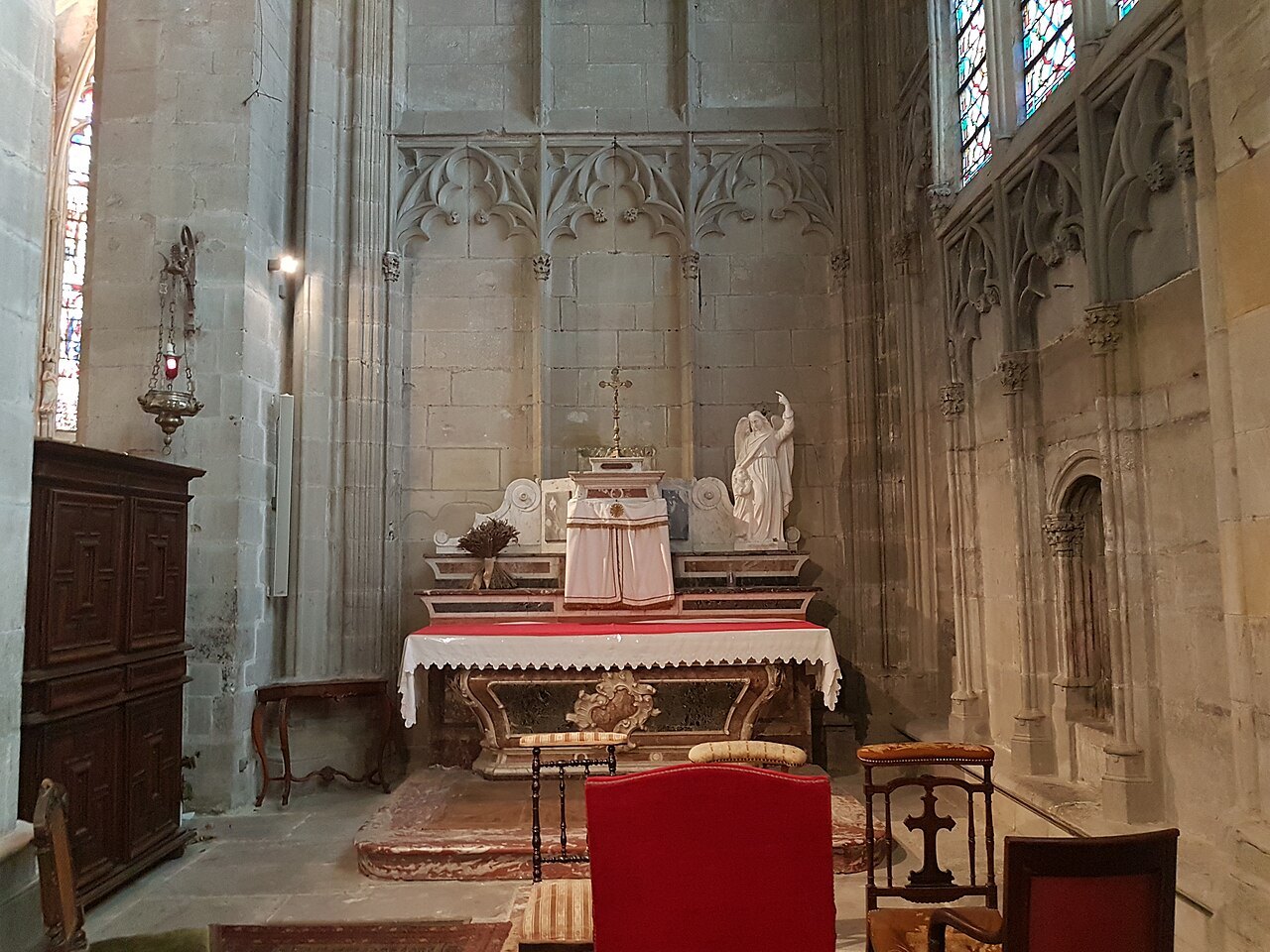
Saint-Nazaire offers a different kind of attention from the fortifications. Its Romanesque and Gothic elements, stained glass and carved details make it a natural second interior visit. Step in quietly and give your eyes time to adjust, then look at how the light changes the atmosphere of the building.
Allow roughly 30–60 minutes as a planning estimate, depending on your interest and the day’s access. Services and special events can interrupt visits, particularly on Sundays. Respect the church’s instructions and photography rules. Pair it with a nearby street walk or lunch rather than immediately hurrying toward a separate attraction across town.
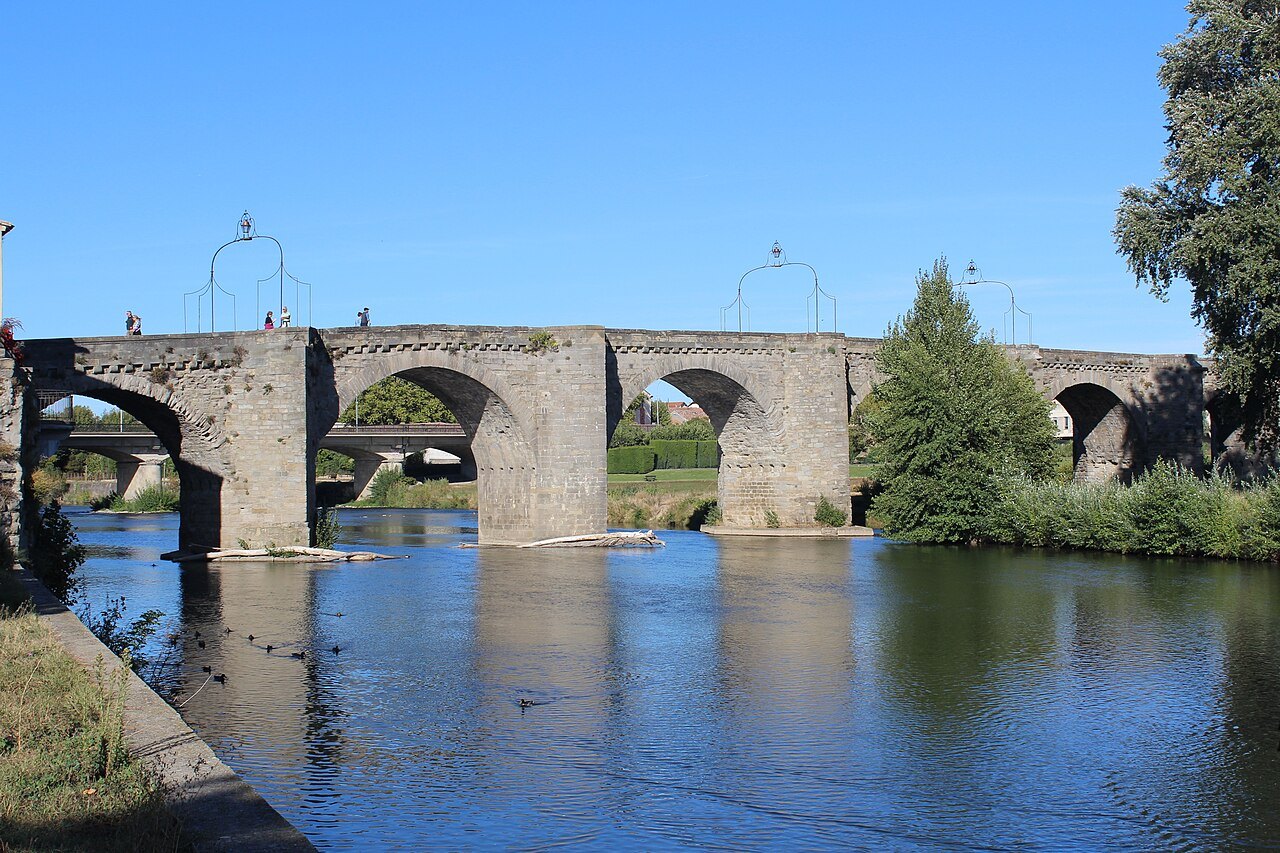
Pont Vieux provides a memorable link between the fortified quarter and the lower town. Make the crossing part of a walk, stopping to notice the river and the changing view toward the Cité. It is particularly useful when your day moves from a morning within the walls to an afternoon around the Bastide.
Allow 30–60 minutes for the bridge and a short riverside pause, with more time if you continue along suitable public paths. The approach to the Cité is uphill, so consider the direction of the walk and the energy of your party. Follow local signs around the river and avoid lower paths when water levels or closures make them unsuitable.
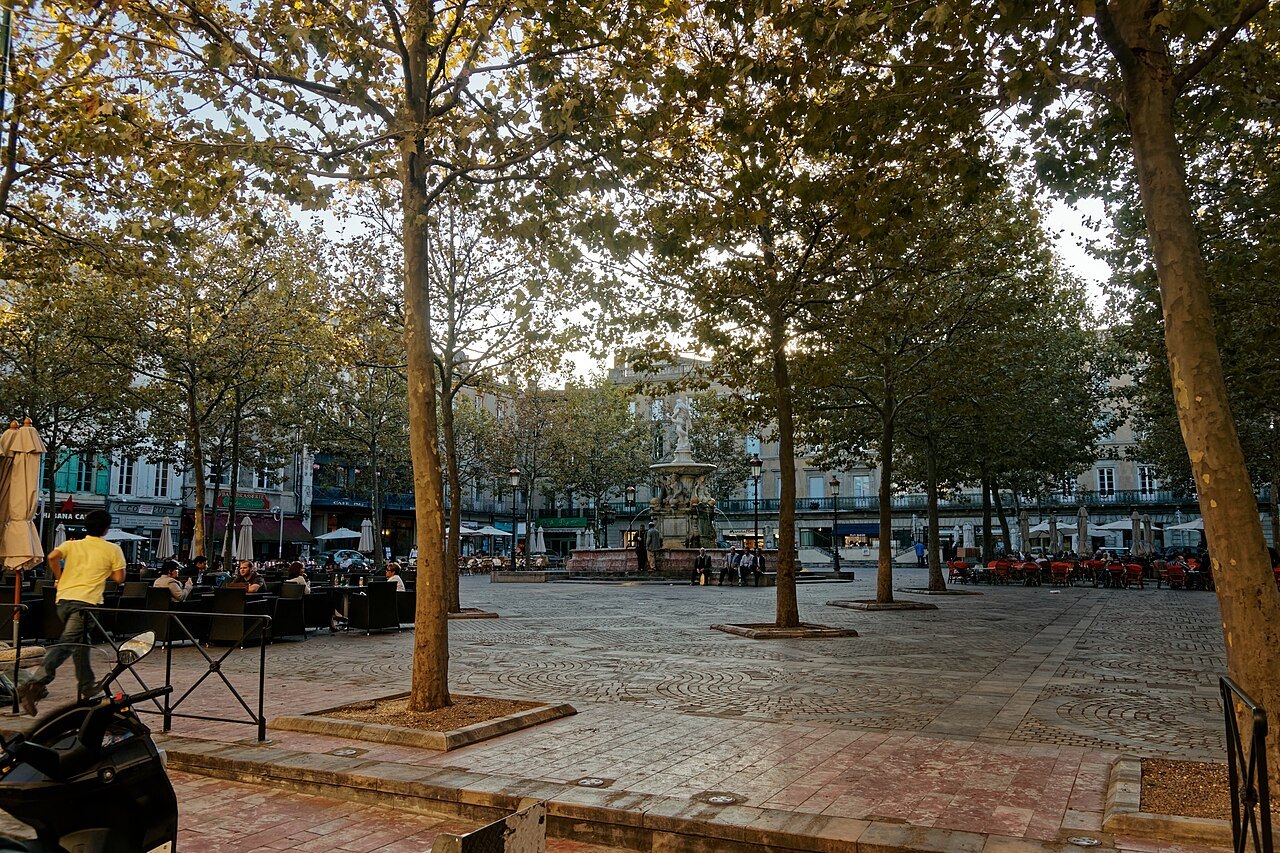
The Bastide Saint-Louis deserves its own part of the visit. Its grid of streets feels different from the lanes within the Cité, and Place Carnot is a useful central pause. Browse shops, notice the façades and choose a café before deciding how much farther to explore. A market morning brings another layer of everyday life.
Allow a half-day with lunch and an interior visit if you enjoy slower city exploring. The Musée des Beaux-Arts, facing Square Gambetta, is an option for an art-focused or rainy afternoon; check its opening calendar before choosing the day. The square photograph is archival and shows the location rather than a current market layout.
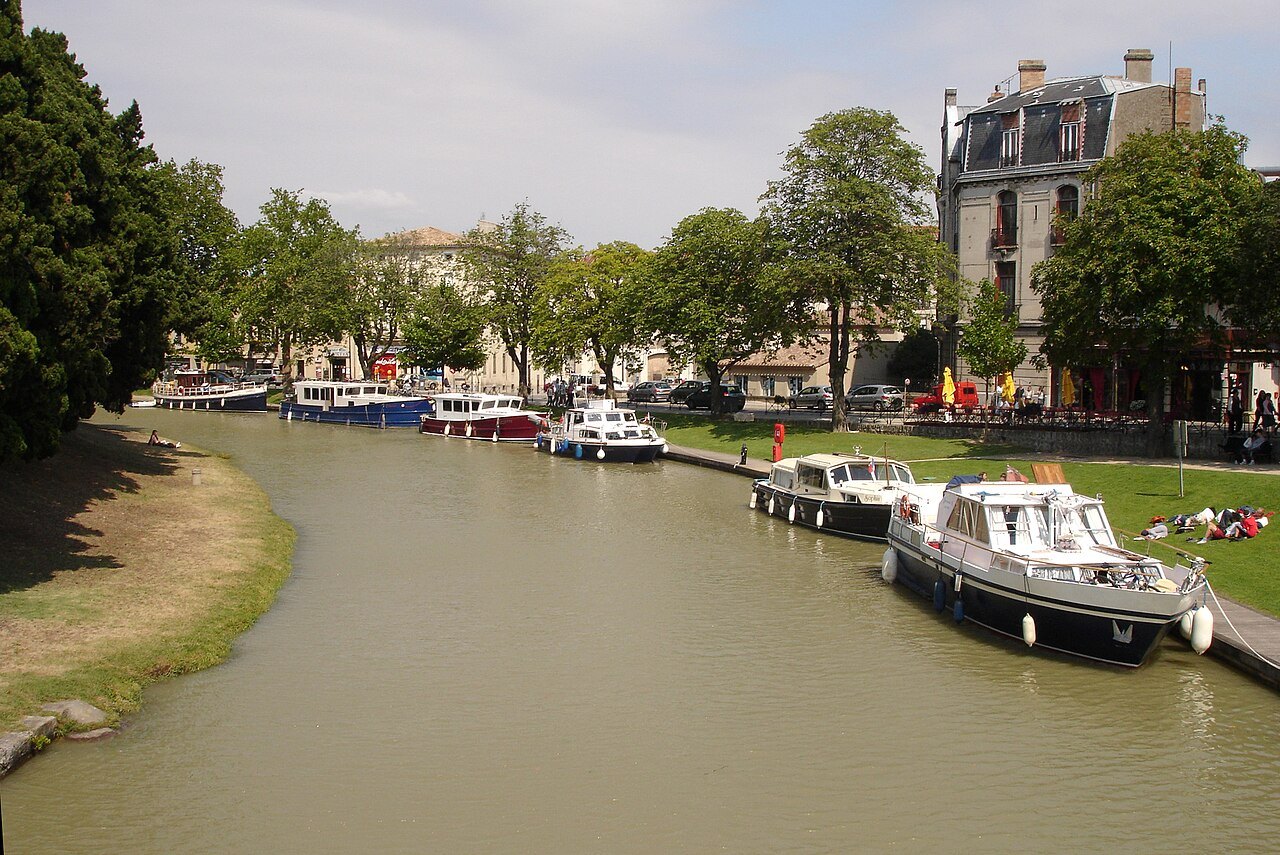
The Canal du Midi lies beside the railway station, on the lower-town side of Carcassonne. It offers a softer landscape after the fortified hill: water, moored boats and the opportunity for a short walk or a booked cruise. The canal was inscribed on UNESCO’s World Heritage List in 1996.
Allow an hour for a simple port-and-towpath pause, or more for a scheduled boat outing. Check the departure point, duration and seasonal operation with the operator before booking. Path surfaces and shade vary; the archival photograph does not guarantee today’s trees or moorings. Choose a route suited to your walking or cycling experience and leave time for the return.
A guided walk can help connect Carcassonne’s buildings with the changing role of the town. Use the tourist office’s current programme to choose the language, length and theme that interest you. Check whether the walk includes the castle ticket or stays within the freely accessible quarter; these are different experiences.
Pair the guided visit with time to wander independently afterwards. You may want to return to a gate, look along the lices or spend longer in the basilica. With children, choose a format and duration they can comfortably enjoy, then add a meal and a break. One well-chosen guided visit usually provides more context than several rushed museum stops.
A boat trip gives the canal its own place in the stay. Compare the actual route and duration rather than choosing only from a departure time. Some outings focus on a short introduction, while others take a larger share of the day; decide how the cruise fits with lunch and any castle booking.
Confirm seasonal availability, boarding arrangements and weather conditions directly with the operator. A towpath walk is a simpler alternative when you want flexibility, particularly around arrival or departure from the station. For cycling, choose a manageable return distance and a bicycle suitable for the path surface. This is a leisure outing, not a reason to rush back uphill for another timed visit.
On a market morning, start around Place Carnot and the covered Halles Prosper Montagné, then make lunch the main pause. A brasserie meal can be an easy way to try the local cooking; ask about the day’s dishes and the cassoulet if that is what brought you here. Keep the afternoon lighter after a substantial lunch.
Add the Musée des Beaux-Arts if art interests you and its calendar fits, or simply walk the grid of streets toward Square Gambetta. Finish near the canal if you prefer another setting. This lower-town day works particularly well during a longer stay, giving a contrast to the Cité without requiring a countryside drive.
Place Carnot hosts its regular market on Tuesday, Thursday and Saturday mornings. Tuesday and Thursday focus on fruit and vegetables; Saturday brings local and organic producers alongside the wider market activity around Boulevard Commandant Roumens. Check special-date arrangements if your stay falls over a holiday.
The covered Halles Prosper Montagné provide another food stop in the lower town, normally Tuesday to Saturday mornings. Specialist counters make it worth browsing before you decide what to buy. The two markets fit naturally into a Bastide morning, with a café or lunch afterwards rather than a hurried transfer straight back to the Cité.
Allow an hour or so for browsing if food is one of your interests. Ask before photographing traders and buy perishables only when the rest of the day suits taking them back to your accommodation. The accompanying photograph shows the square’s setting, not stalls that are guaranteed to be present on every visit.
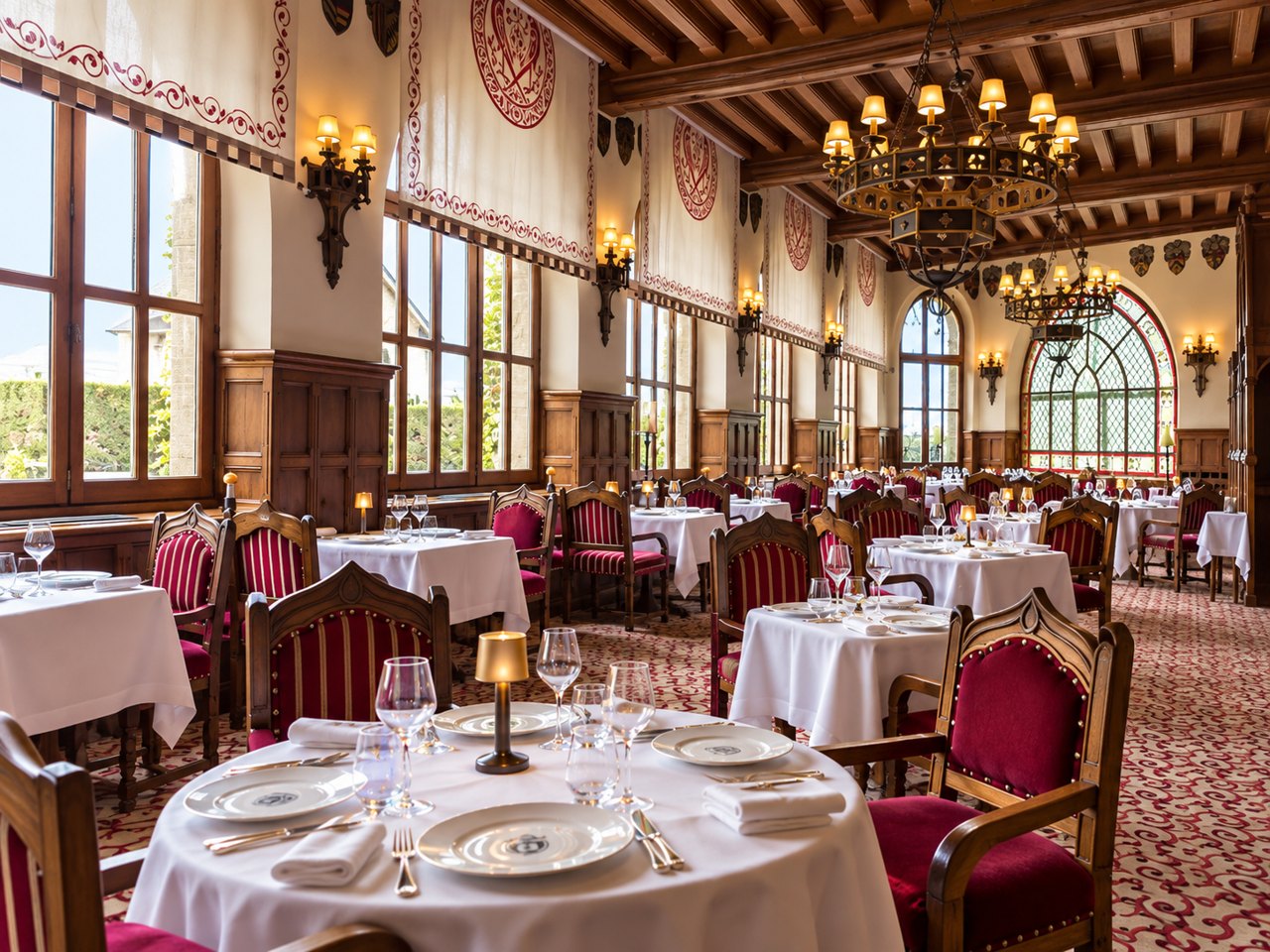
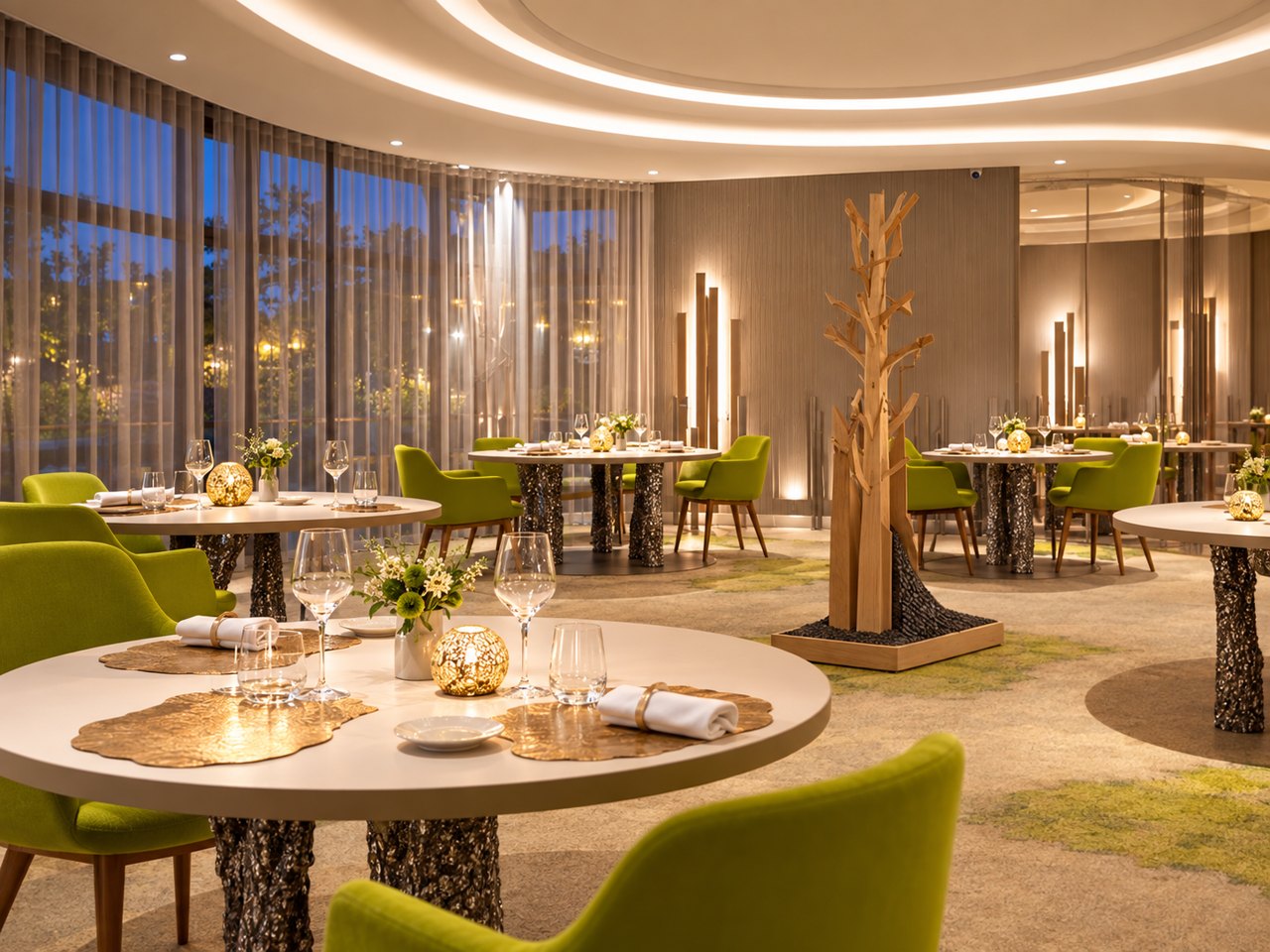
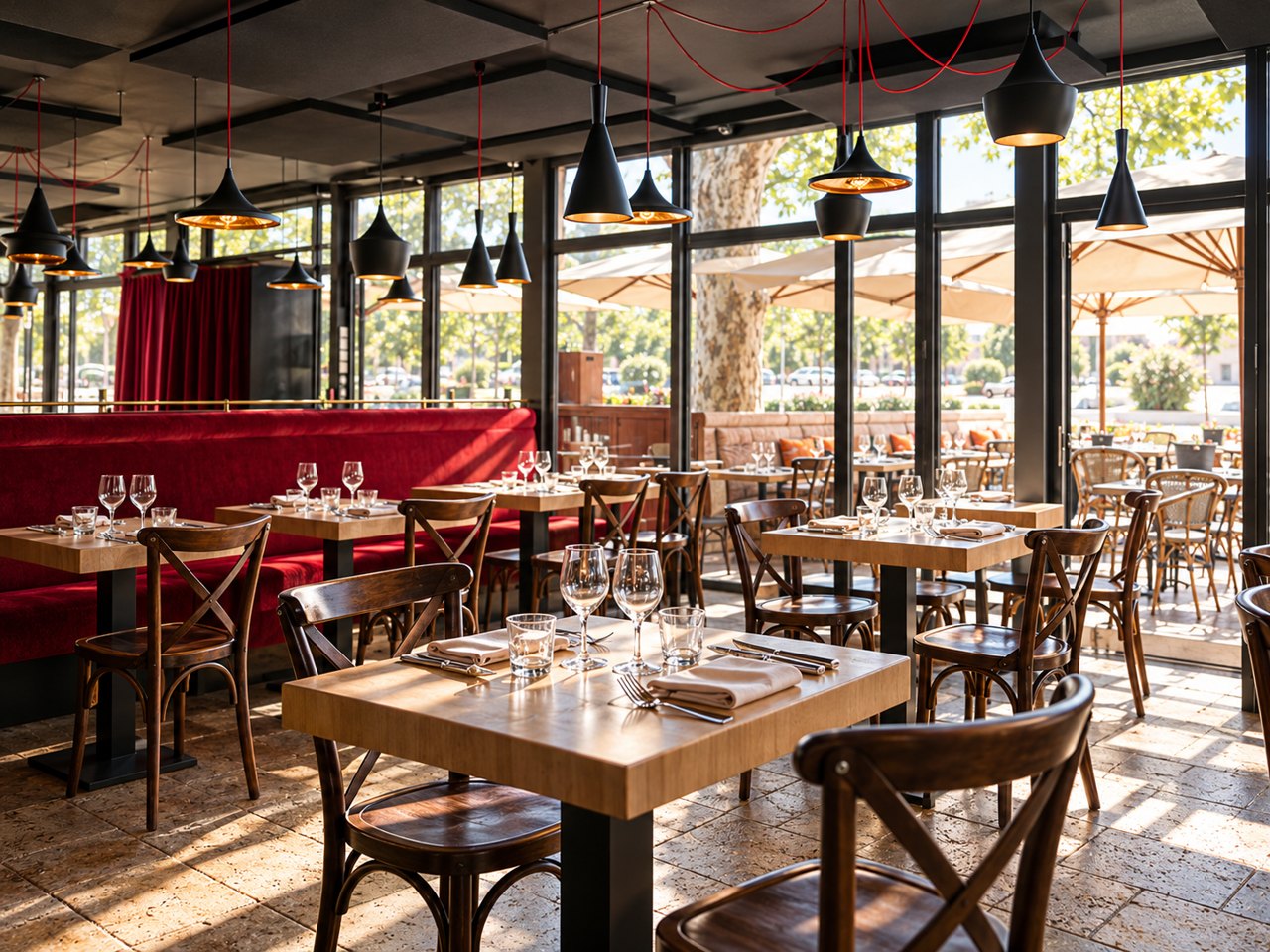
A historic dining room, a dedicated gastronomic meal and a lower-town brasserie give the stay three different options. Use the official links for current menus and reservations. No fixed meal price or dish availability is promised.
AI-generated illustration based on the establishment’s official visual references. Representative view; confirm the current room or dining space directly.
Historic dining within the walls
La Barbacane
La Barbacane, at the Hôtel de la Cité beside Saint-Nazaire, is the choice here for a meal where the historic room is part of the occasion. Chef Jérôme Ryon’s cooking gives local and seasonal produce a gastronomic setting. Reserve a lunch or dinner that leaves time to appreciate the room and the chosen menu.
Ask about current menus, dietary requirements, total cost and cancellation terms when booking. Confirm the dining area if the interior is the main reason for visiting; a terrace table offers another experience and depends on the season and weather. You can consider the restaurant without staying at the hotel. The illustration is based on the official dining-room reference and is clearly representative.
AI-generated illustration based on the establishment’s official visual references. Representative view; confirm the current room or dining space directly.
A dedicated gastronomic outing
La Table de Franck Putelat
La Table de Franck Putelat sits at 80 Chemin des Anglais, outside the Cité, with a modern dining room that contrasts with Carcassonne’s medieval setting. Treat it as a principal experience in the stay, with enough time for the meal and a comfortable return to your accommodation. It is separate from the group’s Brasserie à 4 Temps.
Reserve directly and confirm the selected menu, drink choices and any dietary restrictions in advance. The restaurant’s published schedule normally covers Tuesday to Saturday lunch and dinner, but holidays and special closures need checking. Dress thoughtfully for the setting and arrange transport if necessary. Avoid placing a late train or another timed event immediately after a substantial tasting menu.
AI-generated illustration based on the establishment’s official visual references. Representative view; confirm the current room or dining space directly.
An easy lower-town meal
Brasserie à 4 Temps
Brasserie à 4 Temps, at 2 Boulevard Barbès, suits a Bastide lunch or a more flexible meal between city walks. The setting brings red banquettes and bistrot tables to the lower town, with a terrace and a newer room under a glass roof. Choose the dining area that fits the occasion when you reserve.
The brasserie advertises continuous service every day, making it useful when sightseeing does not align with a narrow lunch window. Still check the current kitchen arrangements and availability, especially for groups or a particular dish. Franck Putelat’s association with the address does not make it the same experience as La Table. Compare the menus and choose according to appetite, budget and the rest of the day.
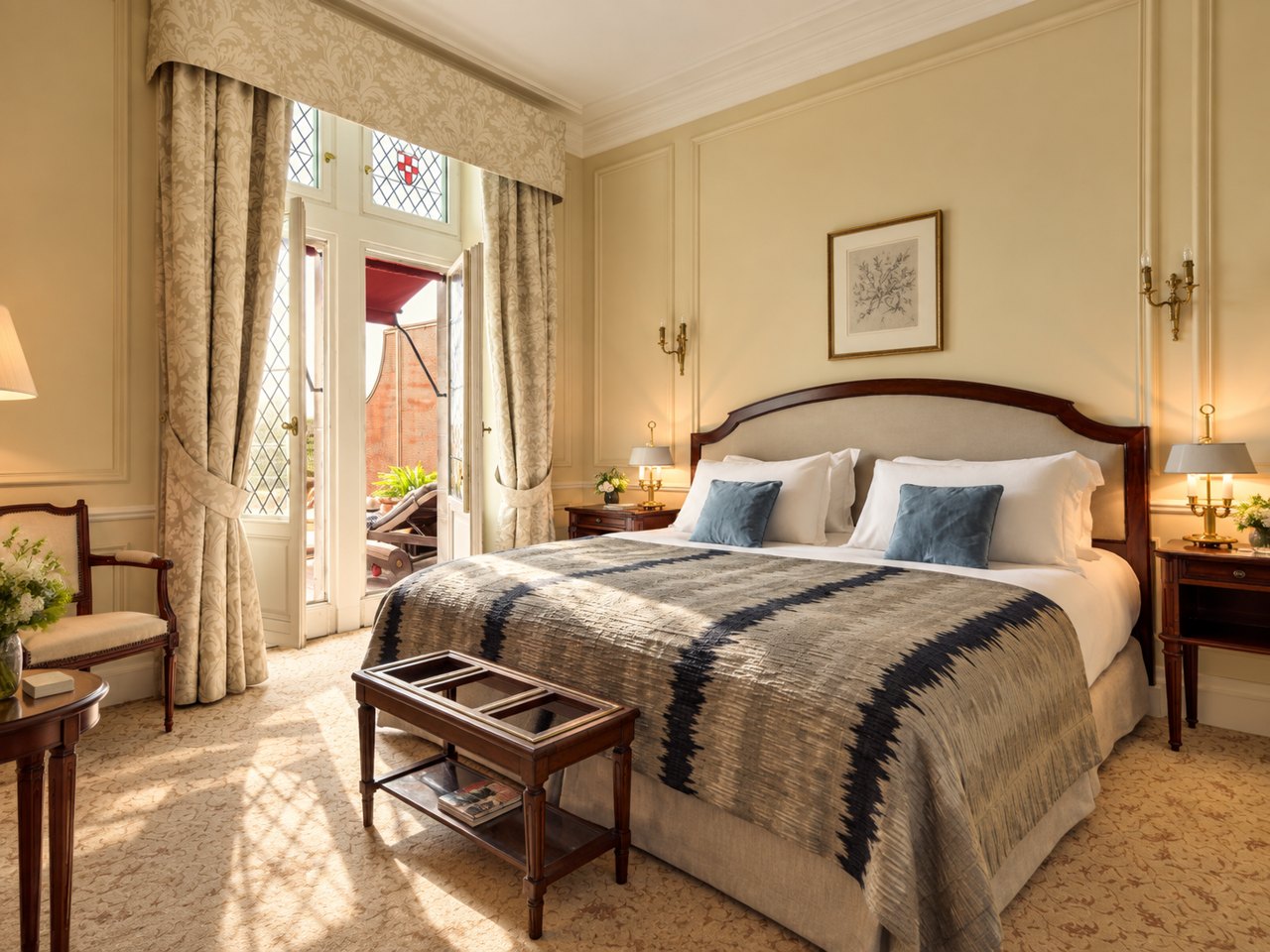
Choose a historic five-star stay, a four-star base within the Cité or a small contemporary hotel near its entrance. Check room categories, access and arrival instructions directly. Establishment illustrations are labelled and should be compared with current official booking photographs.
AI-generated illustration based on the establishment’s official visual references. Representative view; confirm the current room or dining space directly.
Five-star · within the Cité
Hôtel de la Cité
The Hôtel de la Cité offers a substantial historic setting next to Saint-Nazaire, inside the fortified quarter. Its period interiors, gardens and seasonal outdoor pool make the hotel part of the stay rather than simply a place to sleep. Choose it when you want time within the walls and a room to return to between visits.
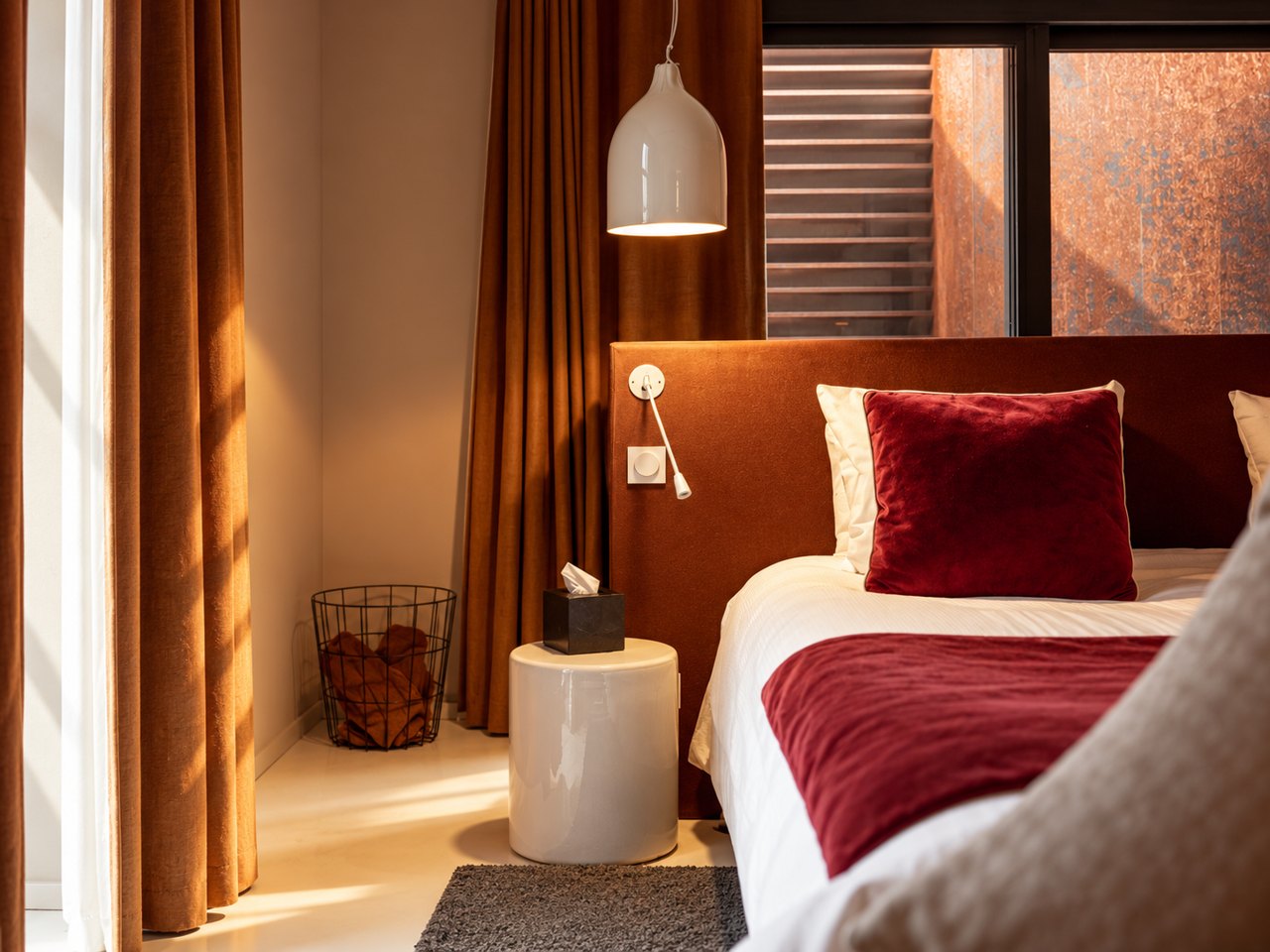
Compare room and suite categories carefully; views, terraces and layouts differ. Ask about spa arrangements, seasonal pool access and any restaurant booking you want to make. Drivers should obtain the hotel’s exact parking and transfer instructions before arrival, since a central Cité address does not mean unrestricted vehicle access. The illustrated bedroom is one representative setting, not a guarantee of your assigned room.
AI-generated illustration based on the establishment’s official visual references. Representative view; confirm the current room or dining space directly.
Four-star · central Cité atmosphere
Hôtel Le Donjon
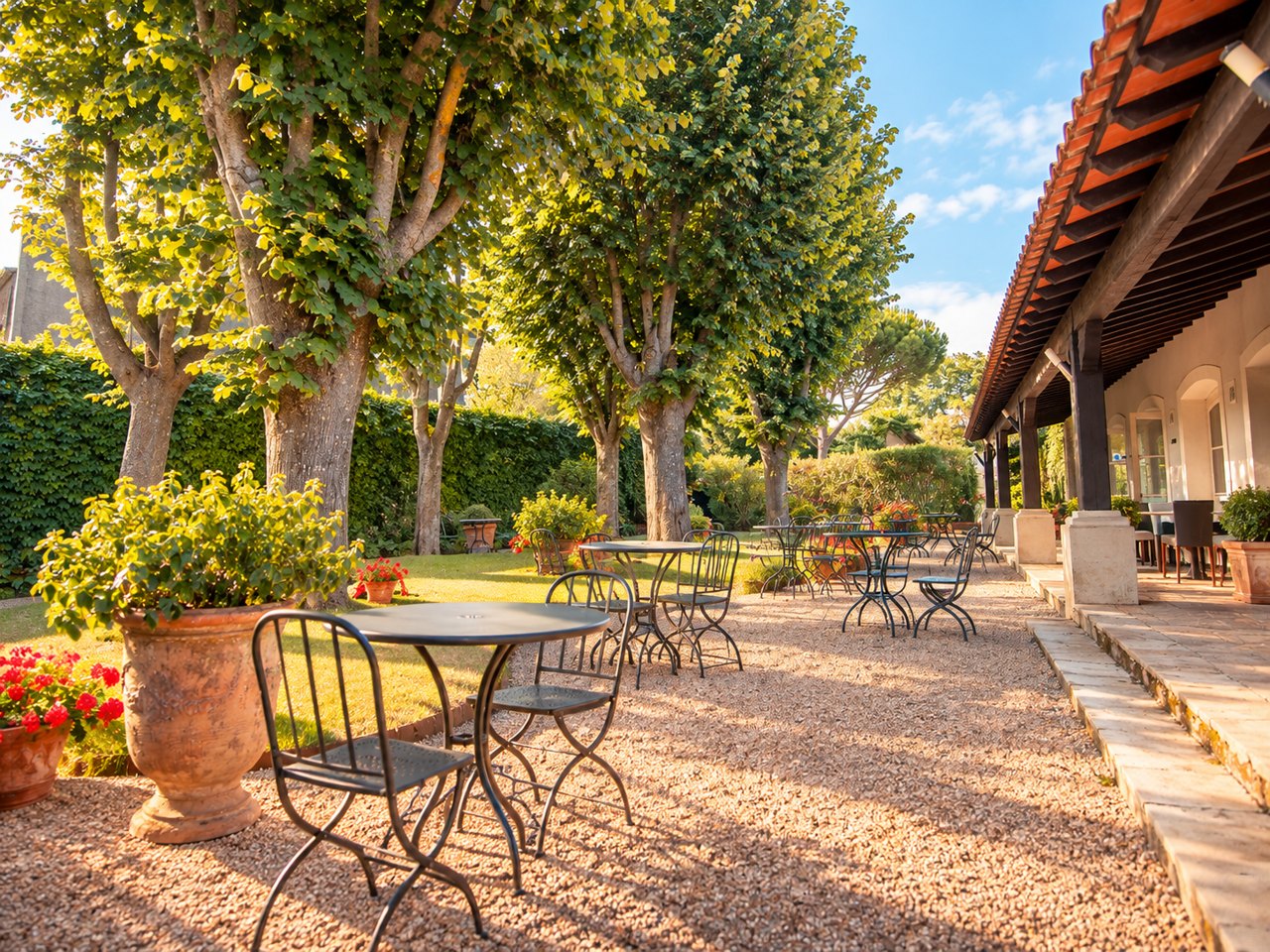
Le Donjon suits travellers who want to stay in the Cité and explore its lanes from the front door. The hotel occupies historic buildings around Rue du Comte Roger, with a garden that offers a quieter pause from sightseeing. It is a useful choice when location and the atmosphere within the walls matter most.
Confirm which building and room category you are booking, along with lift access, bathroom layout and any noise concerns. Ask the hotel for parking and luggage-transfer instructions instead of following a navigation app into the historic streets. The garden illustration conveys an official visual reference; it does not promise a garden-facing bedroom. Check the hotel’s current dining information separately when planning meals.
AI-generated illustration based on the establishment’s official visual references. Representative view; confirm the current room or dining space directly.
Four-star · near the main entrance
Hôtel Pont-Levis
The Pont-Levis is a small hotel near the main entrance to the Cité, offering contemporary rooms, gardens, an outdoor pool and private parking. Its position can suit travellers arriving by car who want the fortified quarter close by without staying deeper within its lanes. It offers a different setting from the more traditional interiors inside the walls.
Check the exact room features before booking: some categories have specific terrace or spa arrangements, and these are not universal. Confirm parking availability, pool season and the walking route to your chosen restaurants. The room-detail illustration is grounded in a particular official reference and should not be used to infer the full layout, outlook or amenities of every category.
A good season for combining the Cité with the Bastide and canal. Carry a layer for wind or showers and confirm boat operations before building the trip around a cruise. Public holidays can affect opening calendars and reservations.
June–August
Summer
Plan the most exposed walks earlier and reserve the castle slot and important meals ahead. Heat, events and visitor numbers can change the rhythm of the Cité. Keep a midday pause and extra travel margin rather than booking every hour.
September–November
Autumn
An appealing period for heritage and meals, with time for the lower town and a shorter canal outing. The castle switches to its winter timetable in October. Check the seasonal end of boat and tourist transport services before travelling.
December–February
Winter
Choose a shorter cultural stay with confirmed interiors and meals. Daylight is limited and some hotel facilities or tourism services are seasonal. The castle normally closes on 1 January and 25 December; verify the calendar for your dates.
How long to stay
One full day
Give the Cité the morning, including a reserved castle visit, then choose the basilica and lunch. Cross toward the Bastide for a short afternoon if your arrival and departure times allow. Do not add a boat cruise simply to complete all three areas.
One to two nights
An overnight stay lets you enjoy the Cité at different times and reserve a proper dinner. With two nights, give the Bastide and canal their own half-day or more, including a market morning when the calendar fits.
Three nights or more
Slow the city visits down, add a cruise or a food-and-art day, and consider a separate countryside excursion. Choose any extra destination by actual travel time and opening dates rather than filling every day with distant stops.
Getting there & getting around
Arrival
Carcassonne railway station is next to the canal on the lower-town side. Check the service for your actual departure city and date before booking. The tourist office suggests about 30 minutes on foot from the station to the Cité, but luggage, heat and the uphill approach can make a taxi or local bus more comfortable.
Carcassonne Airport has a shuttle operated by RTCA, serving key city stops including the railway station and the Cité. Use the current dated timetable because services are linked to flight arrangements and change through the season. Include the full connection to your hotel when planning arrival, rather than only the airport transfer itself.
Walking is the clearest way to understand the relationship between the Cité, river and Bastide. Choose a route that suits the slope and conditions; descending from the Cité toward the lower town can be a comfortable way to finish a heritage morning. A car is rarely useful for moving between individual sights.
For local buses, consult the current RTCA information rather than relying on an old route number or timetable. Seasonal tourist trains and shuttles have separate operation dates and do not automatically replace an accessible transport service. If you stay within the Cité, confirm how you will return after dinner in the lower town.
Choose one parking base, confirm your hotel’s instructions and walk between the sights that belong together. The Cité and Bastide have different parking options and different approaches.
Visiting the Cité
The city lists designated Cité parking areas including P0, P1 and P2. Check the current entrance, tariff, seasonal rules and walk to the gate. Do not assume the closest visible space is available for visitor parking.
Staying within the walls
Ask the Hôtel de la Cité or Le Donjon for precise parking, luggage transfer and arrival instructions before travelling. Historic-quarter vehicle access is controlled. Leave time to reach reception through the arrangement your hotel actually provides.
Choosing a lower-town base
Use a garage or legal space that fits your Bastide route and the length of stay. For a hotel near the Cité entrance, such as Pont-Levis, confirm the private parking conditions directly. Ask about height limits and step-free routes where relevant.
Enter through the Porte Narbonnaise and orient yourself. Visit the castle with a reserved slot, take lunch, then explore Saint-Nazaire and the lanes. Finish with an exterior view or a walk toward Pont Vieux when the weather suits.
Market & Bastide
A lower-town morning
On Tuesday, Thursday or Saturday, browse Place Carnot; add the Halles on their opening days. Have lunch in the Bastide, then choose the art museum or a slower street walk. Keep the rest of the afternoon flexible.
Water & a slower pace
A canal half-day
Choose a confirmed cruise or a manageable towpath walk from the port. Pair it with lunch in the lower town. If returning to the Cité later, allow for the uphill journey rather than placing another booking immediately after the boat arrives.
Three areas, enough time
A two-night stay
Use the first full day for the Cité and the second for the Bastide and canal. Put your main dinner on the evening when arrival and transport are simplest. A shorter final morning works well for a café, market browse or familiar walk.
Practical details that make the stay easier
Booking & access
Reserve the castle and the restaurant that matters most before fixing the rest of the day. Read the current ticket rules, last-entry conditions and seasonal hours. Store luggage at your accommodation before sightseeing: the monument has size restrictions and no luggage-storage service to rely on.
Ask about accessibility for the exact route you want. The castle’s barbacane and courtyard have adapted access, while the full interior and rampart route involves stairs and has no lift. The Cité’s paving and slopes also matter. An adapted visit or shorter walk can still give a rewarding experience without committing to the entire elevated circuit.
Comfort & family visits
Wear shoes with grip for paving and uneven stairs. In warm weather, carry water and build shade or indoor pauses into the day. Wind can make elevated sections feel different from sheltered streets. Keep a shorter alternative available if anyone tires during the castle visit.
For young children, check the monument’s current stroller arrangements and plan a break before a long meal. Read the photography and bag rules rather than carrying extra equipment you cannot use. The freely accessible Cité and the paid monument have different conditions, so verify the rules for the part you actually intend to visit.
Find Carcassonne’s own pace
See the walls before walking them. An exterior perspective helps explain the scale of the Cité before you explore its lanes and elevated route.
Give the Bastide a proper meal break. The lower town becomes more memorable when you stop at a café, market or restaurant instead of using it only as a route to the station.
Choose a second view at another time. An overnight stay lets you revisit a familiar gate or skyline as the light changes, without adding another paid attraction.
Keep the canal as its own outing. A cruise or towpath walk feels more relaxed when it has room in the schedule and a clear return plan.
Frequently asked questions
Is it free to enter the medieval Cité?
Yes. The streets of the Cité are freely accessible. The Château Comtal and its ticketed rampart circuit, museums and guided visits have separate admission conditions.
How long does the castle visit take?
The official monument recommends about two hours for the castle and ramparts. Allow additional time for arrival and checks, and avoid the last slot if you want access to the complete route.
Can I visit without a car?
Yes. The railway station serves the lower-town side, and walking or local transport can connect the main areas. Allow for the uphill approach to the Cité and choose transfers according to luggage and mobility.
Should I stay inside the Cité?
Stay within the walls if atmosphere and returning to the lanes at different times are priorities. Near the main entrance can simplify a car arrival. A lower-town base suits the station, markets and Bastide restaurants.
Is the full rampart route accessible without stairs?
No. The monument has numerous narrow, irregular stairs and no lift. Adapted access is available to specific spaces such as the barbacane and courtyard; contact the monument to plan the right visit.
When are the markets?
Place Carnot normally hosts markets on Tuesday, Thursday and Saturday mornings. The covered Halles Prosper Montagné normally open Tuesday to Saturday mornings. Check holiday and special-date arrangements.
Are the hotel and restaurant images booking photographs?
The six establishment visuals are AI-generated representative illustrations based on inspected official references and labelled beneath each image. Confirm the current décor, room category and dining arrangement on the official booking sites.
Make Carcassonne part of your France trip
France. Well Planned.
A heritage stay with room for everyday life.
Combine Carcassonne with the parts of Occitanie that interest you, then plan around comfortable travel days, a thoughtful base and time for both the famous walls and the town beyond them.
Information reviewed on 4 October 2026. Visit durations outside the castle’s official guidance are editorial estimates. Opening calendars, transport, menus and booking arrangements can change; confirm before travel. No fixed hotel or restaurant price is promised.
Documentary photographs are credited individually with their licences. The Canal du Midi photograph dates from 2007, Place Carnot from 2009 and the skyline panorama from 2021; their settings may have changed. Images have been resized and may be cropped by display, with share-alike terms applying where stated. Hotel and restaurant illustrations are based on inspected official references and labelled as generated. They are representative settings rather than guarantees of a present-day room, table or amenity.