Red rock, open sea and a coast that deserves more than a drive-through
Explore the Calanques de Piana on foot and from the sea, stay above the gulf or close to Porto’s harbour, and leave enough time for weather to shape the best day out.
Best forLandscape & walkingRed-rock scenery, sea trips and changing light
Ideal stay3–4 nightsTime to swap sea and land days
Two main basesPiana or PortoVillage heights versus harbour convenience
Key constraintRoads & weatherAllow margins; keep a land-based alternative
The gulf is best understood from more than one viewpoint. The road through the calanques reveals the scale and colour of the rock; a walking route slows the scene down; a sea excursion changes the perspective again. You do not need to do all three in a single day.
Piana sits above the gulf, with village life and panoramic hotel terraces as its natural focus. Porto, on the commune of Ota, puts you closer to the marine, boat departures and waterside restaurants. Choose the setting that matches your evenings and your main activities, rather than repeatedly driving between the two for every meal.
This stretch of western Corsica rewards a compact programme. A short walk, a proper lunch and time to watch the light on the rocks can be a full day. If you want a longer hike or a combined sea excursion, give it its own space and keep the next commitment flexible.
Where to Go & What to See
AI-generated photorealistic view.
The landscape between Piana and Porto
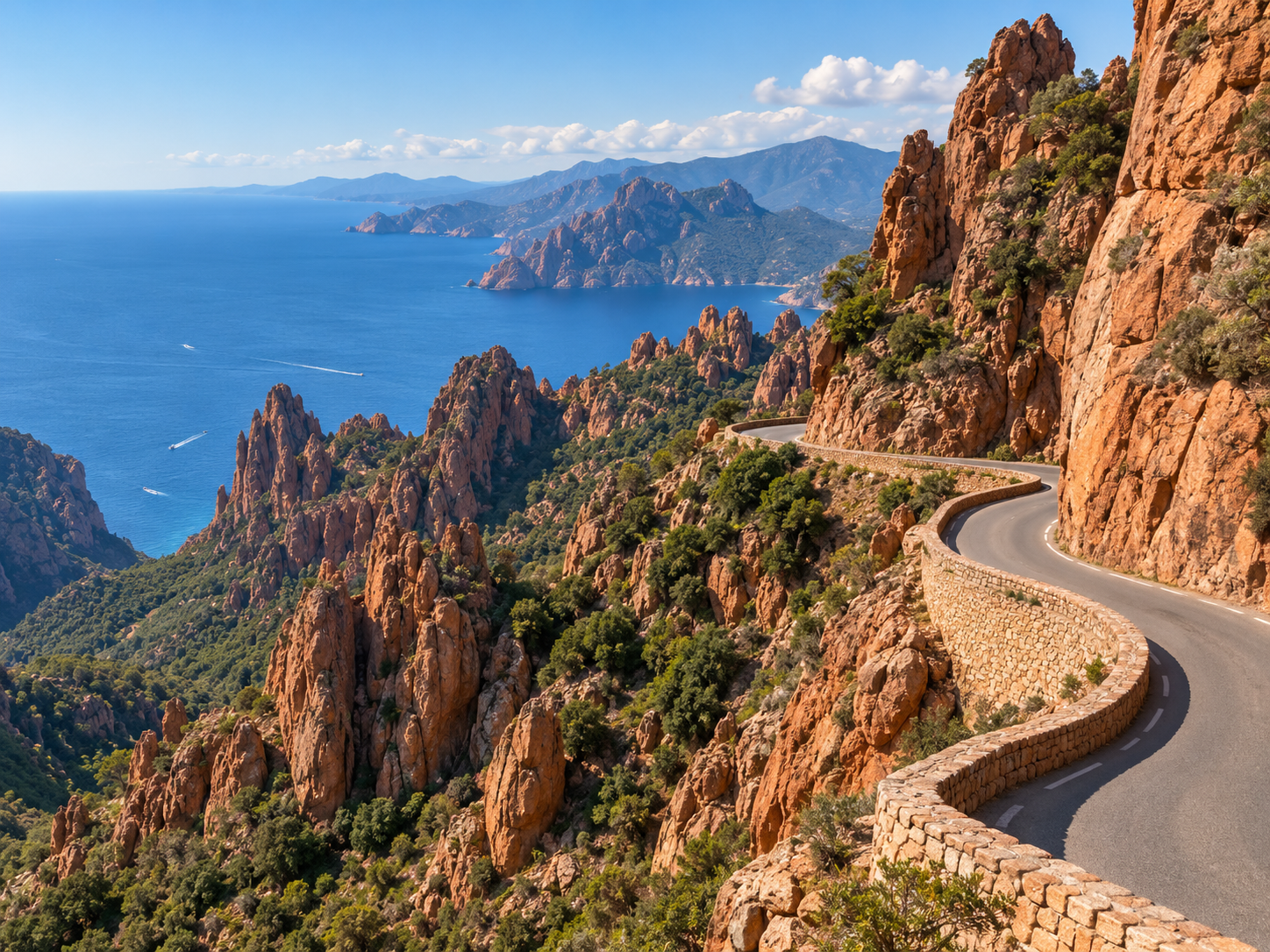
The Calanques de Piana
The red-rock formations along the D81 are the region’s signature sight. Their interest comes from the changing shapes, sea views and scale, rather than one compulsory photo stop. Drive attentively, then use a suitable authorised stopping place or a marked walk to appreciate the landscape properly.
The road is narrow and winding, with limited stopping opportunities. Do not park in a bend or obstruct passing traffic. Early or later visits can be more comfortable in summer, but the best timing still depends on weather and your route. Walking along the road is not the same as using a protected footpath.
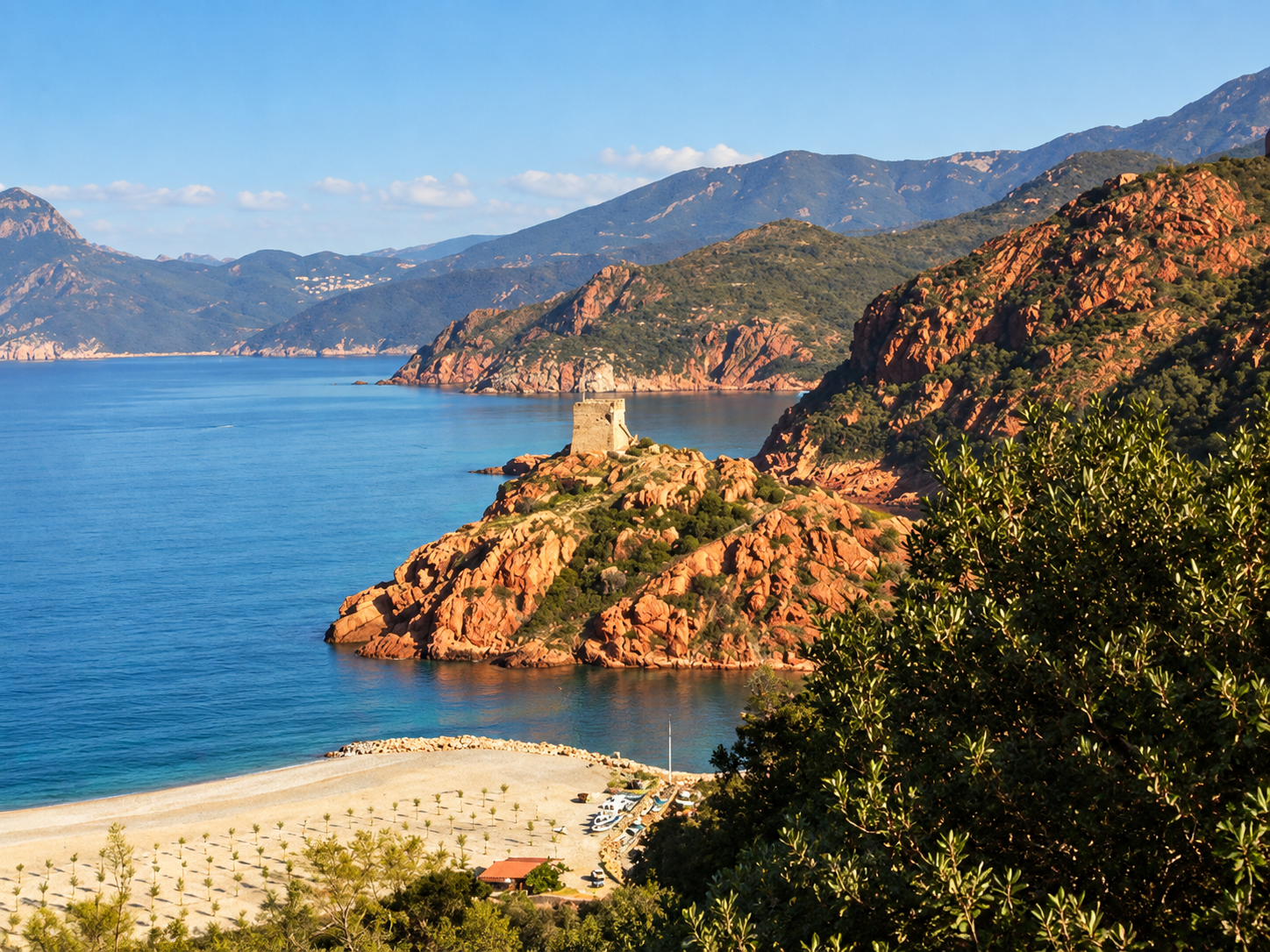
Porto’s square tower stands on a rocky promontory above the gulf. A visit connects the scenery with the history of coastal defence; the upper terrace gives a broad view across the setting. At harbour level, allow time to locate the boat quays and enjoy the waterfront.
The tower approach involves steps cut into the rock, and admission is charged. Check current opening before climbing. Travellers who need a gentler route can focus on the marine instead. Keep the tower visit separate from your boat check-in margin so a queue or slow descent does not become a problem.
Across from the tower, Porto’s pebble beach offers another view of the gulf and an easy pause around a harbour day. The tourism office notes the pedestrian connection from the port by the footbridge, making it a useful stop without another drive.
The water becomes deep quickly, so this is not automatically the right swimming choice for very young children or less confident swimmers. Decide according to the actual sea state and local signs. Comfortable footwear can help on the pebbles, and an evening visit can be rewarding even when swimming is not part of the plan.
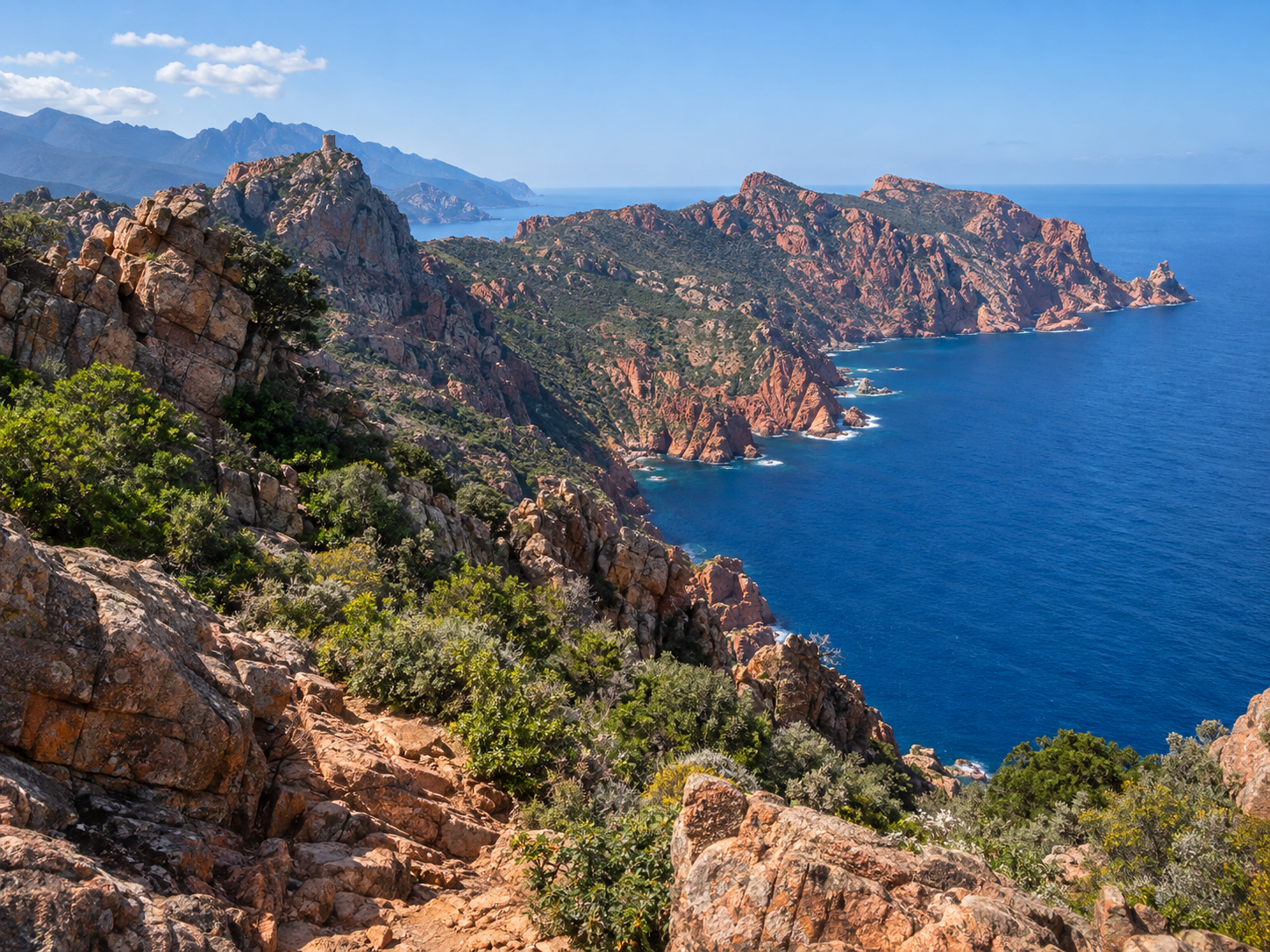
Capo Rosso is a memorable objective for walkers who want more than a short viewpoint stroll. The tourism office’s route listing gives approximately eight kilometres and around 450 metres of ascent, with a suggested duration of three hours. Other official guidance allows longer, so reserve a generous half-day with breaks.
The terrain is rocky and exposed, with a more demanding final ascent. Start early in hot weather, carry enough water and use hiking footwear. The image shows the coastline around Capo Rosso; it is not a route diagram. Check access, wind and fire-risk notices before setting out, and turn back if the conditions do not suit the group.
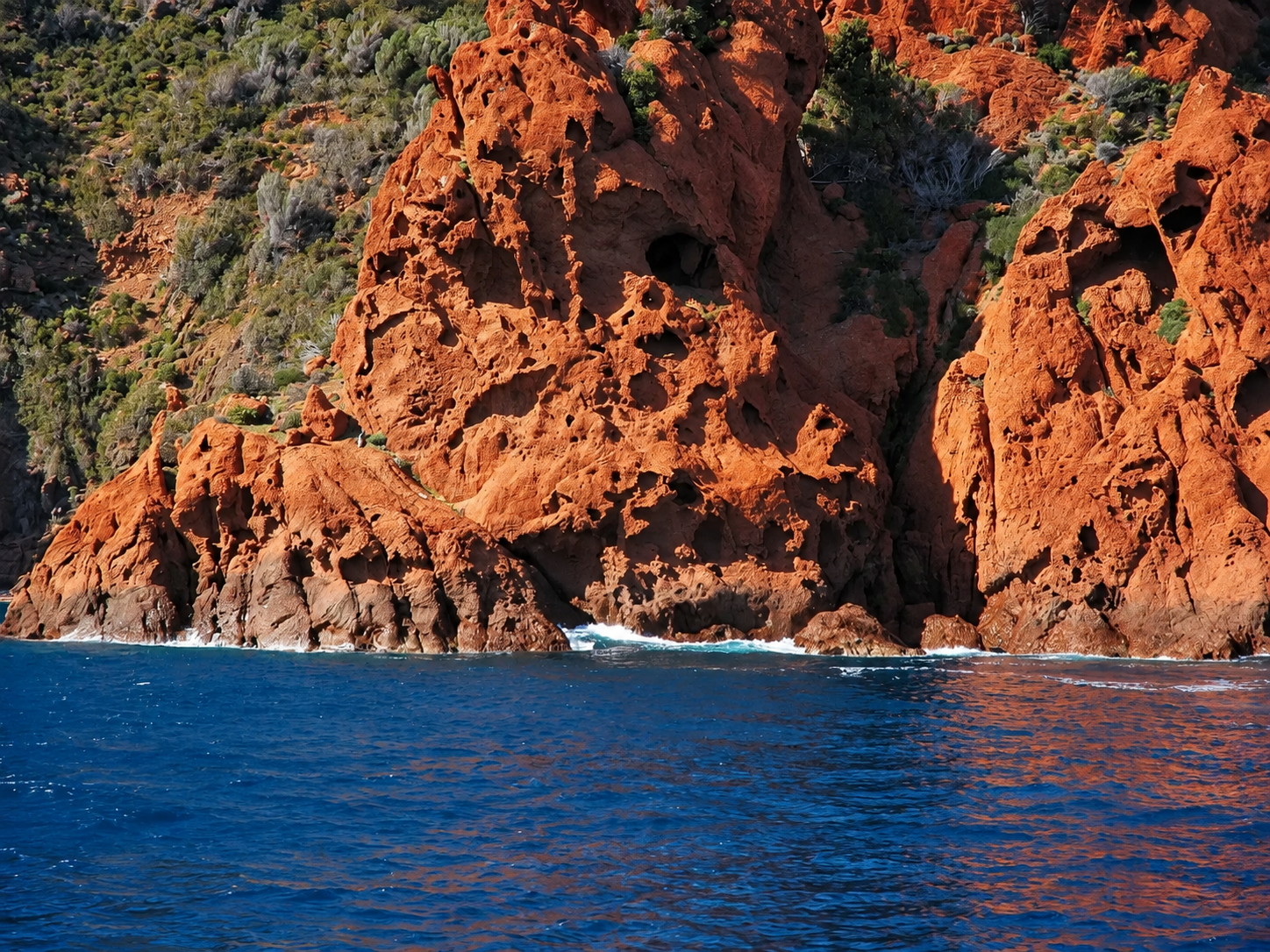
Scandola’s red cliffs, weathered rock and marine setting are a major reason to take a sea excursion. The protected core has no visitor road or walking approach, so choose an appropriate boat trip rather than looking for a land route into the reserve.
Compare vessels as well as itineraries. An open fast boat and a larger excursion boat offer different comfort, shade and boarding arrangements. Follow the operator’s instructions and reserve rules; do not assume swimming, landing or wildlife sightings are included. The route remains dependent on sea conditions.
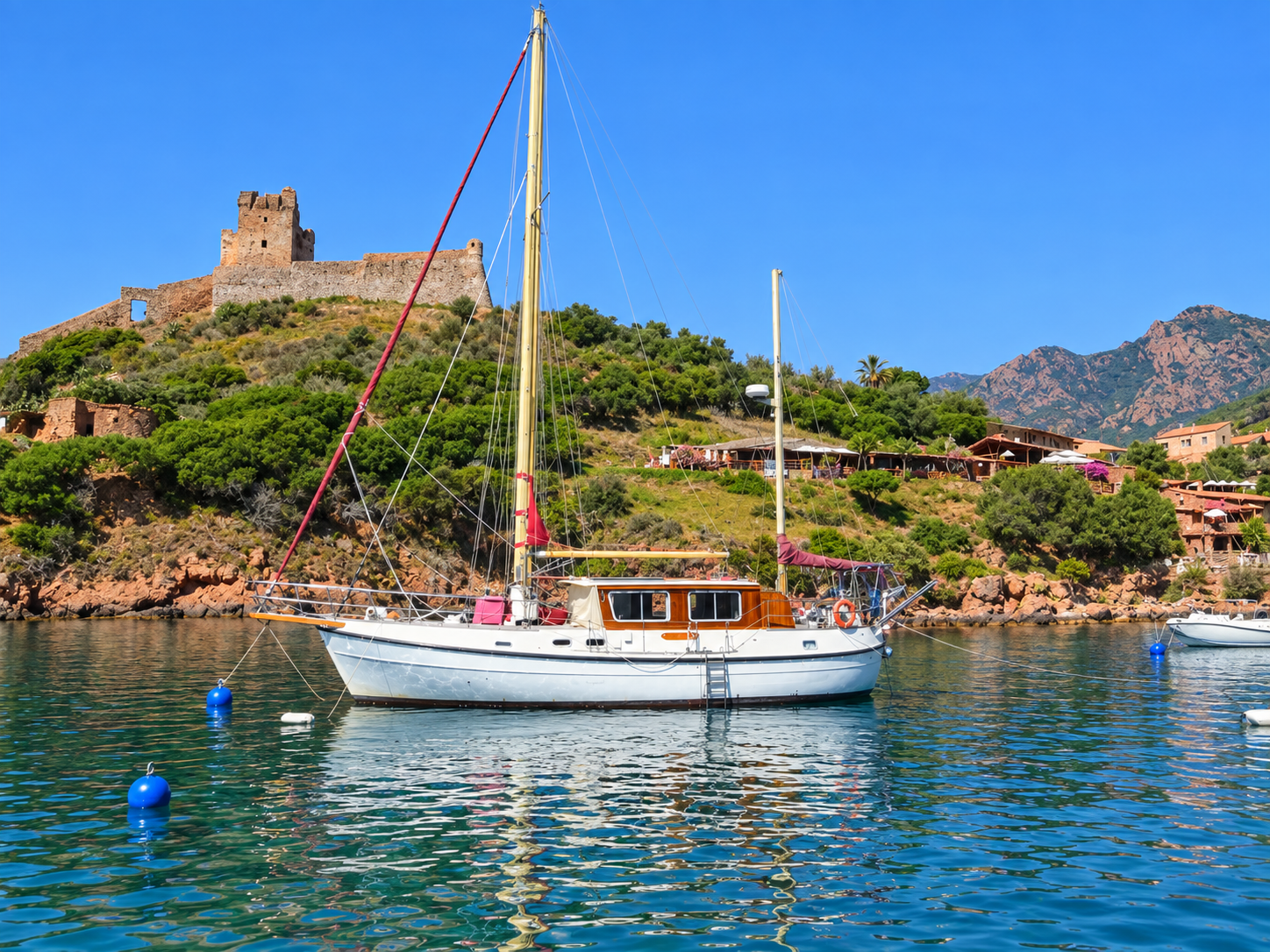
Girolata has no public road access into the hamlet. Its waterfront and fort setting are often included in combined sea excursions, but the length of the stop varies. Check whether your chosen trip actually lands and how much time is available before booking lunch.
Walking from the Col de la Croix is a separate outing with a climb on the return. The port’s route guidance allows about one hour forty-five minutes outward and two hours back. Treat that as a substantial walk, particularly in heat, and do not assume an unbooked boat will provide a convenient one-way return.
Piana, Scandola and Girolata are different choices
Choose the right sea excursion
A short trip along the calanques is different from a longer combined circuit including Scandola and Girolata. Choose by time on the water, vessel comfort and what you most want to see. Ask about shade, seating, toilets, boarding and any restrictions relevant to your party.
Schedule the outing early enough in your stay to leave another possible day. Confirm the departure quay, required check-in time and cancellation arrangements directly. A calmer-looking morning or a beautiful sunset photograph cannot guarantee the conditions on your travel date.
For a smaller walking commitment, the official Château Fort route is listed as roughly 1.2 kilometres and one hour, with about seventy metres of elevation change. It leads through the rock landscape to a viewpoint; the name describes a rock formation rather than a castle visit.
Use the official starting-point information and only authorised parking. Although graded easy in the listing, the surface is a trail and the viewpoint remains exposed. Wear suitable shoes and keep away from edges. The accompanying image illustrates the wider calanques landscape rather than the exact trail.
An overnight stay lets you enjoy the gulf when a day trip would already be turning back. A hotel terrace in Piana and a waterfront evening in Porto offer different versions of the experience. Choose one around your base, settle in and leave the next drive for daylight.
Reserve the meal you care about and ask about terrace seating without assuming it is guaranteed. If staying outside the village or harbour, arrange the return journey beforehand. The most relaxed evening is often the one with the simplest trip back to your room.
Market calendars in western Corsica are local and often seasonal. The regional tourism office publishes current market information, including village and coastal events. We do not list an unverified weekly market day for Piana or Porto: check the calendar for the dates of your stay before making a special journey.
For a short stay, local food shops and confirmed producer visits can fit more naturally than a long market detour. Ask where the cheese, honey, charcuterie or other products come from, and buy according to what is in season and how you will store it.
If a market elsewhere in Ouest Corsica fits your transfer day, it can be a pleasant stop. Keep the driving time in proportion to the visit and avoid leaving perishable purchases in a parked car while you hike or take a boat trip.
These three addresses cover a historic dining room, a panoramic terrace and a harbour meal. Confirm current opening, menus and dietary requirements directly. Bookings should fit the day’s transport, especially after a sea excursion or when returning between Piana and Porto.
AI-generated photorealistic view.
Historic dining room · Piana
Les Roches Rouges restaurant
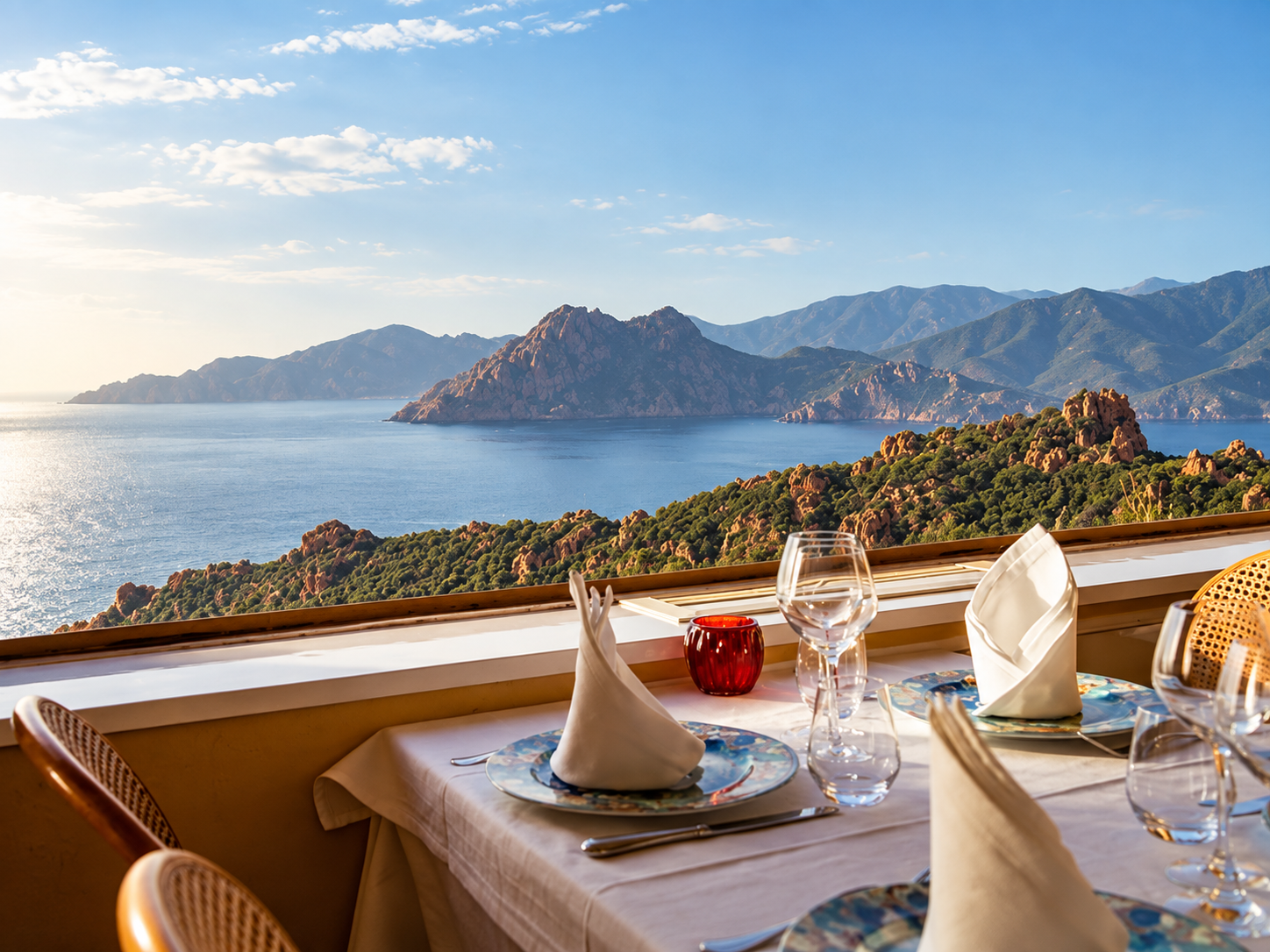
The restaurant at Les Roches Rouges combines a listed historic dining room with a broad outlook over the gulf. It is a natural choice when you want dinner to be part of the Piana experience, with time to enjoy the setting as well as the meal.
The hotel describes evening à la carte dining and a half-board menu for resident guests. Outside guests should confirm reservations and the current service. Request the seating you prefer and clarify any dietary needs; the illustrated window table does not promise the same table on arrival.
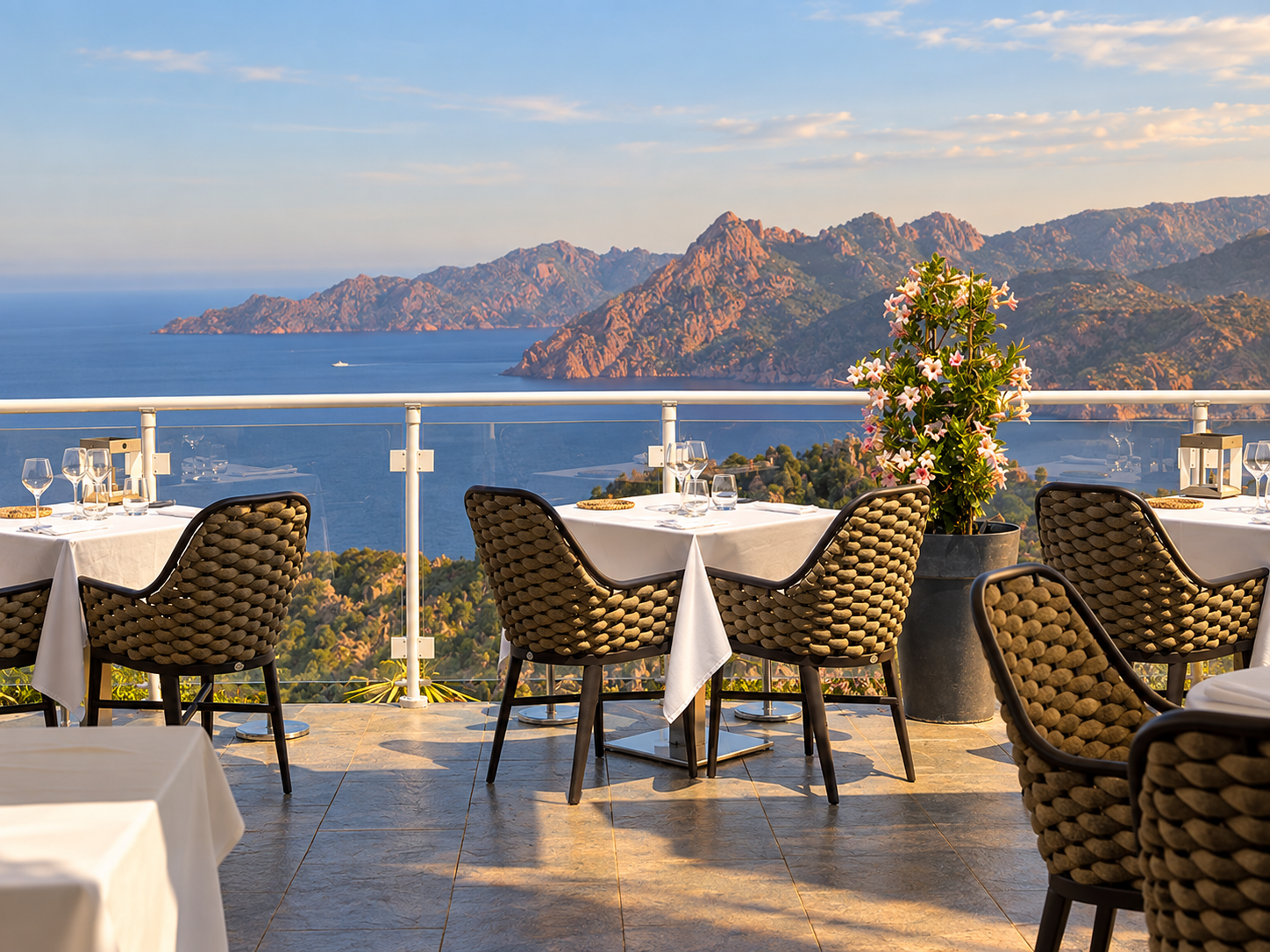
At Hôtel Capo Rosso, La Table de Neptune places the gulf panorama at the centre of dinner. The restaurant emphasises seasonal Corsican produce and a menu that changes with availability. Choose it for a destination evening, rather than a hurried stop between two drives.
Confirm the dining calendar, current menu and whether the terrace will be used in the expected weather. If staying in Porto, plan a suitable return before the meal. The hotel and restaurant share the location, but table arrangements and room views should be requested separately.
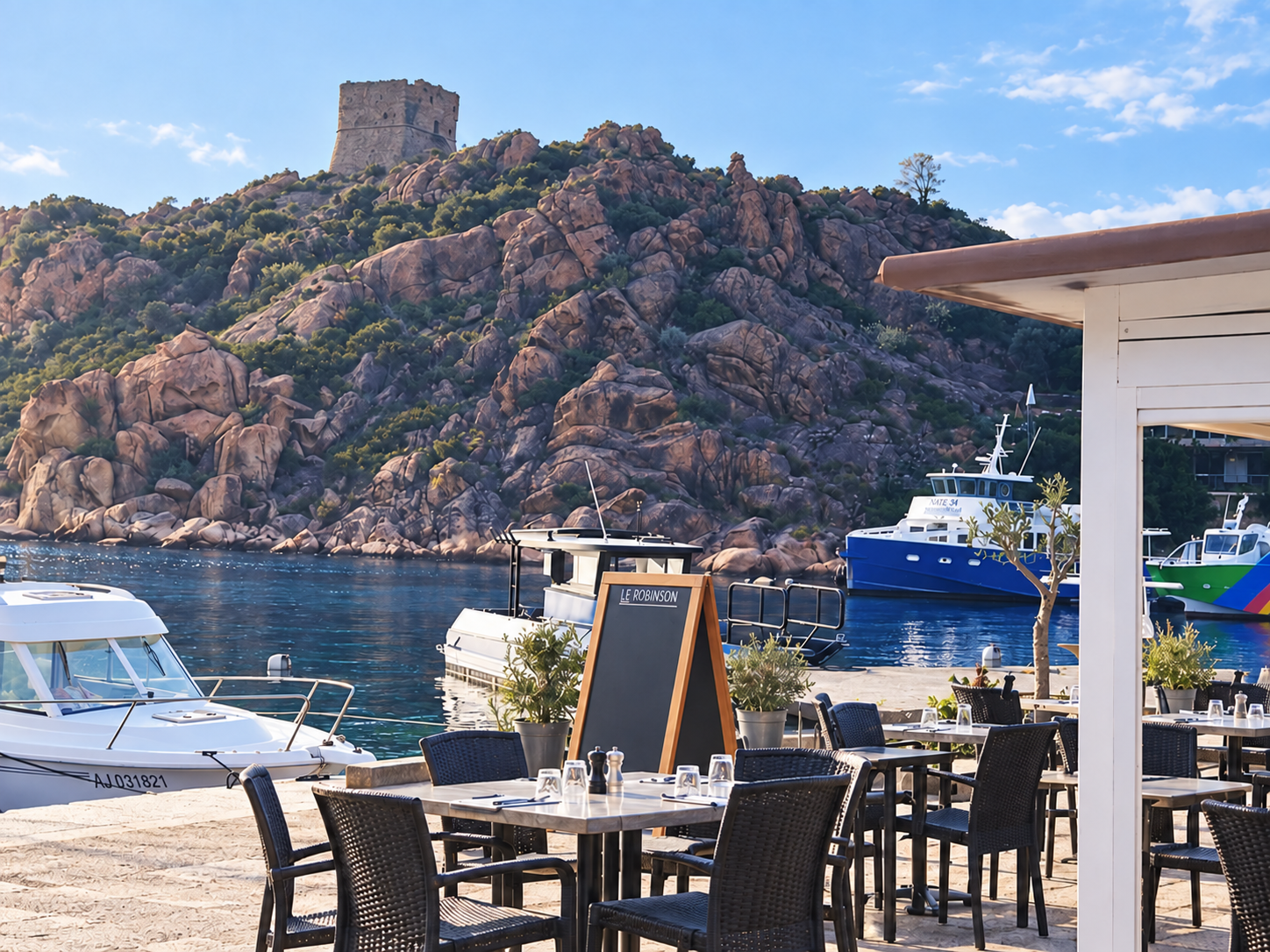
Le Robinson is a Porto marine option for a meal around a harbour visit. The tourism office describes Mediterranean cooking with an emphasis on fish. Its setting makes it a practical alternative to driving up to Piana for dinner after a day on the water.
Reserve directly if the timing matters and confirm what is available that day. Ask about the exact table access if steps or seating space are a concern. Leave a margin after the advertised return of a boat trip, since weather or operational changes can shift the schedule.
Choose Piana for village atmosphere and views from the heights; choose Porto for a stay organised around the marine and excursions. Even within Porto, a hotel on the heights is different from one beside the embarkation quay. Confirm the actual walking route, gradient and parking arrangement.
AI-generated photorealistic view.
3-star hotel · Piana
Les Roches Rouges
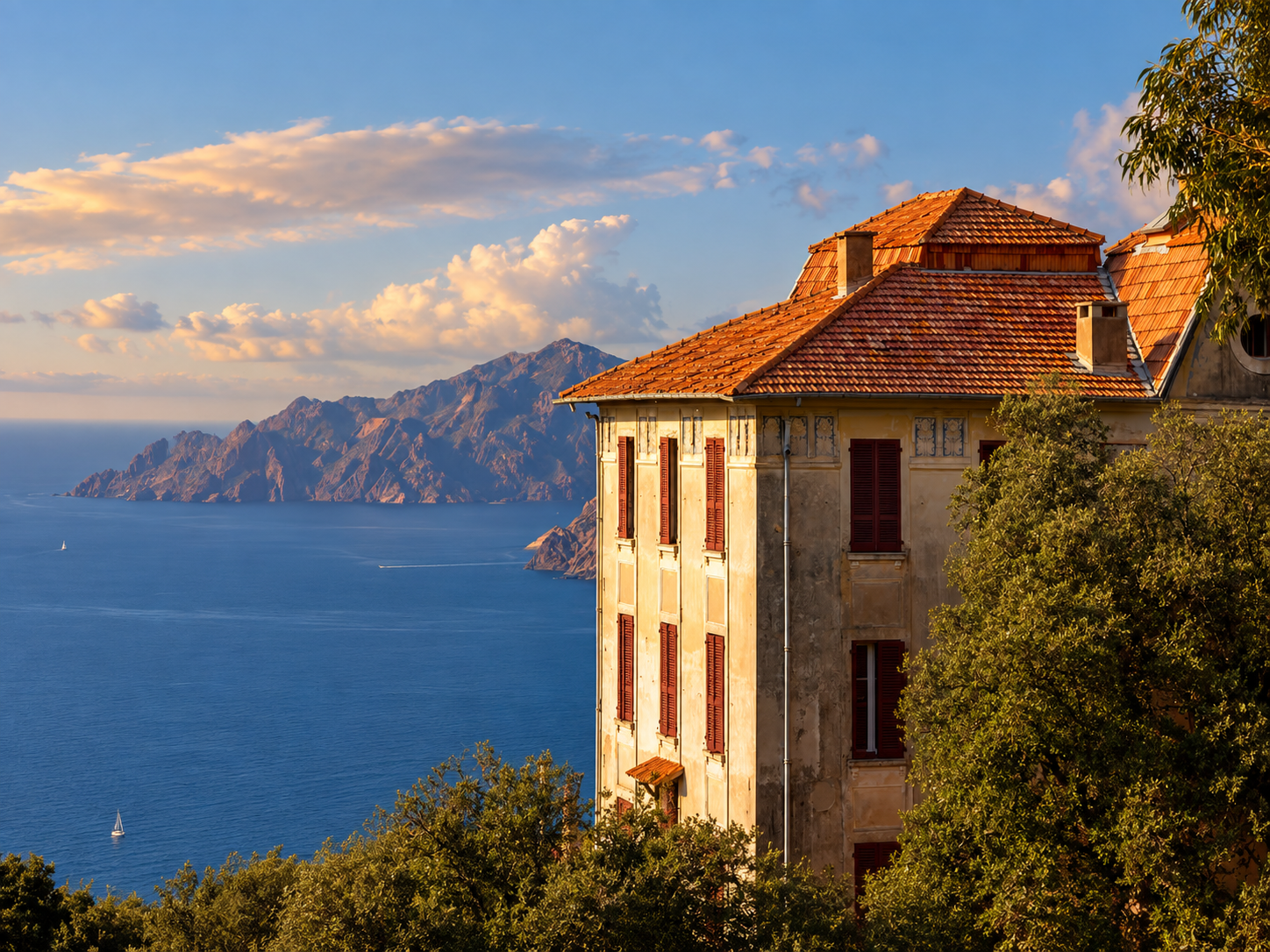
A historic hotel with an atmosphere rooted in the early days of Corsican tourism. Its character and outlook make it a distinctive base for travellers who prefer an established property with a story to a contemporary resort.
Facilities: Rooms in different categories, a restaurant and terrace lounge bar. Sea and garden outlooks differ; some rooms have balconies or terraces. Confirm the exact category, included breakfast and any half-board arrangement when booking.
Best for: Heritage atmosphere and evenings above the gulf. Ask specifically about lift access, steps and luggage handling if these affect your stay.
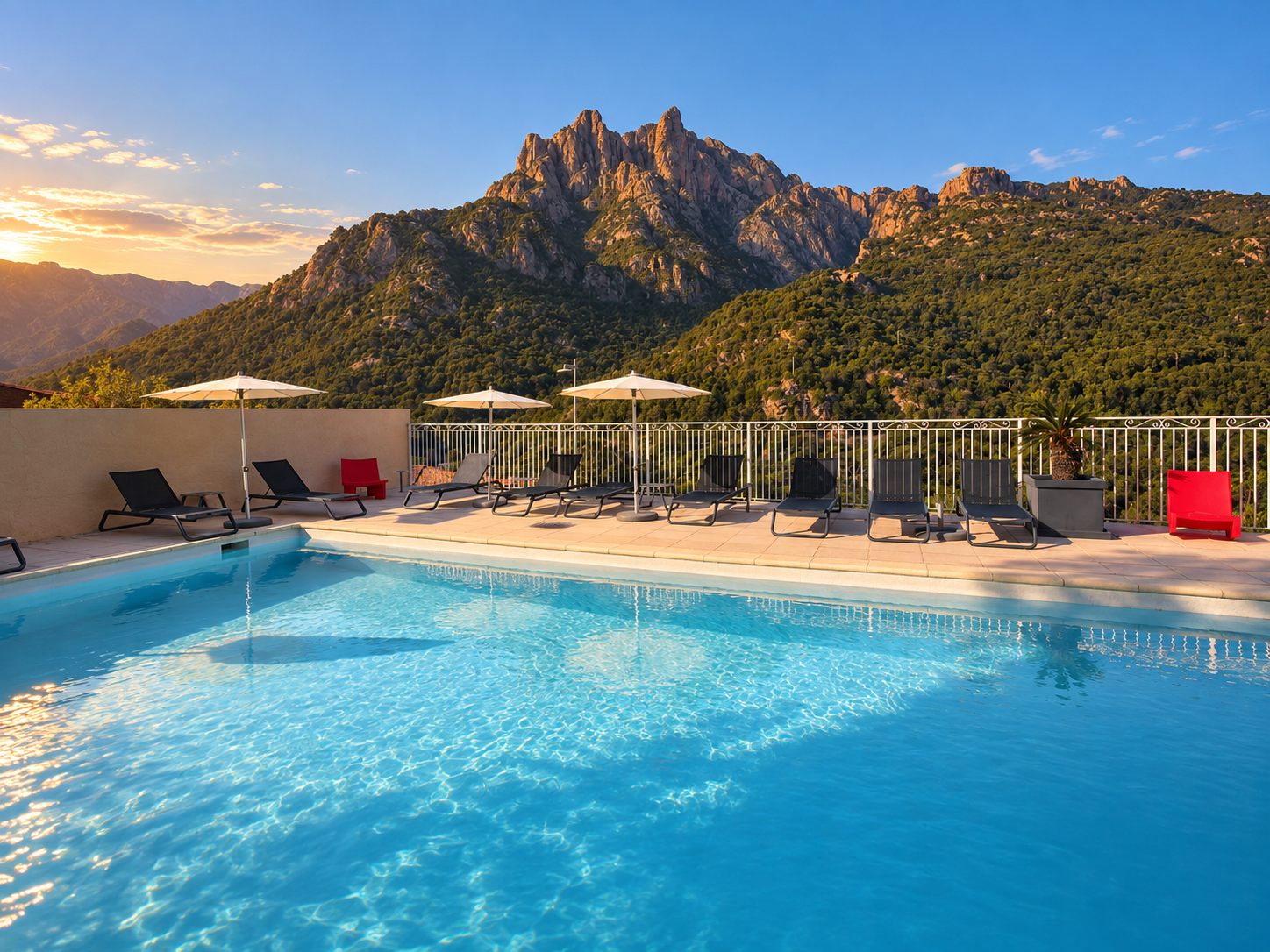
Capo Rosso is a panoramic Piana base with dining and pool time as part of the stay. It works well when you want to alternate outings with quieter hours at the property, rather than spend every day moving between distant sites.
Facilities: Rooms and suites, pool, bar and La Table de Neptune restaurant. Categories and buildings differ, so confirm the booked terrace or balcony, outlook and route to the main facilities.
Best for: A hotel-centred stay with selected walks and sea excursions. The image shows the restaurant terrace; it is not a representation of every room’s view.
Capo d’Orto offers a practical Porto-area base, with mountain scenery and facilities useful for a longer touring stay. Its position above the marine means you should check the hotel-to-harbour journey before deciding to walk to an early boat departure.
Facilities: Air-conditioned rooms, lift, heated pool, private parking and shared practical facilities including laundry equipment. Some services carry an additional charge; confirm what is included.
Best for: Travellers with a car who want a pool and a convenient regional base. Ask about the exact room outlook and parking or charging arrangements before arrival.
Spring can suit a land-and-sea itinerary with more emphasis on walking than swimming. Confirm hotel, restaurant and boat reopening dates individually. Carry layers for an exposed deck or viewpoint, and retain a land alternative for unsuitable sea conditions.
Book key outings and start walks early
Summer
Summer brings heavier traffic and pressure on limited stopping places. Choose fewer outings, begin exposed walks early and keep time for shade and rest. Confirm current fire-risk or trail restrictions, and do not attach a demanding afternoon hike to a full morning at sea.
Plan around the actual operating calendar
Autumn & winter
Early autumn can reward a slower visit, while later months require more careful confirmation of services. A winter trip should be built around accommodation and dining known to be open, with road and weather conditions checked before longer outings. Boat trips are an optional possibility, not the foundation of the plan.
How Long to Spend
One day gives an introduction to the calanques and Porto, but it leaves little flexibility for the sea. Choose either a modest walk or a suitable boat circuit and let the rest of the day remain simple. A late arrival and early departure should not be counted as two full sightseeing days.
Three nights allow a land day and a sea day with more choice over their order. Four nights are better if you want Capo Rosso or the walk to Girolata as well as time at the hotel. Put the most weather-dependent outing early in the stay, subject to suitable conditions.
If this is part of a longer Corsica itinerary, use the gulf as a genuine overnight base. Returning repeatedly from Calvi or Ajaccio uses hours that could be spent in the landscape. Choose the next base according to the wider route, with the transfer day kept manageable.
Getting There
Choose around your whole Corsica route
Arrive via Ajaccio or Calvi
Ajaccio is a common gateway for western Corsica; Calvi can also make sense when combining the gulf with Balagne. Compare flight or ferry arrival times with the onward road journey. An island arrival does not mean you are already close to the hotel.
Book a car or transfer when a straightforward arrival matters, and allow time for collection, stops and the final approach. Keep your first meal and check-in realistic. Ask the hotel for directions if the entrance or parking is not obvious from the road.
The Corsican railway does not serve this part of the west coast. Regional bus services are limited and vary by route and season, so check exact dates and stops before choosing a car-free stay. A bus reaching the area is not necessarily a convenient daily sightseeing service.
The tourism office also provides information on the U Vagabondu local minibus service. Check eligibility, reservations, routes and operation dates rather than assuming it serves your hotel or every trailhead. Arrange essential transfers separately if a missed connection would disrupt the trip.
The D81 and local approach roads include bends, narrow sections and places where passing requires care. Plan by driving time and comfort, not kilometres alone. A day with a long transfer should have fewer other commitments, especially when the driver is also hoping to enjoy the scenery.
Use authorised stopping places to look at the landscape. If one is full, continue safely rather than improvising a roadside space. For the onward journey through the interior, check the route and conditions in advance and build in a proper break.
In Piana, use signed visitor parking and ask your accommodation about any private spaces or luggage-drop arrangement. Historic village lanes and scenic-road verges are not substitutes for a car park. Check the posted conditions at the facility you choose; charges and restrictions can change.
In Porto, identify the departure quay and the most suitable authorised parking before the day of a boat trip. Leave a separate allowance for parking, walking and check-in. Staying in the Porto area does not guarantee that your hotel is at harbour level.
At trailheads, use the official route’s starting-point information and current signs. Places around the calanques are limited, and the road is an active traffic route. Do not block bends, passing spaces, driveways or emergency access for a photograph.
For Girolata on foot, the port’s route guidance identifies the Col de la Croix as the starting point for the Chemin du Facteur. Plan the return climb and avoid relying on an improvised boat connection. If walking conditions are unsuitable, change the day’s objective rather than parking elsewhere and guessing a route.
Begin with Piana and the calanques while allowing a modest amount of walking. If using the Château Fort route, follow its official access information and include time for parking and breaks. Continue to Porto for lunch and a harbour visit.
Choose the tower if its steps and opening suit your party, or keep the afternoon at marine level. A short boat trip can replace the walk if conditions and departures fit; do not add it automatically on top of an already full day.
Swap the sequence with the weather
Three days · land, sea and breathing space
Use one day for Piana and a shorter calanques walk, one for a suitable sea excursion, and one for Porto, beach time or your hotel. Keep the sequence flexible so the best sea day does not fall after your only available sailing.
Reserve important meals but avoid tight timings after excursions. If the boat trip includes Girolata, check the landing duration before planning food there. A missed sailing is easier to absorb when the whole programme is not already committed.
One major outdoor objective at a time
Four or five days · add a proper hike
Add Capo Rosso or the walk to Girolata as its own half-day or longer outing, with a comfortable margin for breaks. Do not schedule both demanding walks on consecutive days unless that is the holiday you specifically want.
Leave another half-day mostly free. It can become a second view of the calanques, a long lunch or time by the pool. For a mixed-ability group, organise an appealing alternative rather than expecting everyone to complete the same route.
Accessibility & Practical Advice
The tower steps, rocky walking routes and steep coastal terrain require individual choices. Ask about the exact route and surface, not simply whether a site is described as easy or family-friendly. A harbour-level visit and a terrace meal can make a rewarding day without a hike.
For a boat trip, discuss boarding, seating, movement on board, shade and toilets directly with the operator. Mention any mobility or comfort requirements before booking. A faster trip is not necessarily the easiest option for everyone.
For hotels, confirm the room and the route between parking, reception, dining and pool areas. A lift or accessible room does not describe every part of the property. Request the practical details that matter to your group in writing when they determine the choice.
Check local weather, fire-risk notices and any trail closures before walking. Carry water and sun protection, stay on authorised routes and allow time for the return. Around the sea, follow local signs and operator decisions; photographs show a moment, not the conditions you will encounter.
FWP Insider Advice
Match the base to your evenings. Piana is attractive for a stay above the gulf; Porto is simpler for harbour meals and departures. A beautiful hotel becomes a better choice when its location also fits the practical rhythm of your trip.
Keep the sea day flexible. Put a suitable outing early in the stay, with a possible alternative date. Choose the boat for comfort and itinerary, and leave your next meal reservation enough room.
Give the landscape time. Returning to the same view in different light can be more rewarding than another long drive. Leave at least one afternoon with no destination to reach.
Frequently Asked Questions
Should I stay in Piana or Porto?
Piana suits village evenings and panoramic hotels; Porto suits harbour life and sea departures. Check each hotel’s exact location, because some Porto properties are on the heights rather than beside the marine.
How many nights do I need?
Three or four nights allow land and sea days with useful flexibility. Stay longer if you want substantial hikes as well as time at the hotel.
Can I get there by train?
No. The railway does not serve Piana or Porto. Check current bus services or organise a car and transfers for the journeys you need.
Can I drive to Girolata?
There is no public road into the hamlet. Visitors arrive on foot or by sea. Confirm the return arrangement before choosing either option.
Is Capo Rosso a short viewpoint stroll?
No. The official walking route is about eight kilometres with roughly 450 metres of ascent, on rocky and exposed terrain. Allow a generous half-day and choose according to conditions and fitness.
Can I walk into Scandola?
The protected core is visited from the sea; there is no visitor road or walking route into it. Use a suitable boat operator and follow the reserve’s restrictions.
Is Porto beach ideal for toddlers?
The water becomes deep quickly and the shore is pebbly. Assess conditions and your group’s needs carefully; a beach pause need not include swimming.
Are sea excursions guaranteed every day?
No. Weather and sea state can alter routes or cancel departures. Keep a land plan and confirm the operator’s cancellation arrangements.
Plan Your Stay
France. Well Planned.
See the gulf at its own pace.
We plan. You choose. You book.
We help you choose your base, balance walks and sea excursions, and build a practical Corsica route with room for the conditions on the day.
Last reviewed: 4 October 2026. Confirm operating dates, menus, access and transport directly. Route distances and walking times are taken from the linked official descriptions; allow extra time for stops, conditions and the ability of your group.
All images are labelled AI-generated photorealistic editorial views. The new hotel and restaurant images were made from official property or tourism-listing reference photographs. Porto, Girolata and Scandola references came from Ouest Corsica. Existing calanques and Capo Rosso coastline imagery is reused from our Corsica regional guide.
These are editorial illustrations, not documentary photographs or guarantees of a booked view, table, room or current furnishing. Confirm establishment details directly. Images illustrating a wider area are identified as such in the accompanying text.