A citadel above the sea, villages in the hills and time to slow down
Start with Calvi’s harbour and fortified old town, then explore Balagne through its workshops, hilltop lanes and coastal paths. Choose a comfortable base, make room for the beach and keep the village days pleasantly short.
Best forCoast & villagesA varied stay without changing hotels every night
Ideal stay3–5 nightsTown, villages and a flexible coastal day
Getting aroundTrain + selective car hireRail along the coast; road transport into the hills
Choose your baseWalkable or secludedCheck the actual hotel-to-town journey
Calvi and Balagne offer two complementary rhythms. The marina and citadel make an easy focus for a first day, while the inland villages reward a slower circuit with time to browse, pause and look across the landscape. L’Île-Rousse adds a market town and a rocky seafront walk to the mix.
The most enjoyable plan usually has one main outing each day. Pair two nearby villages rather than collecting every name on the map, and give the coast a morning or afternoon of its own. A short distance on a mountain road is not the same as a quick urban transfer.
Choose accommodation around your evenings. A central hotel makes dinner and a harbour stroll straightforward; a hillside or countryside property encourages more time at the hotel. Both work well, provided you decide how you will return after dinner before making restaurant reservations.
Where to Go & What to See
AI-generated photorealistic view.
Begin above the harbour
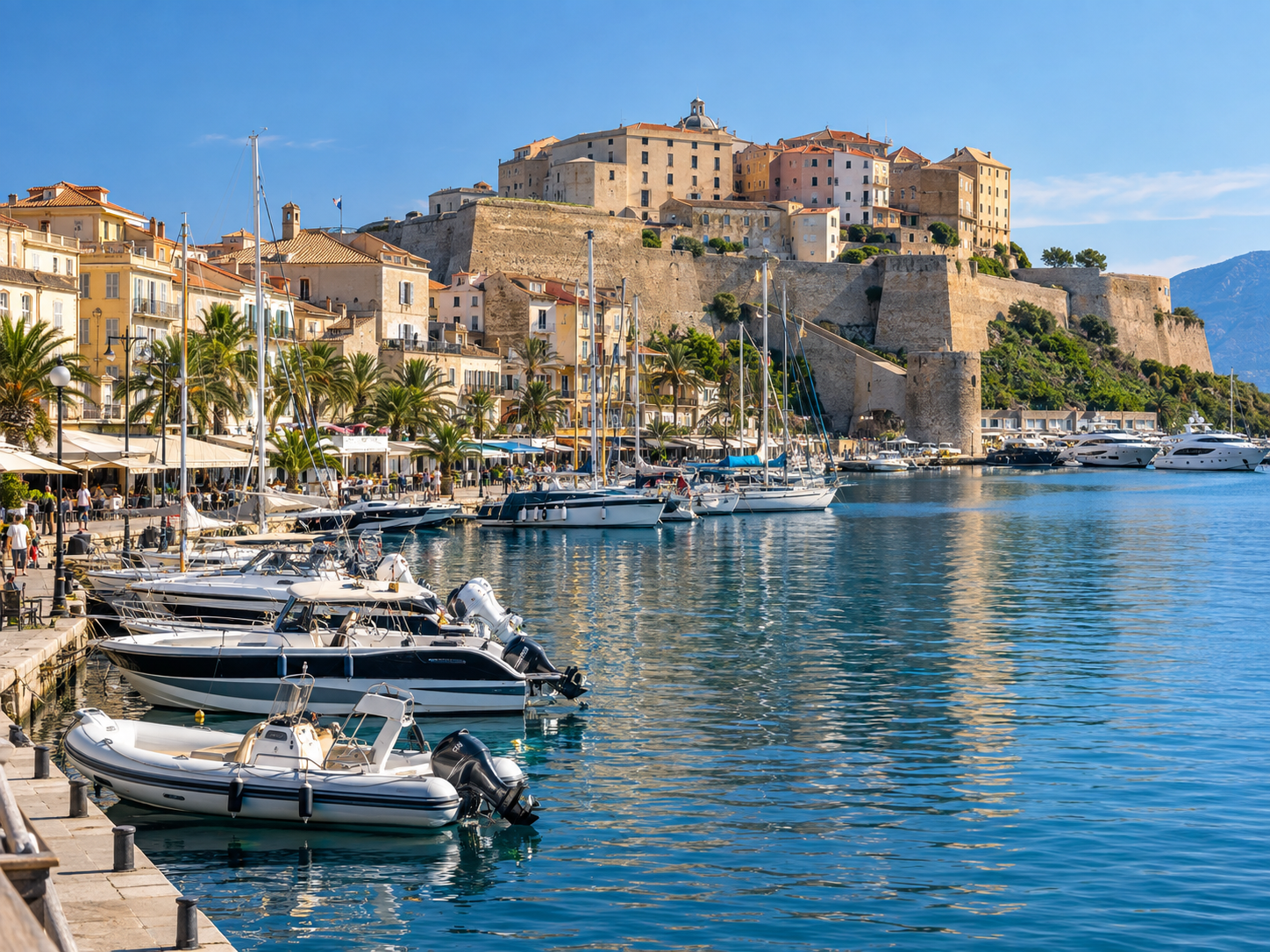
Calvi’s citadel
The fortified upper town gives Calvi its distinctive outline. Explore its stone lanes and rampart viewpoints with time to stop rather than treating it as a single photograph. Looking back down towards the marina helps make sense of the relationship between town, bay and defences.
Plan roughly an hour or two for an unhurried introduction, longer if a church or cultural visit is open and interests you. Surfaces and gradients vary; comfortable shoes and a cooler part of the day make the walk easier. Check individual opening times before building the day around an interior.
Spend time at harbour level before or after the upper town. The boats, waterside cafés and changing view of the fortifications make this a natural place for a pause. A short stroll here can be enough on an arrival afternoon, leaving the longer uphill visit for the following morning.
Choose your restaurant for the meal as well as the view, and check whether your preferred table is in shade. If you are travelling with someone who finds climbing difficult, a harbour-focused visit is a useful alternative; confirm the exact pedestrian route and any steps near your destination.
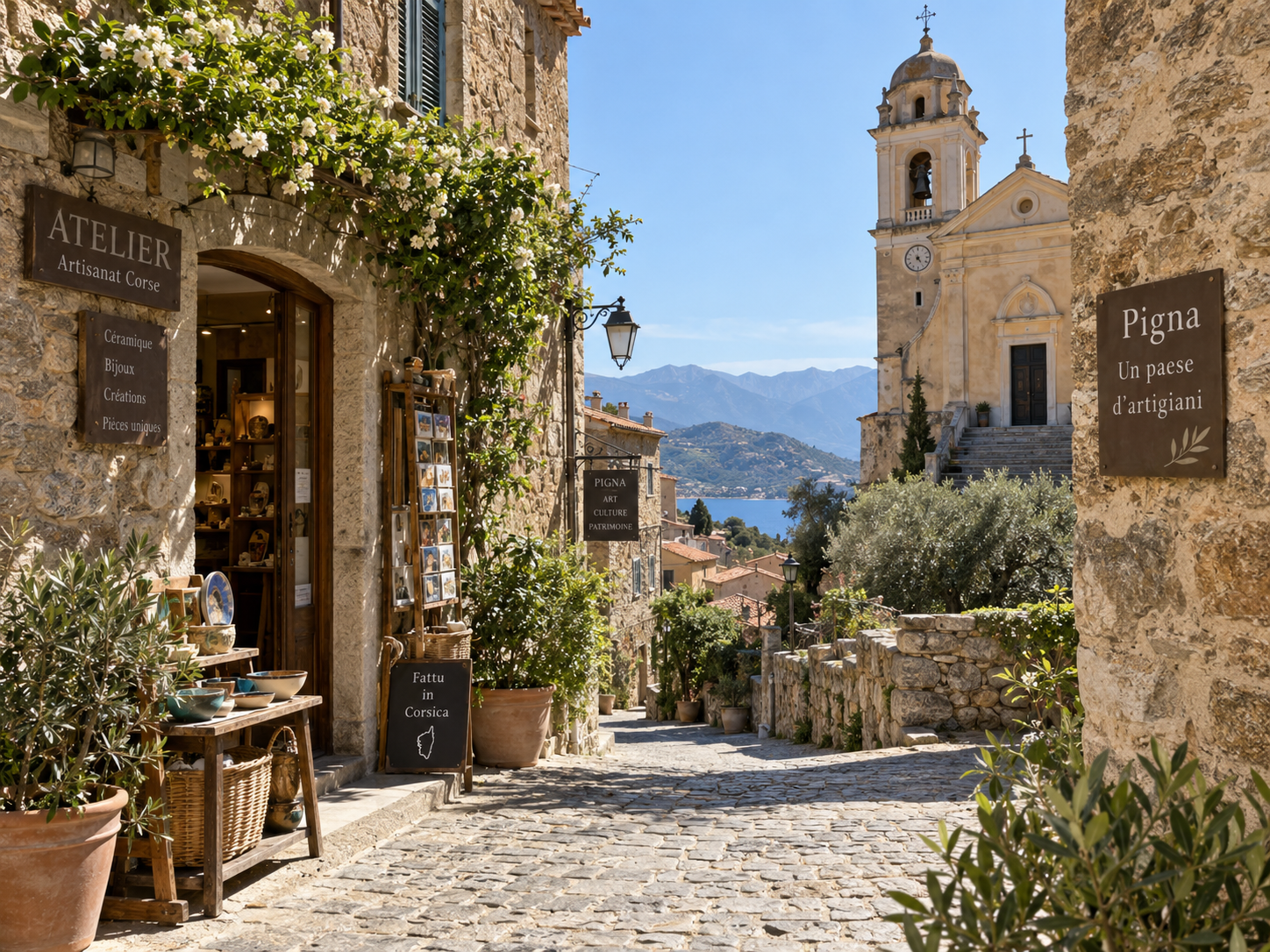
Pigna is a good place to make the artisan side of Balagne part of the day. Walk the small lanes, look for open workshops and allow a conversation or a purchase to determine the pace. The interest lies in the people and work you encounter as much as in the stone setting.
Consult the Route des Artisans before setting out, especially outside the main season. Do not assume every workshop opens continuously through lunch. Combine Pigna with one nearby village, keep your car in designated parking and leave yourself enough time to carry purchases back comfortably.
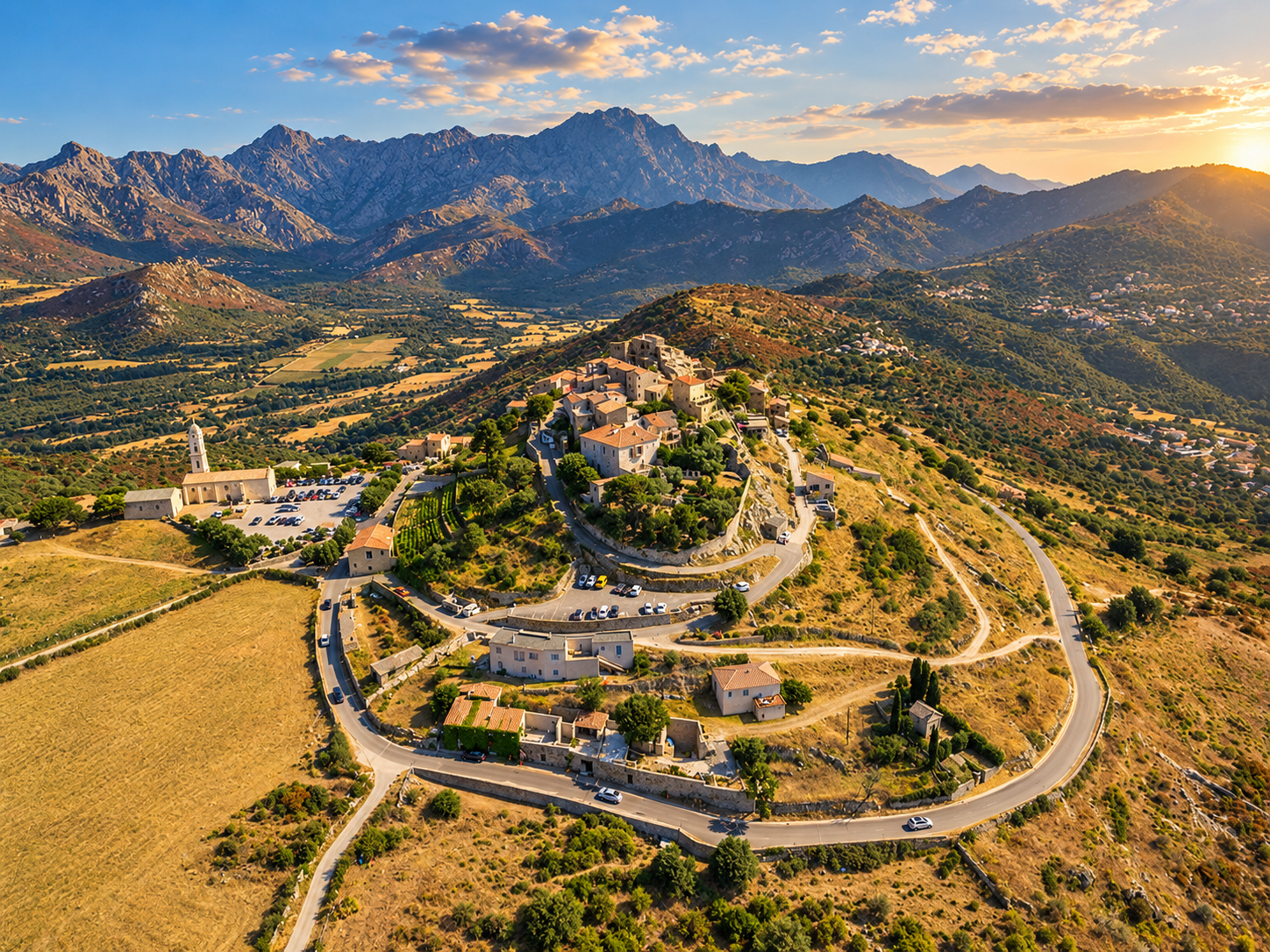
Sant’Antonino’s clustered stone buildings occupy a striking hilltop above the Balagne countryside. The approach reveals the village as a whole; once inside, the experience becomes one of narrow lanes, stone passages and glimpses out towards the surrounding hills.
Park where directed below the historic lanes and continue on foot. Uneven paving, slopes and steps mean this is not a uniformly accessible circuit. Keep the visit compact in hot weather, carry water and resist adding several more villages simply because they appear close together on the map.
Maquis, rocky coves and an exposed coastal landscape
La Revellata
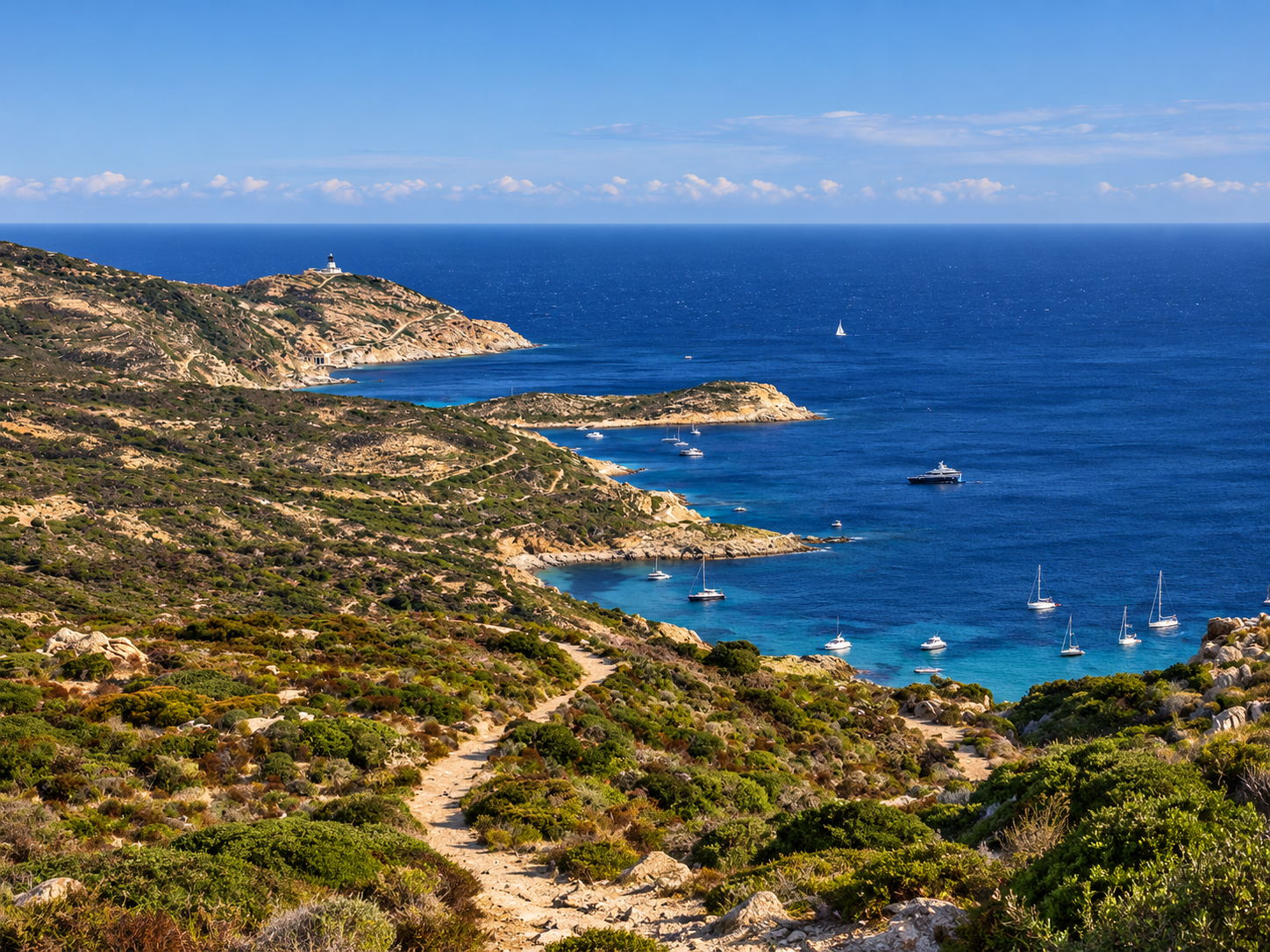
West of Calvi, the Revellata peninsula brings a wilder contrast to the town. The protected landscape includes rocky shores, Mediterranean vegetation and paths towards the lighthouse area. Choose a marked route that suits the conditions and the ability of everyone in the group.
A short out-and-back can be more comfortable than committing to a full circuit. Carry water, wear walking shoes and check current access and fire-risk notices. There is little reason to rush towards an exposed viewpoint in strong wind or midday heat; keep a town or hotel alternative.
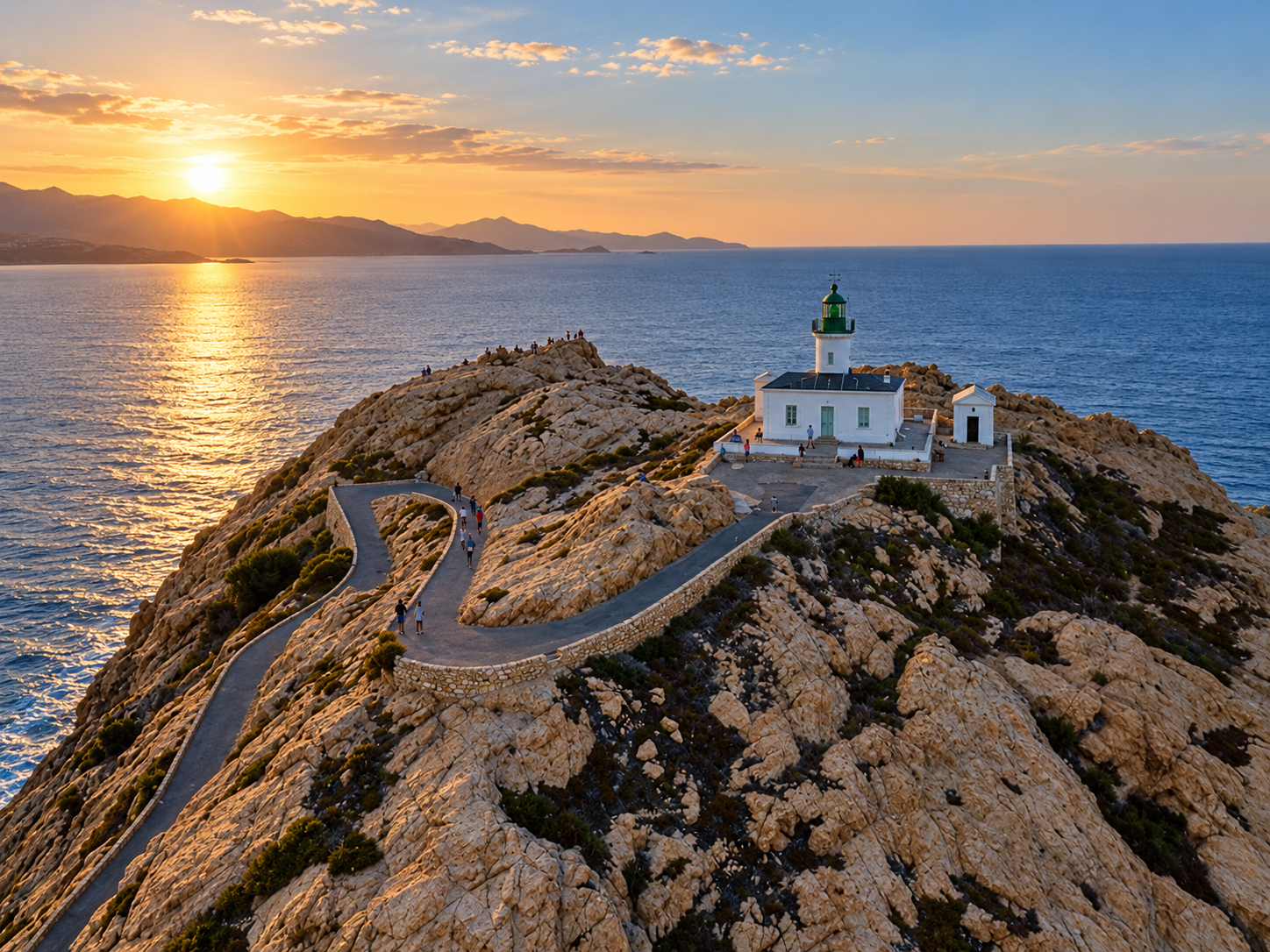
L’Île-Rousse works well as a separate coastal day. Begin in town, allow time for the covered market, then walk towards the Pietra headland if the weather and your energy suit. The pale lighthouse and warm-toned rocks give a very different setting from Calvi’s citadel.
The lighthouse is best treated as an exterior viewpoint unless a current visit is explicitly available. Exposed sections can feel hot or windy. Plan the return before the last train if travelling without a car, and leave a margin for the walk back into town.
The coastal railway offers a useful way to explore without moving the car between every stop. Build a simple day around one destination, such as a market morning in L’Île-Rousse followed by lunch and a headland walk, rather than assuming frequent hop-on services everywhere.
Read the current Chemins de Fer de la Corse timetable for your exact date, including the direction of travel and final return. Check the location of the stop you need and any service notices. Keep luggage light and avoid a tight connection to a flight or reserved dinner.
Use the Route des Artisans to identify workshops that match your interests before visiting the villages. A small number of purposeful stops can be more rewarding than an ambitious driving loop. Ask before photographing a workshop, and consider how fragile purchases will travel home.
Pigna makes a natural focus, but the route is broader than one village. Confirm opening arrangements directly for a particular maker; working studios can have a different rhythm from shops. Leave lunch flexible enough to enjoy the visit without watching the clock.
Set aside a morning for the landscape itself rather than attaching a walk to the end of a long sightseeing day. Choose your turnaround point in advance, then adjust it to the heat, wind and terrain. A modest route with time to pause can be the highlight of the stay.
Bring water and sun protection from the outset. Follow marked and authorised paths, respect local restrictions and keep away from unstable cliff edges. Swimming is a separate decision based on the actual sea conditions and access, not a promised feature of every cove.
IA Generated — illustrative image; not a photograph of this venue or its products.
A morning stop in town
Calvi covered market
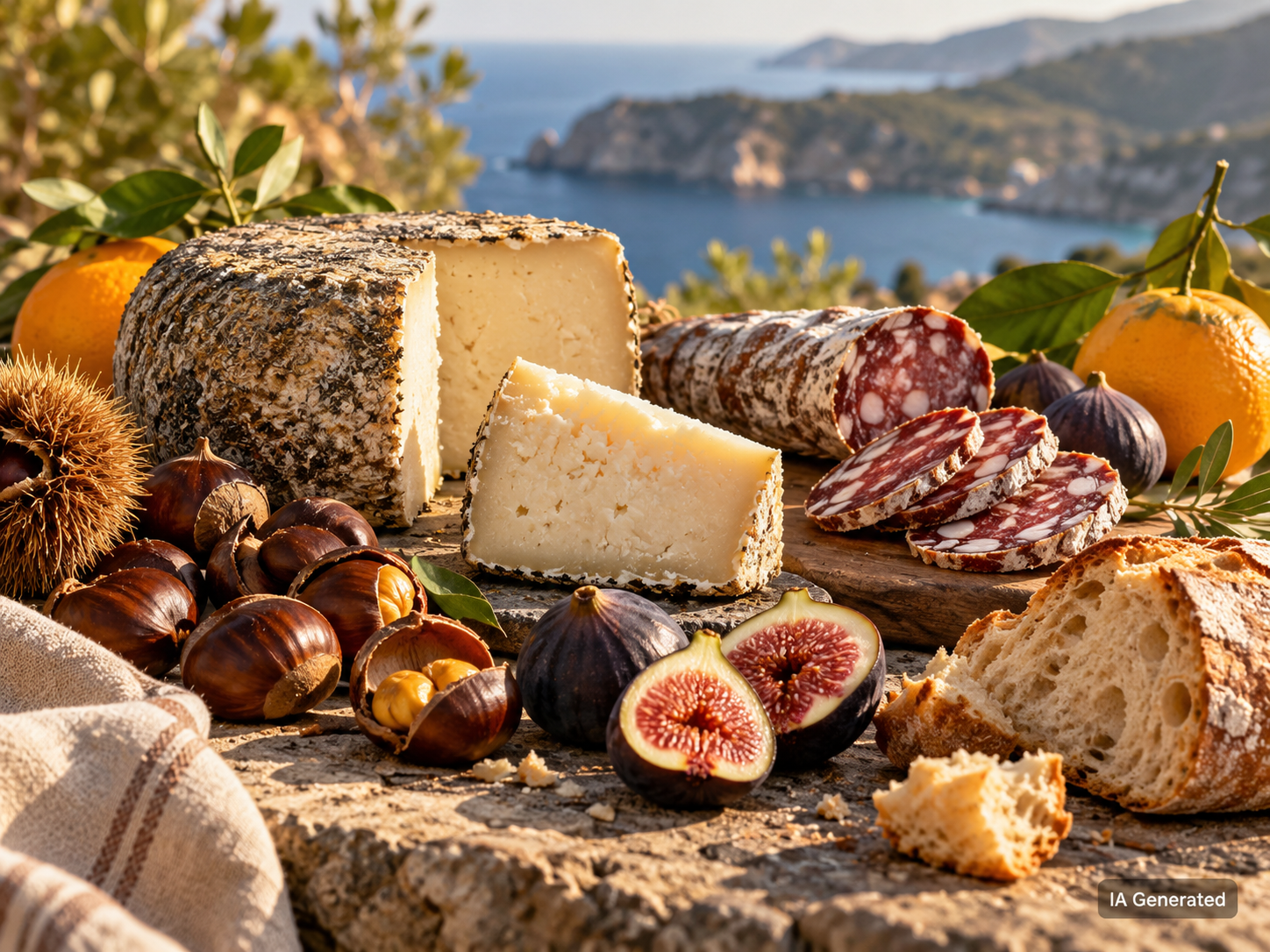
Corsica’s tourism agency lists the covered market as open every morning throughout the year, with produce and regional products. Fit it into the beginning of a Calvi day, when shopping and a coffee can lead naturally into the lower town or citadel.
Buy what suits the rest of the day. Cheese, fish and other perishables need appropriate storage; a long village drive is not the ideal next step with shopping in a warm car. Stall attendance and availability vary, so treat the market as a local encounter rather than a fixed list of products.
IA Generated — regional food illustration; not a photograph of a named restaurant, dish or market.
Daily mornings · listed 8am–1pm
L’Île-Rousse covered market
The official tourism listing gives daily, year-round morning opening from 8am to 1pm. Arrive with enough time to browse before lunch, then use the rest of the day for the town and Pietra rather than rushing straight back to Calvi.
Confirm arrangements around holidays or special events. If coming by train, check both directions before leaving and keep purchases easy to carry. The market is a useful anchor for a day, but not a reason to squeeze several distant stops into the same afternoon.
Two destination restaurants and one central aperitif option suit different evenings. Confirm seasonal opening, the current menu and any dietary requirements directly. Terrace use depends on weather and service arrangements; a photograph does not guarantee a particular table.
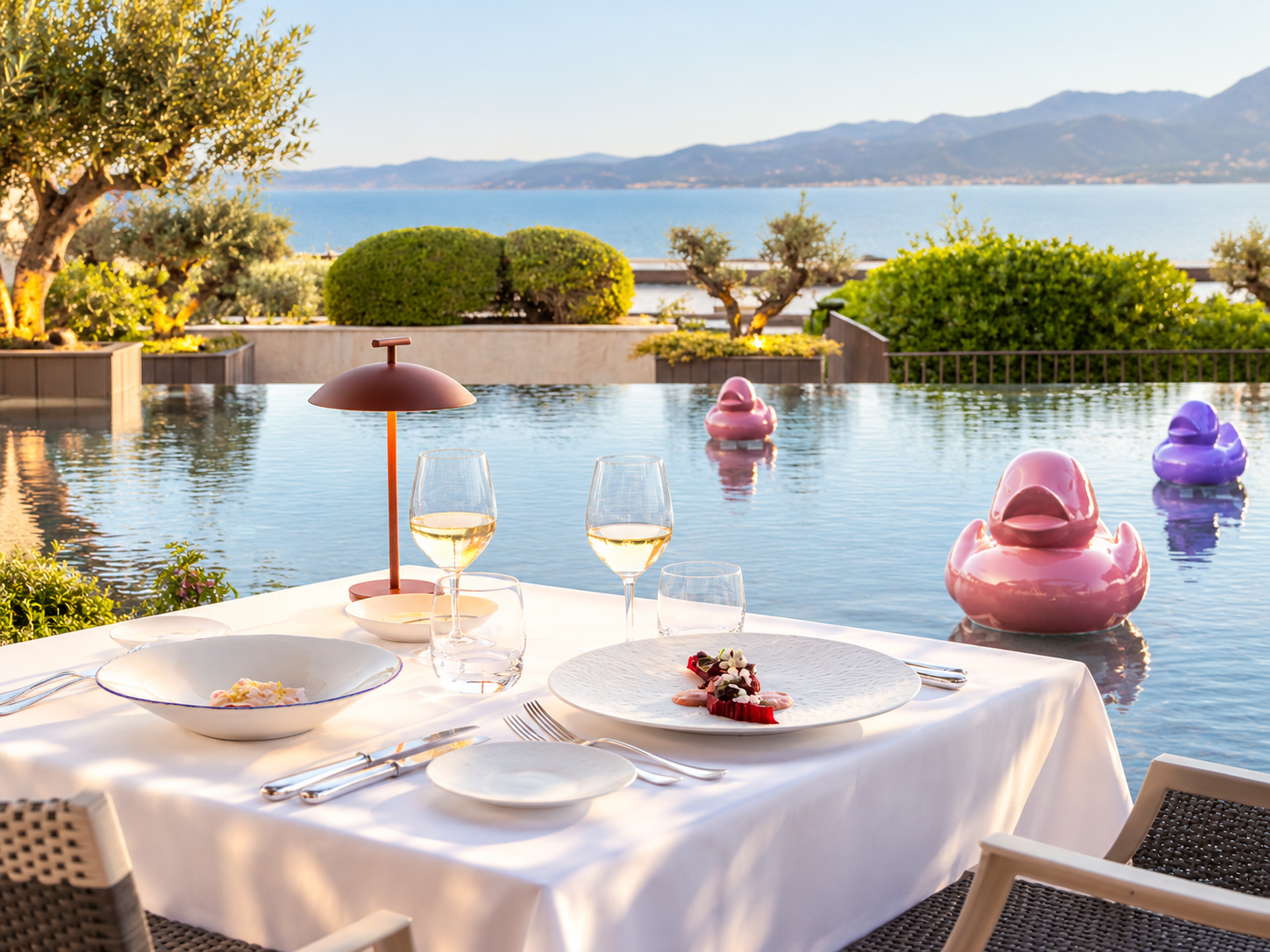
AI-generated photorealistic view.
A destination dinner above Calvi
La Table by La Villa
La Table pairs Mediterranean cooking with the setting of La Villa, above the town. It is a good choice when dinner is the main event of the evening and you want time to settle into the view and atmosphere. The illustrated terrace belongs to the property; request your preferred seating when booking.
Reserve directly and ask which menu and dining space operate on your dates. Arrange the journey back before dinner, especially if your hotel is elsewhere. Leave room around the reservation rather than attaching it to an uncertain late return from a long drive.
Italian and Mediterranean cooking in a garden estate
Joia at La Signoria
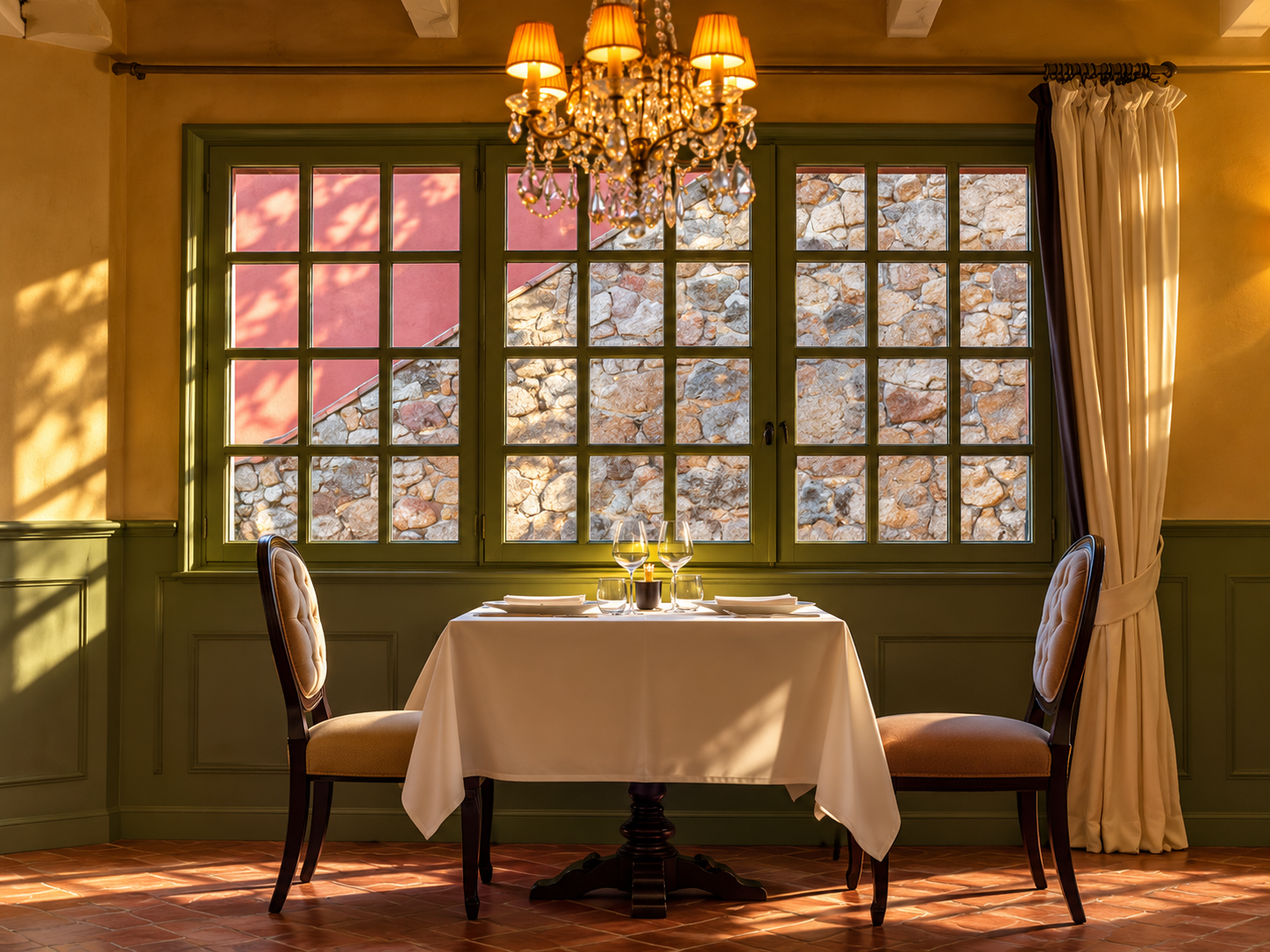
Joia offers an alternative to dining around the marina, with Italian and Mediterranean influences at La Signoria. It suits an evening spent enjoying the property’s setting rather than combining several town stops. The illustrated dining room is based on the restaurant’s own reference photograph.
Book ahead, mention allergies and confirm whether the planned service is indoors or on the terrace. La Signoria is outside the centre, so decide on a car or pre-arranged transfer. Check opening dates directly when travelling at either end of the season.
A central aperitif · not a full dinner recommendation
Loria Bar at Kasano
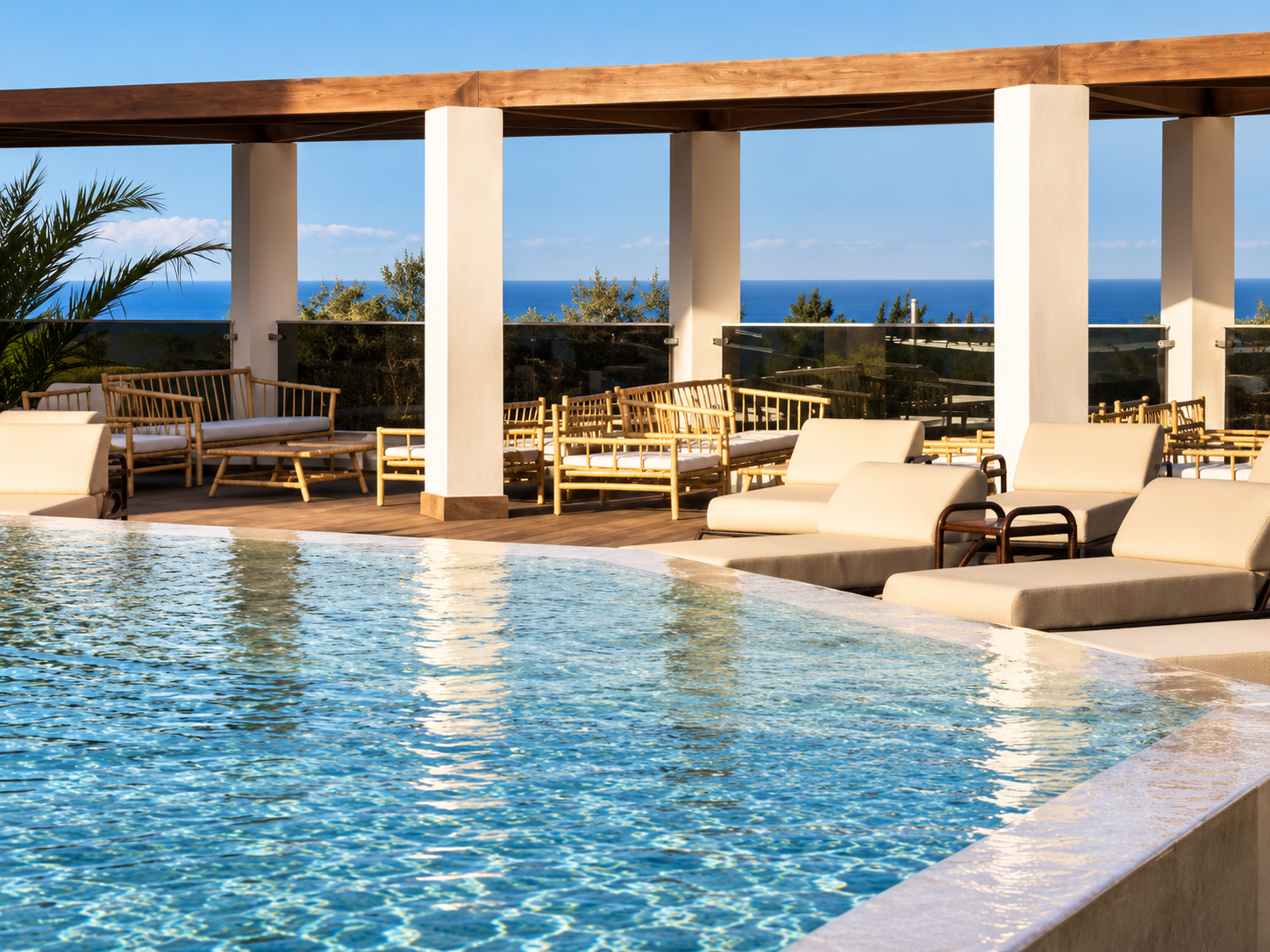
Kasano’s Loria Bar is a convenient drinks option for an evening based around central Calvi. Use it as a pause before dinner, or as part of a quieter evening at the hotel. The image shows Kasano’s pool setting, not a guaranteed bar table or view.
Confirm access for outside guests, current service hours and available food directly with the hotel. If you want a complete restaurant meal, book a dining address separately. This is the practical choice of the three when you want to keep the evening focused on the town.
The three hotels below are selected for distinct settings. Kasano is the central option; La Villa is on the heights; La Signoria is a countryside estate. Star levels refer to the hotels, not every separate villa or accommodation product sold by the same property. Ask about the exact room category, included facilities and access arrangements before booking.
AI-generated photorealistic view.
4-star hotel · central Calvi
Kasano
Kasano suits travellers who want a contemporary hotel close to the citadel and town life. It is the most convenient of this selection for a stay built around walking into central Calvi, with day trips added selectively. Room outlook and balcony arrangements depend on the category booked.
Facilities: Pool, spa with hammam and sauna, treatments, fitness space and Loria Bar. The hotel advertises private covered parking; confirm availability and vehicle requirements.
Best for: A central base with hotel facilities and fewer evening transfers. Ask about the precise step-free route from parking to your room if mobility matters.
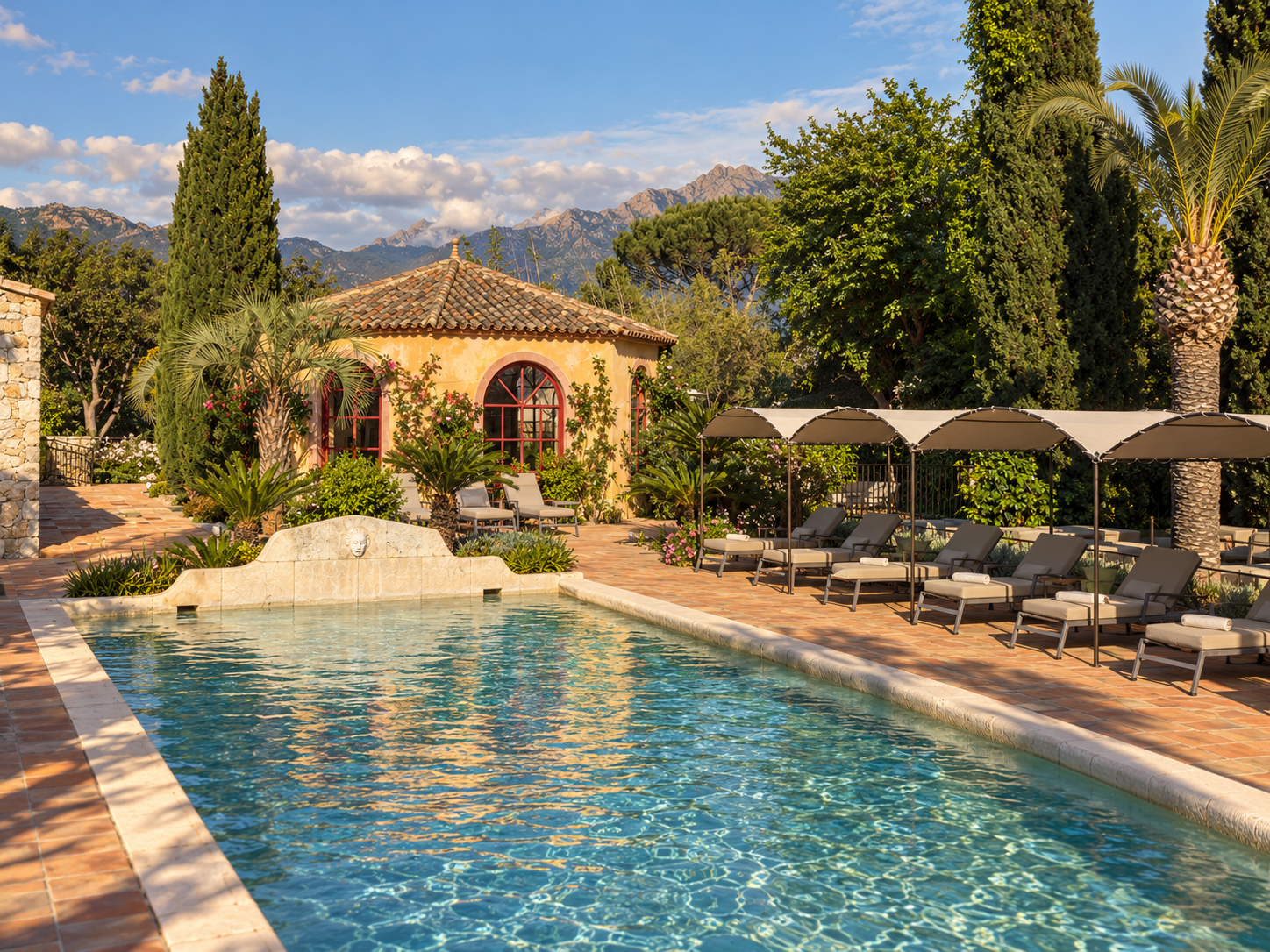
La Villa offers a more residential retreat, with time at the property forming part of the holiday. Its position above Calvi suits travellers who value a quieter setting and destination dining, and who are comfortable arranging the trip into town.
Facilities: Rooms and suites, restaurants including La Table, spa, indoor pool, hammam and fitness facilities. The image illustrates the property’s terrace, not a specific guest room.
Best for: A relaxed hotel-focused stay combined with selected outings. Confirm the accommodation category carefully: the separately offered villas are not covered by the hotel’s star classification.
La Signoria’s garden setting and warm-toned buildings create a different atmosphere from the harbour. This is a useful choice when the estate, dining and spa are part of the reason for travelling, with visits to Calvi and Balagne organised around them.
Facilities: Rooms and suites, pools, restaurants and Casanera spa. Check the seasonal availability of individual services and whether any treatments or facilities require advance booking.
Best for: A quieter retreat with a planned transport arrangement. Do not assume that being in the Calvi area means a practical walk into the centre; organise evening transfers and confirm room outlooks directly.
Spring works well for a stay centred on the citadel, crafts and coastal walking. Keep layers for wind and cooler evenings, and check seasonal hotel and restaurant reopenings before committing to a particular base. Sea swimming should be treated as an optional extra.
Early starts and a slower middle of the day
Summer
Reserve accommodation and key meals early. Visit the citadel or hill villages in the cooler hours, pause through the hottest part of the day and avoid making beach parking the centre of an overfilled itinerary. Check outdoor access restrictions before walking.
Match the plan to confirmed services
Autumn & winter
Early autumn can suit a mixed coast-and-village trip, while later months require more attention to opening dates and transport frequency. Winter is a quieter town-and-landscape visit; build it around confirmed accommodation and dining rather than assuming summer services continue.
How Long to Spend
One full day gives a useful introduction to Calvi: the upper town, harbour and a relaxed meal. If your time is this short, stay local rather than spending much of it driving between villages.
Three nights allow a Calvi day and a village or coastal day, with arrival and departure kept manageable. Four or five nights give you a better chance to fit in L’Île-Rousse, an outdoor morning and some hotel or beach time without watching the clock.
For a longer Corsica journey, treat Balagne as a proper base before moving on. Repeated long return drives across the island consume the time that makes this corner enjoyable. Change accommodation when the next part of the trip genuinely belongs elsewhere.
Getting There
Airport transfer or hire car
Arrive through Calvi
Calvi’s airport is the natural arrival point for a stay focused on this area when suitable flights operate. Compare the whole journey, including arrival time and onward transport, rather than choosing on flight duration alone.
Arrange a transfer or hire car in advance when arrival timing matters. Ask the hotel about collection options and late check-in, and keep the first day light. Do not assume a convenient scheduled bus will meet every flight.
A scenic journey with timetable constraints
Use the Corsican railway
Calvi is connected to the island’s railway network, and the coastal service is useful for L’Île-Rousse and intermediate stops. Connections from other parts of Corsica need careful reading of the timetable; this is not a high-frequency intercity system.
Use the official date-specific schedules and allow generous connection margins. Check service notices before travelling and confirm the station closest to your accommodation. A taxi for the final hotel approach may still be necessary.
A car is useful for Balagne’s hill villages and countryside hotels. Choose the route around realistic driving time, rest stops and the final approach, especially after a ferry journey. Narrower roads and summer traffic can make a short-looking map segment more demanding.
Keep luggage out of view when stopping and ask the hotel for arrival instructions. Avoid attaching an essential timed visit to the end of a long transfer. If driving is not part of your holiday, arrange a local driver for the village day rather than assuming rail serves the hills.
Getting Around & Parking
For Calvi, use the municipality’s current parking information and the signs at the facility you choose. Paid periods, permitted durations and resident restrictions vary by zone. Do not rely on an old map naming a former car park or assume that a space near the citadel is available to visitors.
Ask your hotel for the exact approach, luggage-drop point and parking arrangement before arrival. Private parking may have capacity or vehicle-size constraints. Once settled, combine central visits on foot where practical instead of moving the car for each stop.
At Pigna and Sant’Antonino, use signed parking outside the old lanes and continue on foot. A navigation app’s shortest route may lead towards narrow or restricted streets. Allow time for the walk back, particularly if carrying shopping or travelling with children.
For coastal outings, arrive with one clear destination and a fallback. If the intended access is full or closed, choose another authorised stop; do not block passing places, emergency access or local driveways.
Start with the covered market and lower town, then climb towards the citadel while the day is still comfortable. Explore the lanes and viewpoints, allowing a seated break rather than pushing straight through.
Have lunch at a pace that suits the weather. Spend the afternoon around the marina or resting at your hotel, then return for an evening stroll. Add a longer walk only if it improves the day for everyone; the essential introduction is already complete.
A balanced first stay
Three days · town, villages and coast
Day one belongs to Calvi. On day two, visit Pigna and Sant’Antonino with a proper lunch and time for workshops. Leave the late afternoon flexible instead of adding another hill village by default.
Use day three for L’Île-Rousse by train and a suitable Pietra walk, or choose Revellata if walking is the priority. Check the forecast and timetable before fixing the order. A windy outdoor day can be exchanged for a town or hotel day.
Add breathing space
Five days · more time in fewer places
Keep the three-day outline, then add a separate Revellata morning and a largely unplanned coast or hotel day. Revisit a favourite workshop, enjoy a longer lunch or leave time for treatments if that is part of your chosen hotel experience.
Book the meals that matter, but avoid filling every gap. A spare half-day absorbs a delayed arrival, changing weather or a place you would like to see again. For families, shorter outings with a reliable return are often more valuable than an extra destination.
Accessibility & Practical Advice
Calvi’s citadel and the hill villages involve gradients and uneven surfaces. Ask about specific routes, steps and distances rather than relying on a general description of an accessible destination. Harbour-level time may be a better fit than an uphill circuit for some travellers.
For hotels, confirm the exact room, lift access, bathroom arrangement and route from parking. A property with accessible rooms may still have terraces or leisure facilities reached by a different route. Explain the needs that matter when making the reservation.
For walks, use current local access information, carry water and turn back early enough to keep the return comfortable. Follow fire-risk restrictions and weather guidance. Boat outings and swimming require their own assessment of conditions; a sheltered-looking photograph is not a forecast.
Opening calendars vary across the region. Confirm a specific workshop, restaurant or treatment before making it the main reason for a drive. Keep booking confirmations and transfer details available offline, particularly on a day spent between villages.
FWP Insider Advice
Choose the evening first. If you want to walk out for dinner most nights, a central Calvi base will simplify the trip. If the hotel is an important part of the experience, choose the heights or countryside and plan transport around a smaller number of outings.
Separate the coast and the hills. Pigna and Sant’Antonino make a coherent village day; L’Île-Rousse deserves its own morning and lunch. You can then enjoy each setting without constantly calculating the next departure.
Keep one flexible half-day. Wind, heat, a workshop conversation or a long lunch may change the ideal sequence. A little space in the plan usually produces a better holiday than another compulsory stop.
Frequently Asked Questions
How many nights should I spend in Calvi and Balagne?
Three nights give a first introduction. Four or five nights allow Calvi, the hill villages, L’Île-Rousse and an outdoor day at a more relaxed pace.
Can I visit without a car?
Yes, for a stay centred on Calvi and the coastal railway. Arrange a driver or suitable road transport for the hill villages and any countryside hotel; rail does not take you to Pigna or Sant’Antonino.
Should I stay in central Calvi or outside town?
Choose central Calvi for simpler evenings on foot. Choose a hillside or countryside hotel when the property and its facilities are part of the holiday, with transfers planned in advance.
Are the markets only weekly?
The official tourism listings describe the covered markets in Calvi and L’Île-Rousse as daily morning markets throughout the year. Confirm holiday arrangements and expect individual stalls to vary.
Is the Revellata walk suitable for everyone?
Not automatically. Terrain, exposure, heat and wind matter, and there are several possible routes. Choose a suitable marked section, check access restrictions and keep a simpler alternative.
Can I visit all the Balagne villages in one day?
A driving circuit is possible, but two carefully chosen villages usually make a better day. Leave room for workshops, lunch, parking and walking rather than measuring success by the number of stops.
Can I count on year-round hotel and restaurant opening?
No. Seasonal calendars differ by property and service. Confirm your exact dates directly, especially in spring, late autumn and winter.
Plan Your Stay
France. Well Planned.
Give Balagne room to unfold.
We plan. You choose. You book.
We help you choose the right base, balance coast and village days, and organise practical routes with time to enjoy the places you came to see.
Last reviewed: 4 October 2026. Opening dates, menus, transport and parking rules can change. Use the linked official sources to confirm your travel dates. Suggested visit lengths are planning allowances, not operator schedules.
Images are AI-generated photorealistic editorial views and are labelled accordingly. New destination and hotel images were prepared from identifiable reference photographs; hotel and restaurant references came from the properties’ official websites. The Pietra reference was a published travel photograph, and the Sant’Antonino reference came from the Route des Artisans website.
These images are not documentary photographs and do not guarantee a particular room, table, view, current furnishing or access condition. Confirm booking details directly with each establishment. Existing Calvi and Pigna imagery is reused from our Corsica regional guide.