Coronation heritage, Champagne cellars and a city rebuilt with character
Begin beneath the cathedral’s sculpted façade, explore the Art Deco streets and descend into the chalk cellars. Reims combines major history with a lively food scene and an easy introduction to Champagne.
Best stay2–3 nightsAdd a day for vineyard villages
First visitCathedral & one cellarLeave time for the city between them
Market rhythmWednesday, Friday, SaturdayBoulingrin is the central food stop
ArrivalCheck your stationReims Centre and Champagne-Ardenne TGV differ
Reims deserves more than a quick cathedral photograph followed by a tasting. Its Roman remains, coronation history, twentieth-century reconstruction and working Champagne houses create a city with several distinct stories. A good first visit moves between these themes, leaving space for a market morning or a long lunch.
The practical choice is how to divide your time between the central streets and the Champagne-house district around Saint-Nicaise. They belong in the same stay, but not every stop is adjacent. Group visits geographically, reserve the cellar experience that interests you most, and choose accommodation to suit your preferred evenings and arrival arrangements.
Where to Go & What to See
The city’s essential landmark
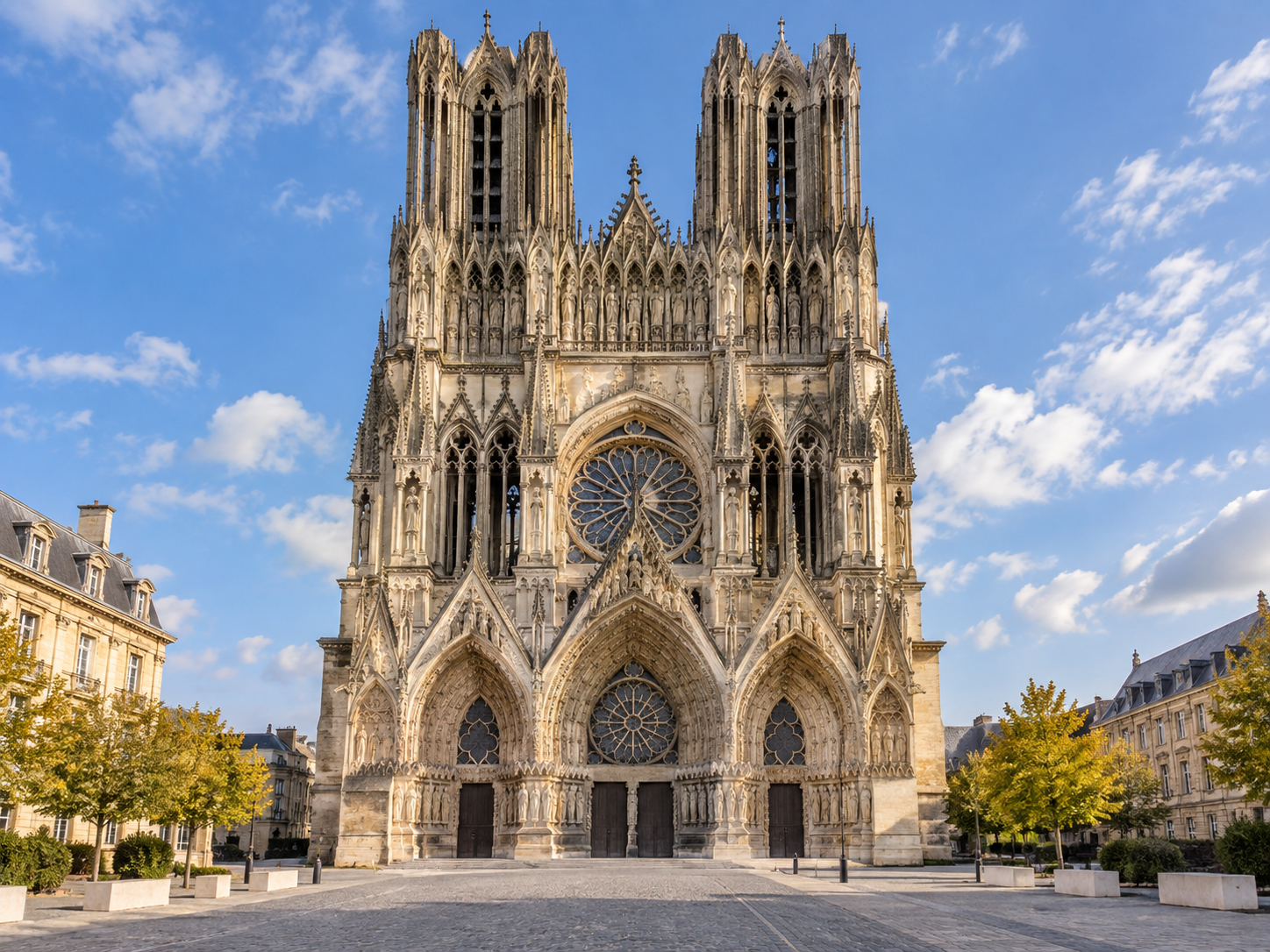
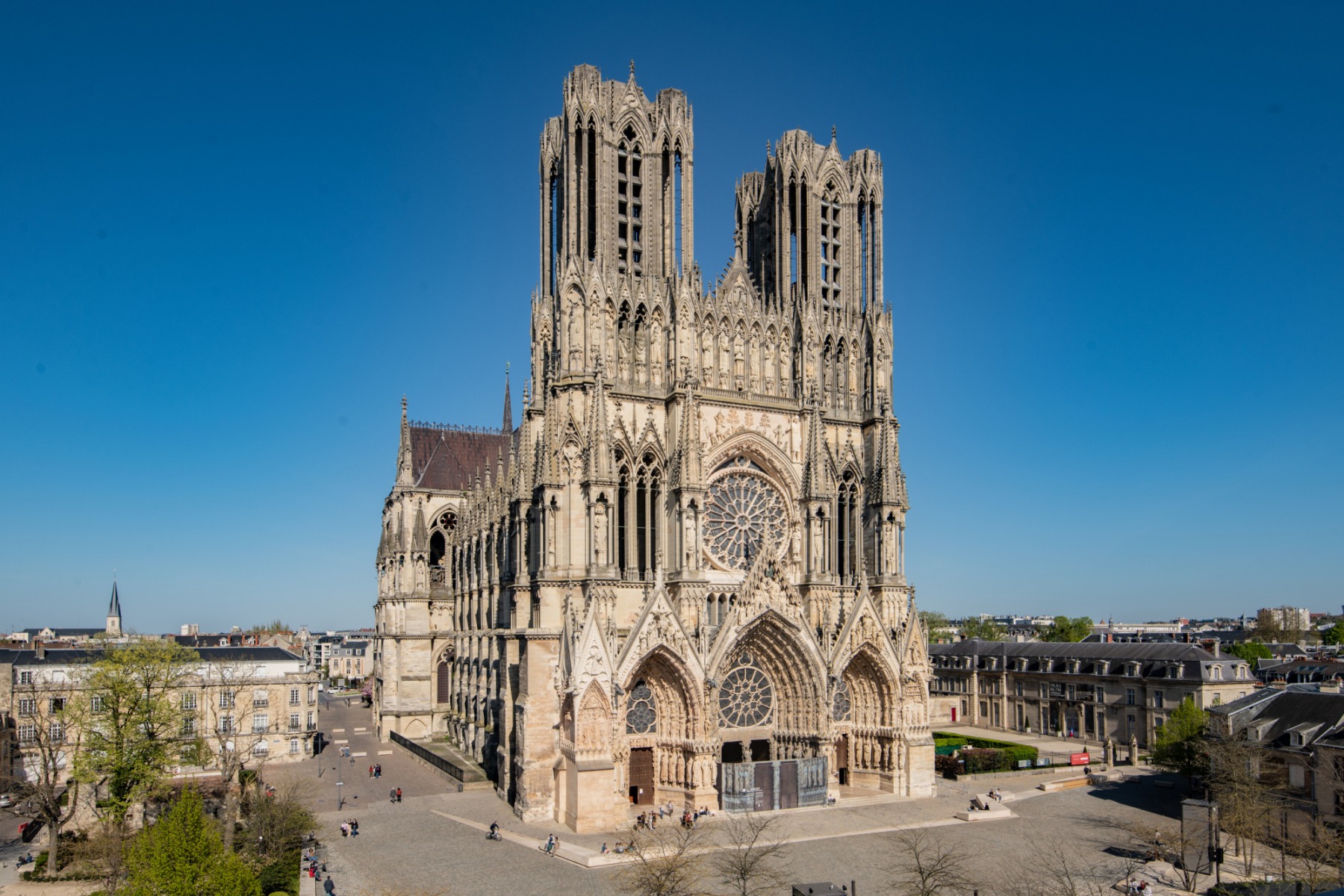
Notre-Dame Cathedral
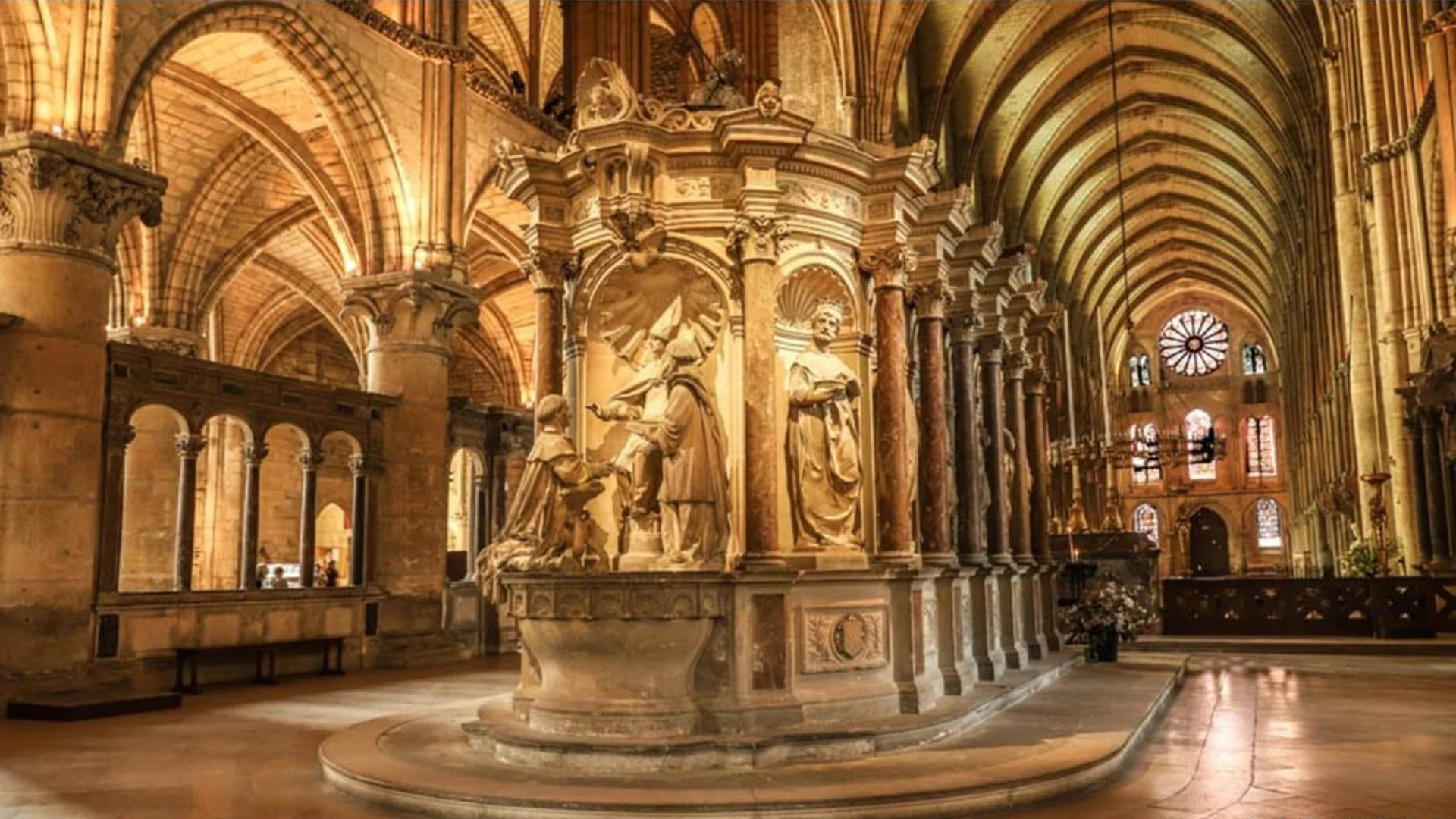
Start outside, where the sculpture and changing light reward a slow look, then go inside for the scale, stained glass and atmosphere. The Gothic cathedral is closely tied to the coronations of French kings and to the city’s rebuilding after the First World War.
Separate a ground-level visit from the tower tour when planning your time. Services and ceremonies affect access, and a guide can add useful context to details that are easy to miss on a hurried circuit.
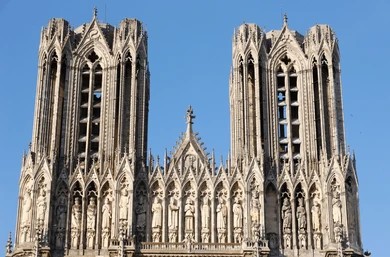
The upper route reveals monumental sculpture, the reconstructed roof structure and views across Reims. It is a rewarding addition for visitors comfortable with a substantial stair climb, rather than an essential part of every cathedral visit.
There are 249 steps. Reserve a timed departure and check seasonal openings, weather restrictions and age conditions. The route is not wheelchair accessible; keep a ground-level alternative for anyone who does not wish to climb.
Give the basilica and former abbey area their own part of the day. The Musée Saint-Remi provides a broader view of local history and archaeology, making this a worthwhile counterpoint to the cathedral quarter.
The museum is normally closed on Mondays, and its current notice reports closure of the cloister garden during works. Check the latest information and accessibility before visiting; access for reduced-mobility visitors is limited to the ground floor.
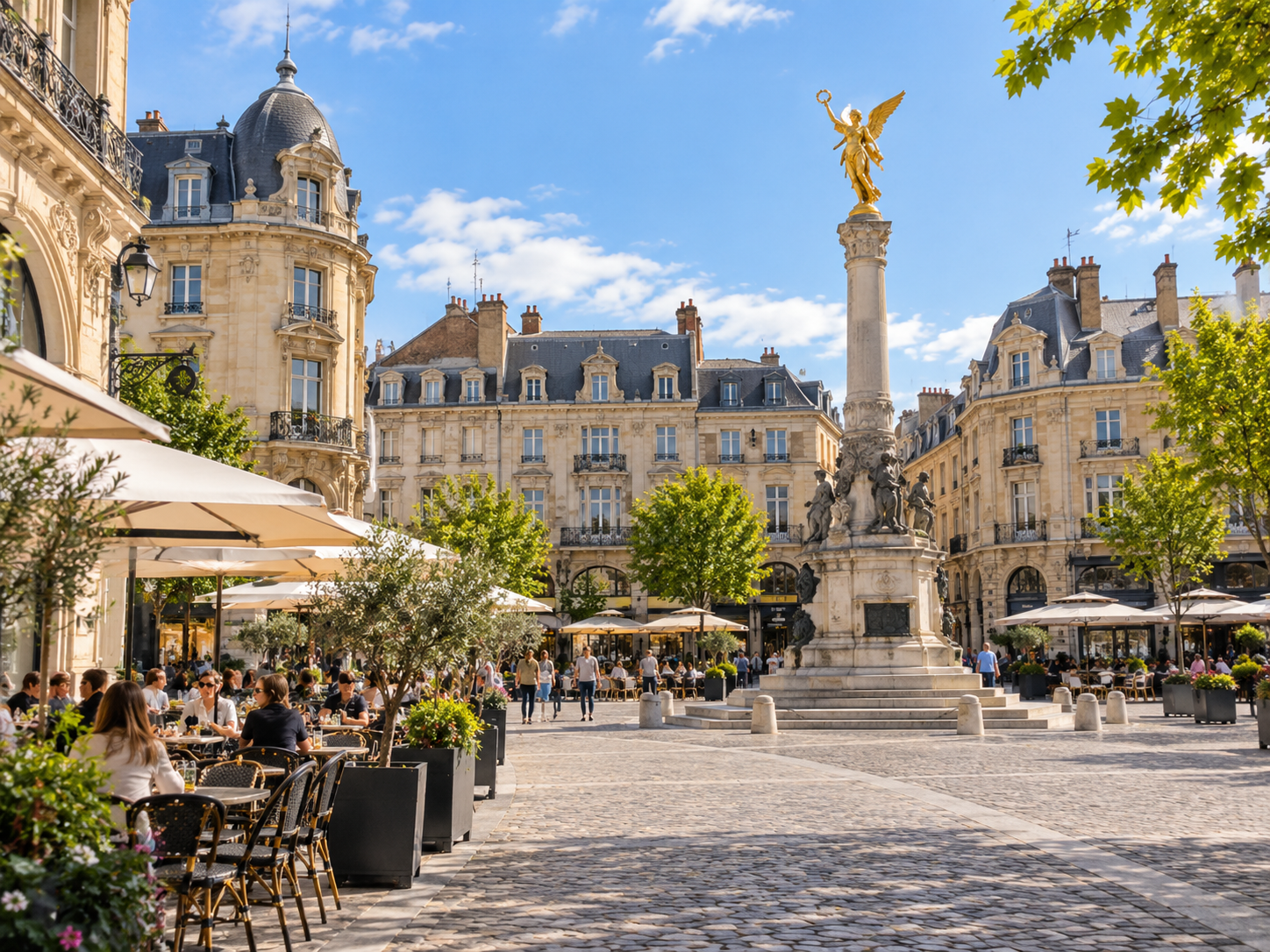
The Roman arch near the promenades and the remains beneath Place du Forum offer a different starting point for understanding Reims. Connect them with a walk through the centre, pausing at the square rather than rushing directly to the next monument.
The cryptoportico’s interior follows a seasonal calendar. Enjoy the surrounding square even when it is closed, and check access before making a descent part of a tightly timed visit.
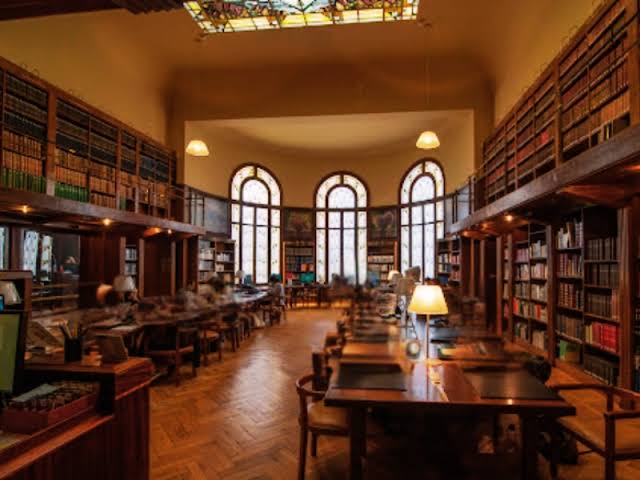
Look for the architecture that emerged as Reims rebuilt after the First World War. The Carnegie Library near the cathedral is a strong focal point, while the Boulingrin district makes it easy to combine architectural observation with food shopping.
This is a working library, so confirm public visiting arrangements and respect readers. An exterior-led walk remains worthwhile without assuming every doorway or reading room is available to sightseers.
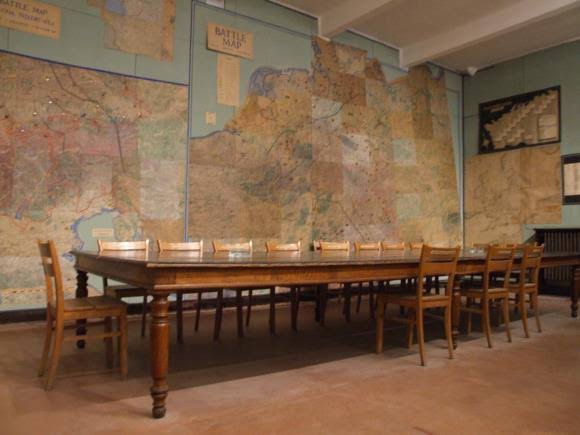
The museum reopened in May 2026 with a renewed presentation of the German surrender signed in Reims. The historic map room gives this small museum a particular significance for travellers interested in the end of the war in Europe.
Plan it as a focused visit, especially if travelling with children who may benefit from a brief introduction beforehand. It is normally closed on Tuesdays; consult current notices for exceptional closures.
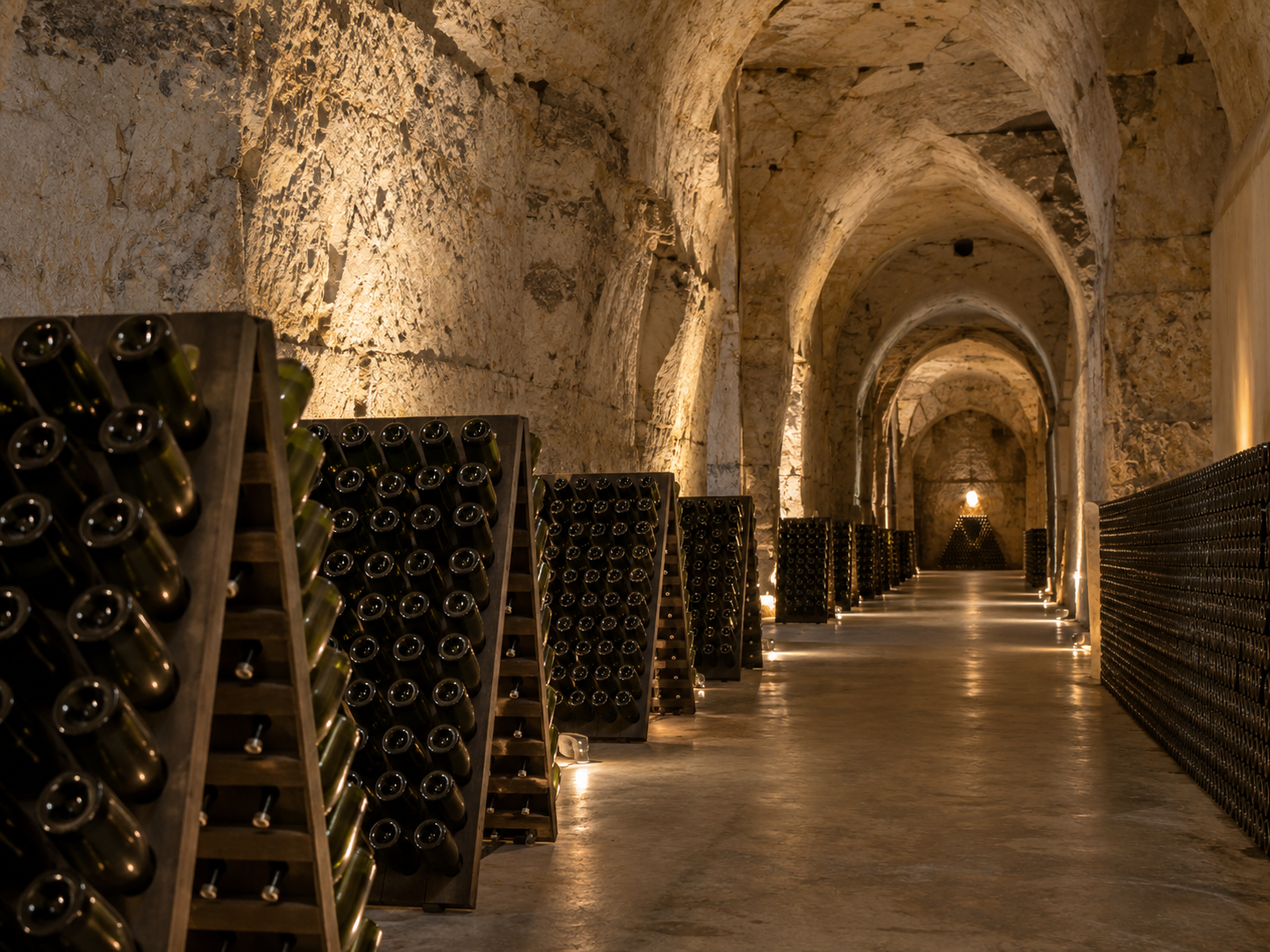
Choose a guided or self-guided format according to how much explanation you want. The visit combines the house’s history with the underground setting and an art programme, giving it an appeal beyond the final glass.
Book the exact language and tasting option. The descent includes a substantial staircase, so ask about suitability before paying if stairs are difficult. Bring a warm layer and allow transfer time from the cathedral district.
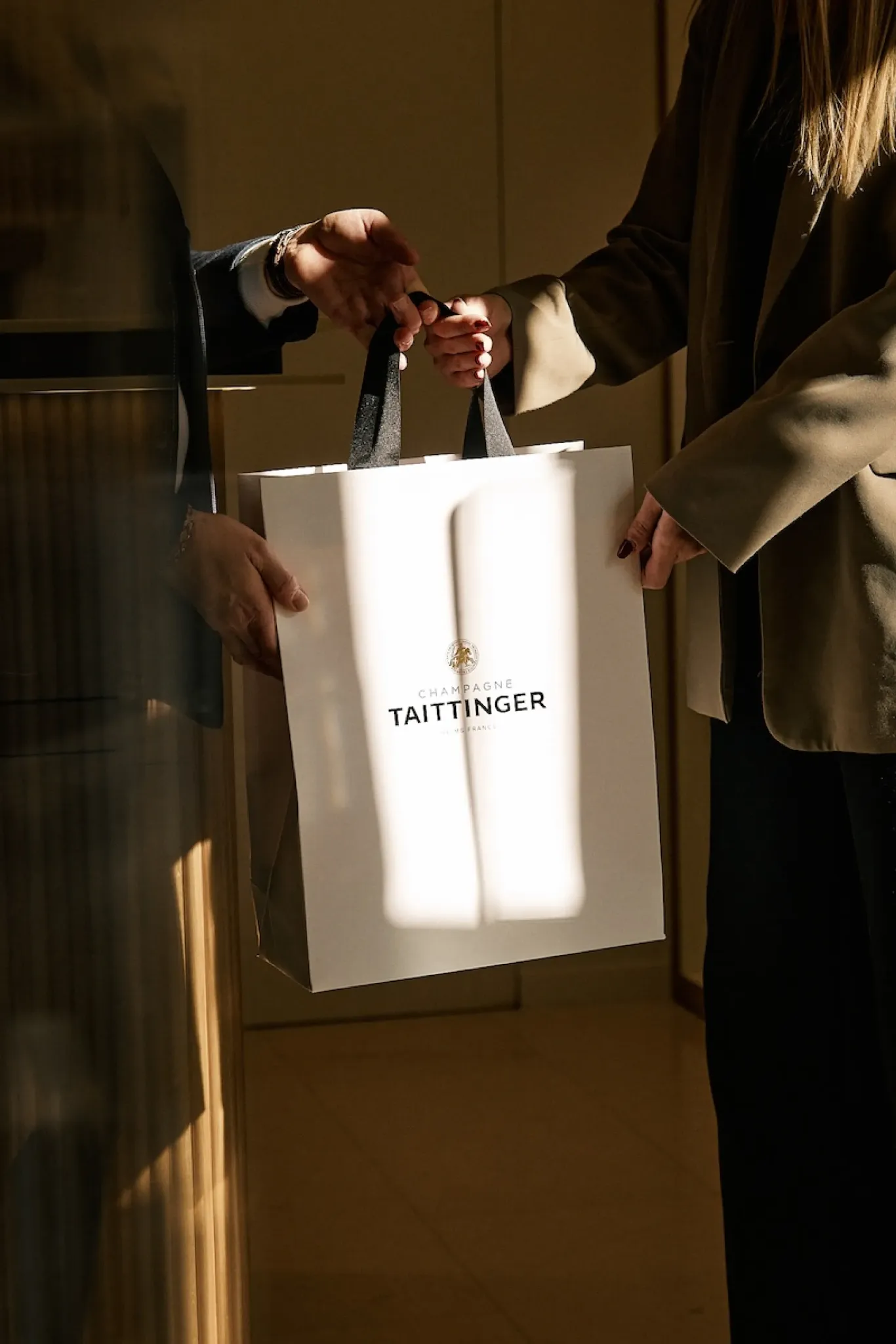
Taittinger offers guided visits at its historic Saint-Nicaise site, with different formats for exploring the house and its cellars. It is a useful alternative if you prefer a structured tour rather than an independent route.
Choose one main cellar visit for a short stay and compare the actual programme, not simply the name on the bottle. Confirm the meeting point, access requirements, child arrangements and non-drinking alternatives directly.
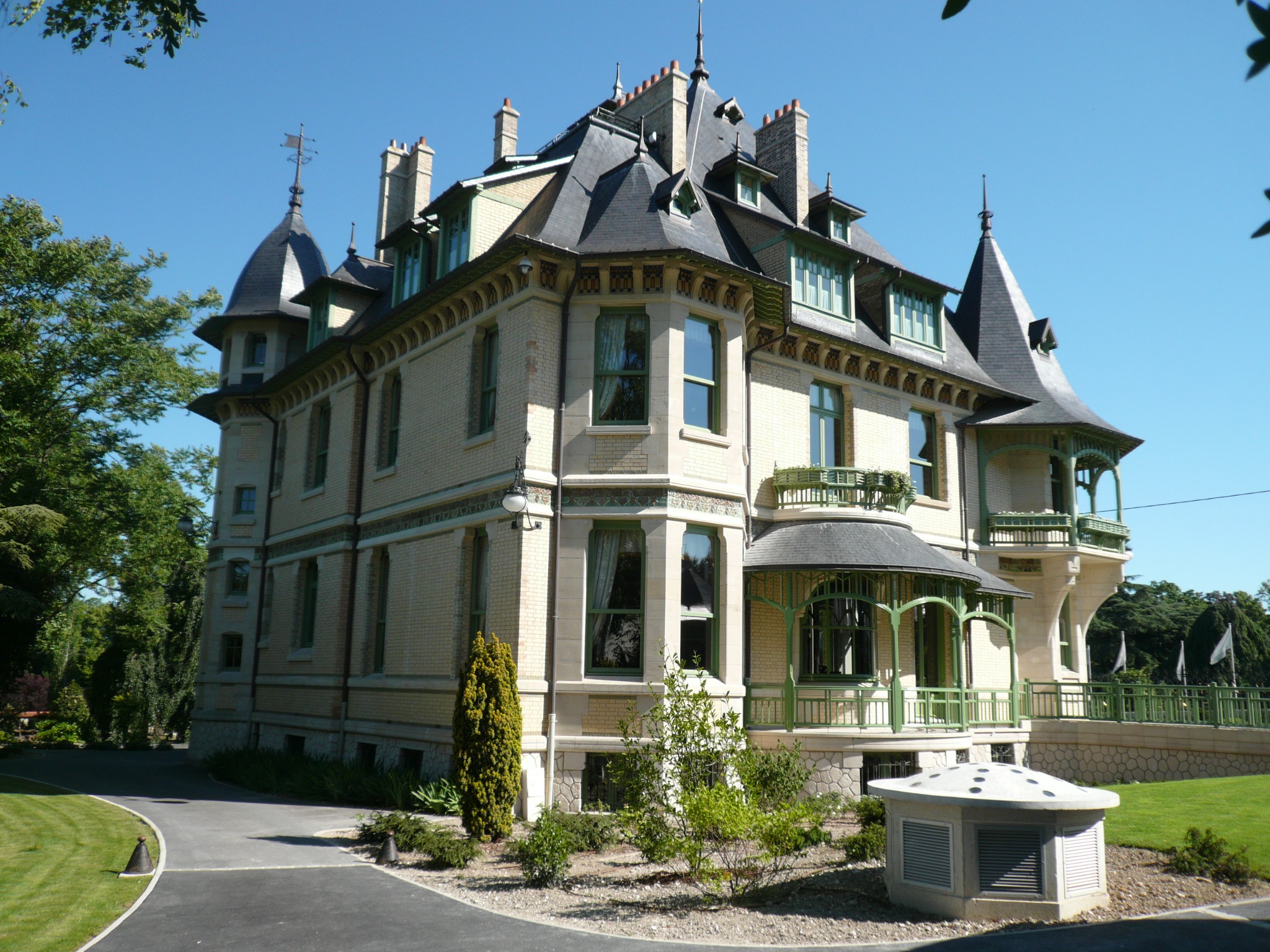
The restored villa adds interiors and decorative arts to a stay otherwise focused on monuments and cellars. Its setting in the Champagne-house district makes it a logical companion to a nearby visit when the calendars align.
Check the available route and language before booking. Leave a genuine break between appointments, and avoid treating a combined ticket as a reason to compress more into the day than your group will enjoy.
IA Generated — illustrative image; not a photograph of this venue or its products.
Food shopping beneath a remarkable roof
Halles du Boulingrin
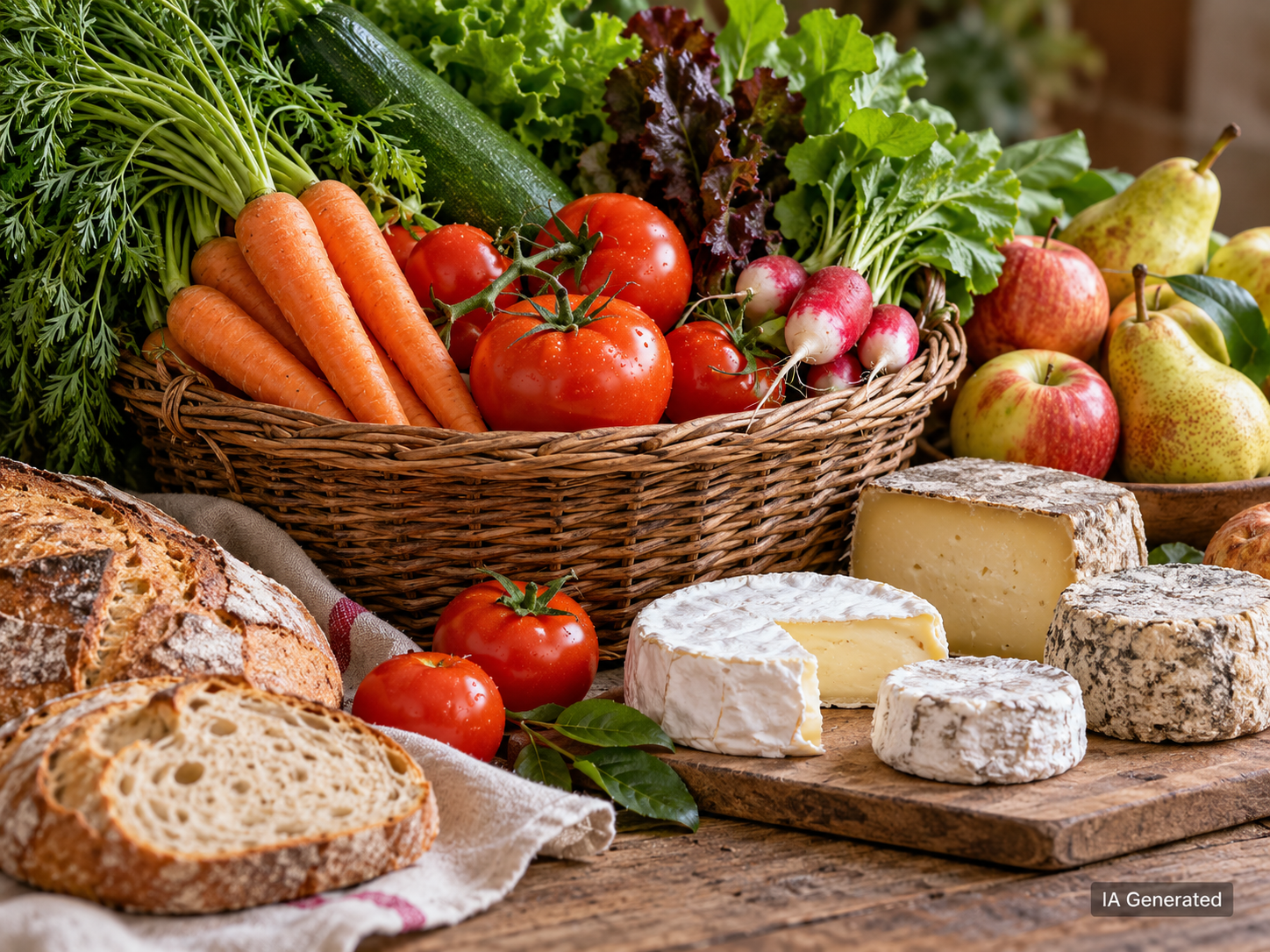
The central covered market is as interesting for its structure as for its stalls. The municipal schedule lists Wednesday, Friday and Saturday markets, making a morning visit an easy way to bring everyday Reims into a heritage itinerary.
Go with time to browse and ask questions rather than expecting every trader to keep identical hours. Combine the visit with the surrounding Art Deco streets and a nearby lunch; special events or holidays may alter arrangements.
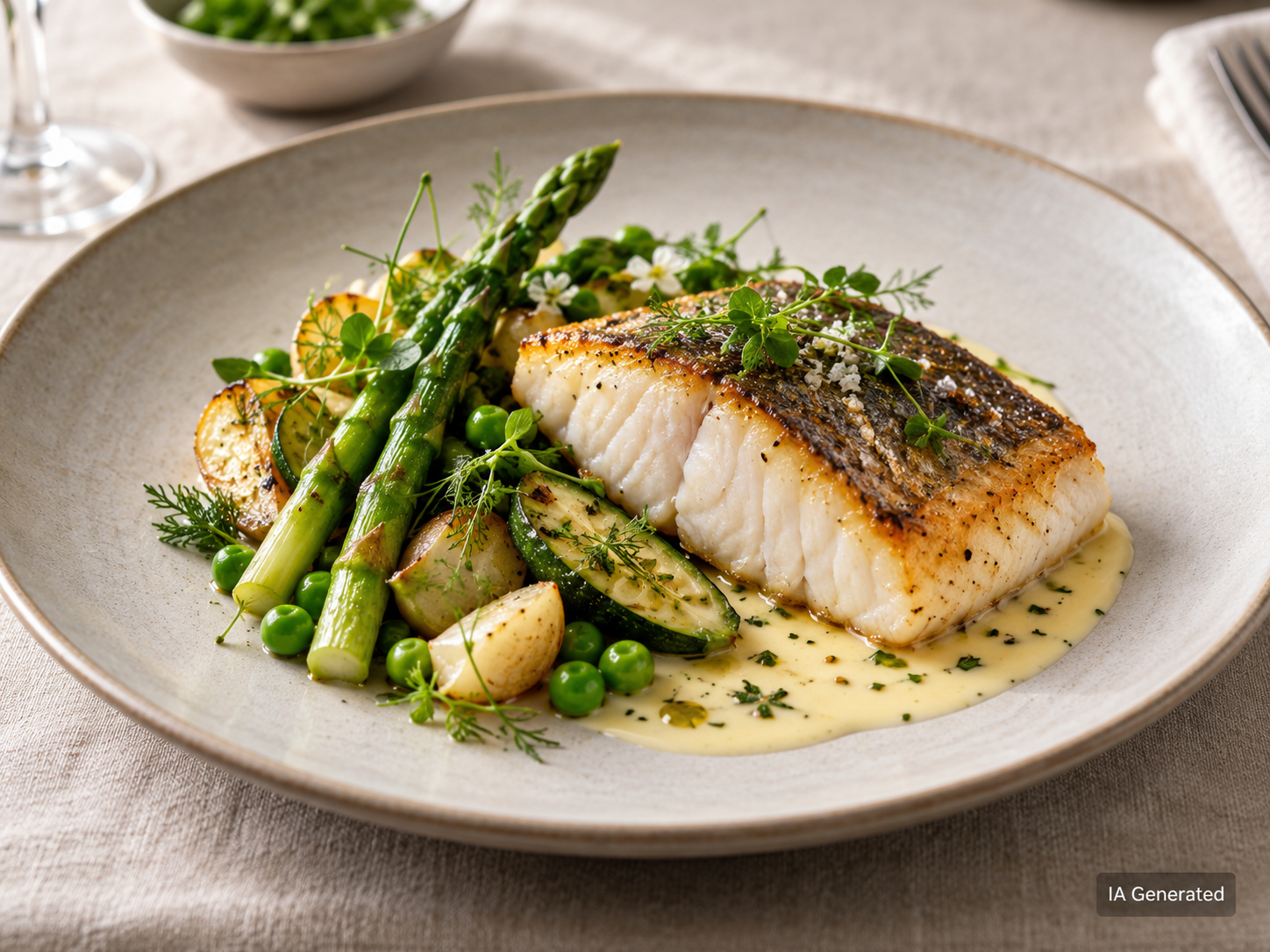
IA Generated — regional food illustration; not a photograph of a named restaurant, dish or market.
A different Boulingrin rhythm
Friday’s organic market
The city also lists an organic market at Boulingrin on Friday late afternoons. It can suit travellers arriving after the usual morning market, provided the current programme fits their date.
Keep purchases practical for your accommodation and onward travel. For a short hotel stay, a few well-chosen ingredients or local products are often more useful than a large shop that needs refrigeration.
IA Generated — regional food illustration; not a photograph of a named restaurant, dish or market.
An Art Deco institution
Brasserie du Boulingrin
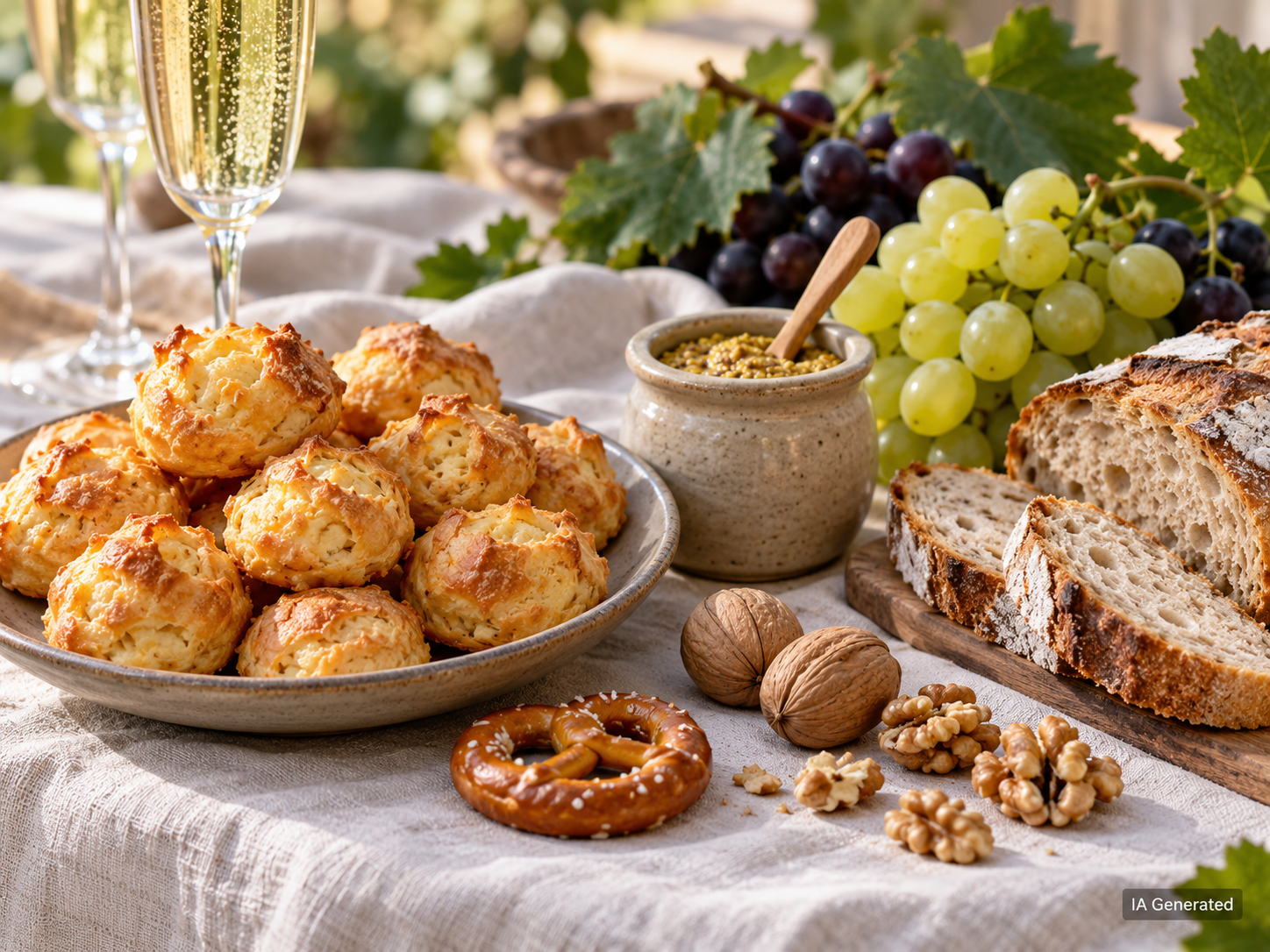
Opposite the market halls, this traditional brasserie brings together French cooking and a distinctive period setting. It fits naturally after a market visit or as an evening meal near the northern side of the centre.
Reserve for busy services and make sure an online request has been confirmed. The dining rooms occupy more than one level, so discuss access needs when booking rather than discovering them at the door.
IA Generated — regional food illustration; not a photograph of a named restaurant, dish or market.
Bistro cooking beneath an Art Deco glass roof
Café du Palais
Close to the cathedral quarter, this café offers an atmospheric setting for a meal during a central walking day. Choose it when you want the room and the food to be part of the experience, with enough time to notice the details.
The published calendar closes on Sundays and Mondays. Confirm kitchen service separately from general opening times, and mention allergies or dietary preferences when reserving.
IA Generated — illustrative image; not a photograph of this venue or its products.
A destination meal
Le Parc at Les Crayères
For a special occasion, give the gastronomic restaurant at Les Crayères a dedicated evening or lunch. The estate also has the more informal Brasserie Le Jardin, offering a different format in the same green setting.
Choose the restaurant deliberately and reserve separately from any hotel room. Allow for the transfer from the city centre, discuss dietary requirements in advance and avoid placing a fixed visit immediately after a long meal.
Four four- and five-star hotels suit different stays: a cathedral-facing address, a convenient central hotel near the station, a grand estate in the Champagne-house district, or a luxurious vineyard retreat in Champillon. Select the location first, then the exact room and facilities.
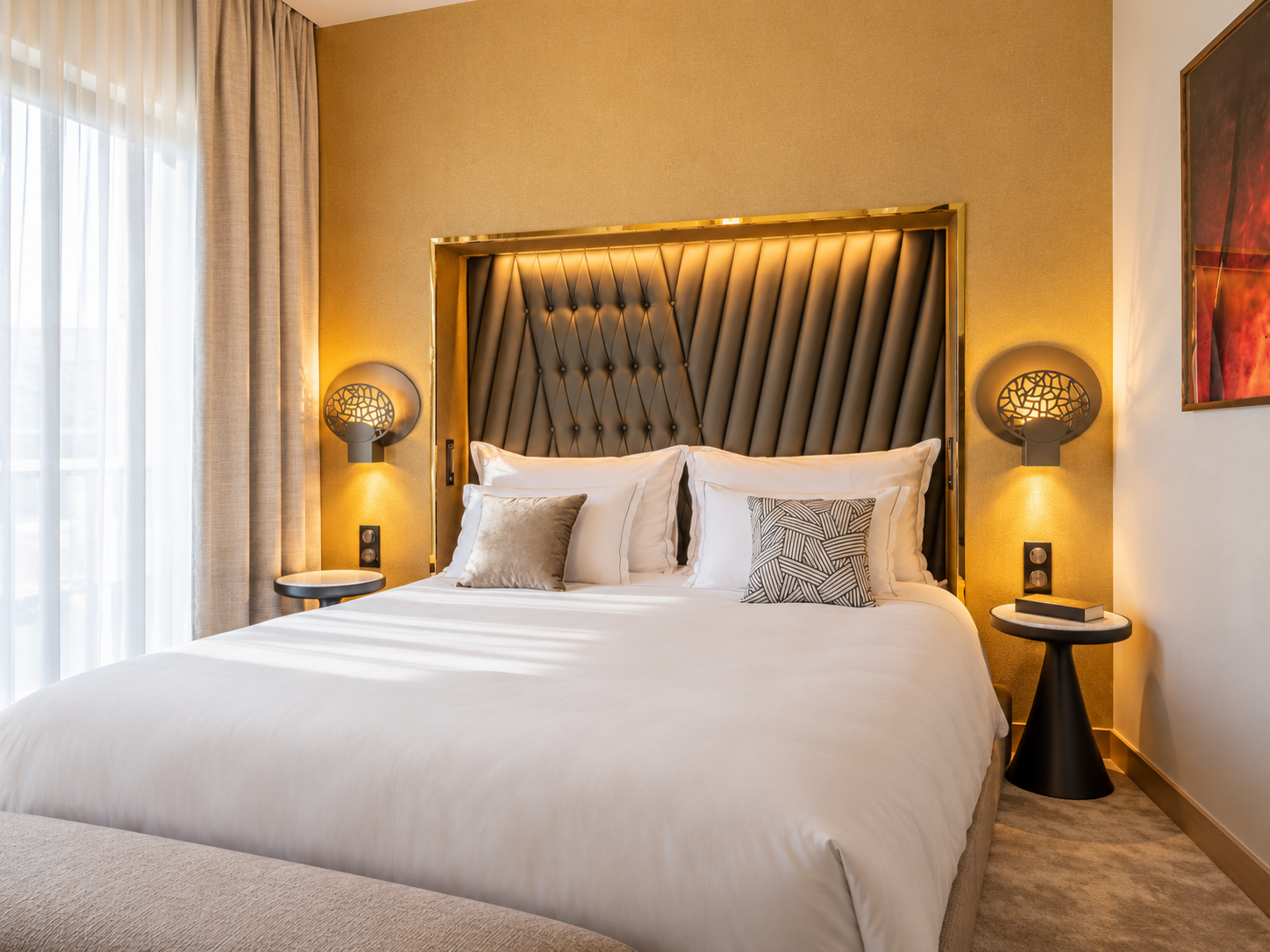
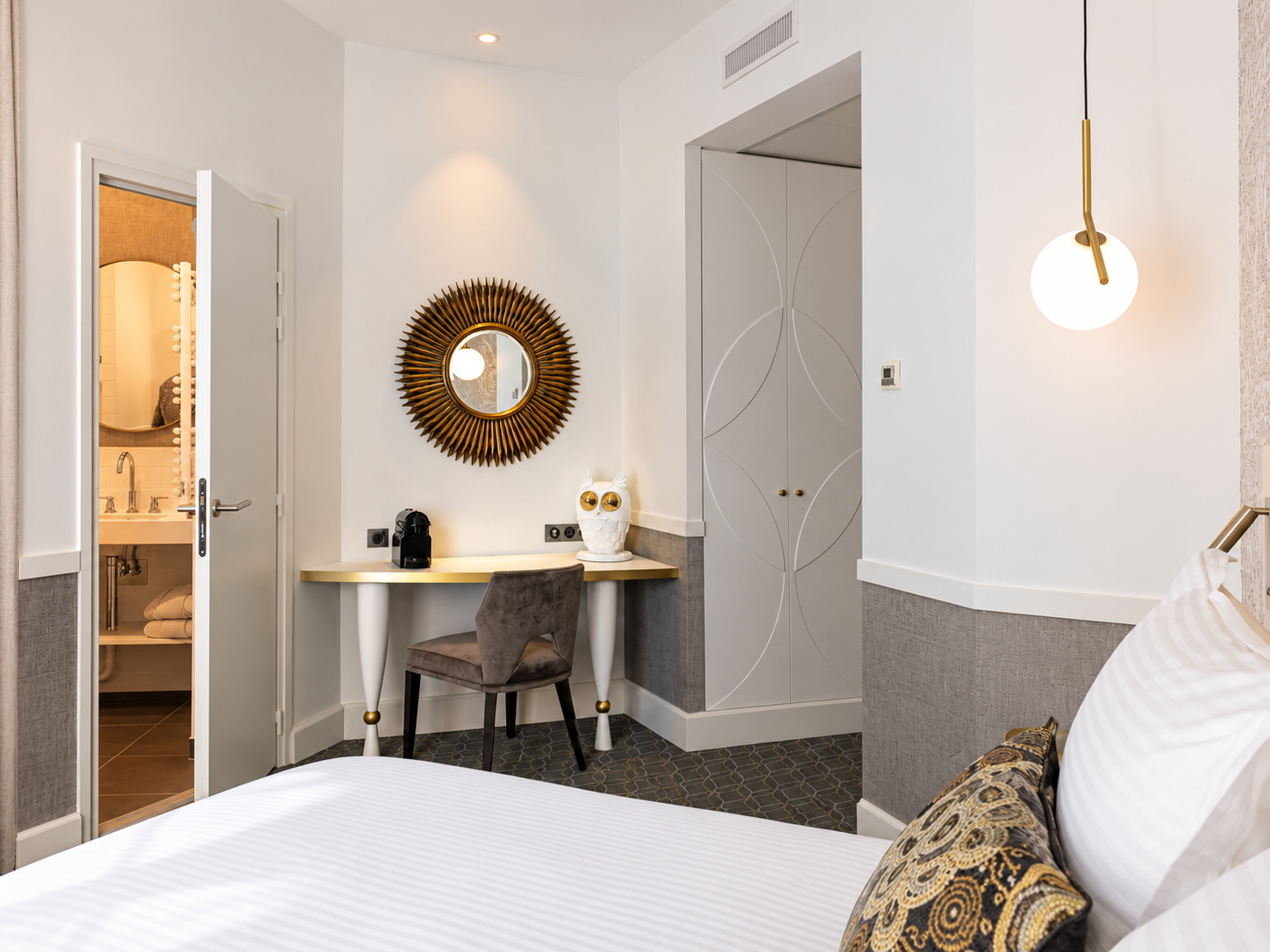
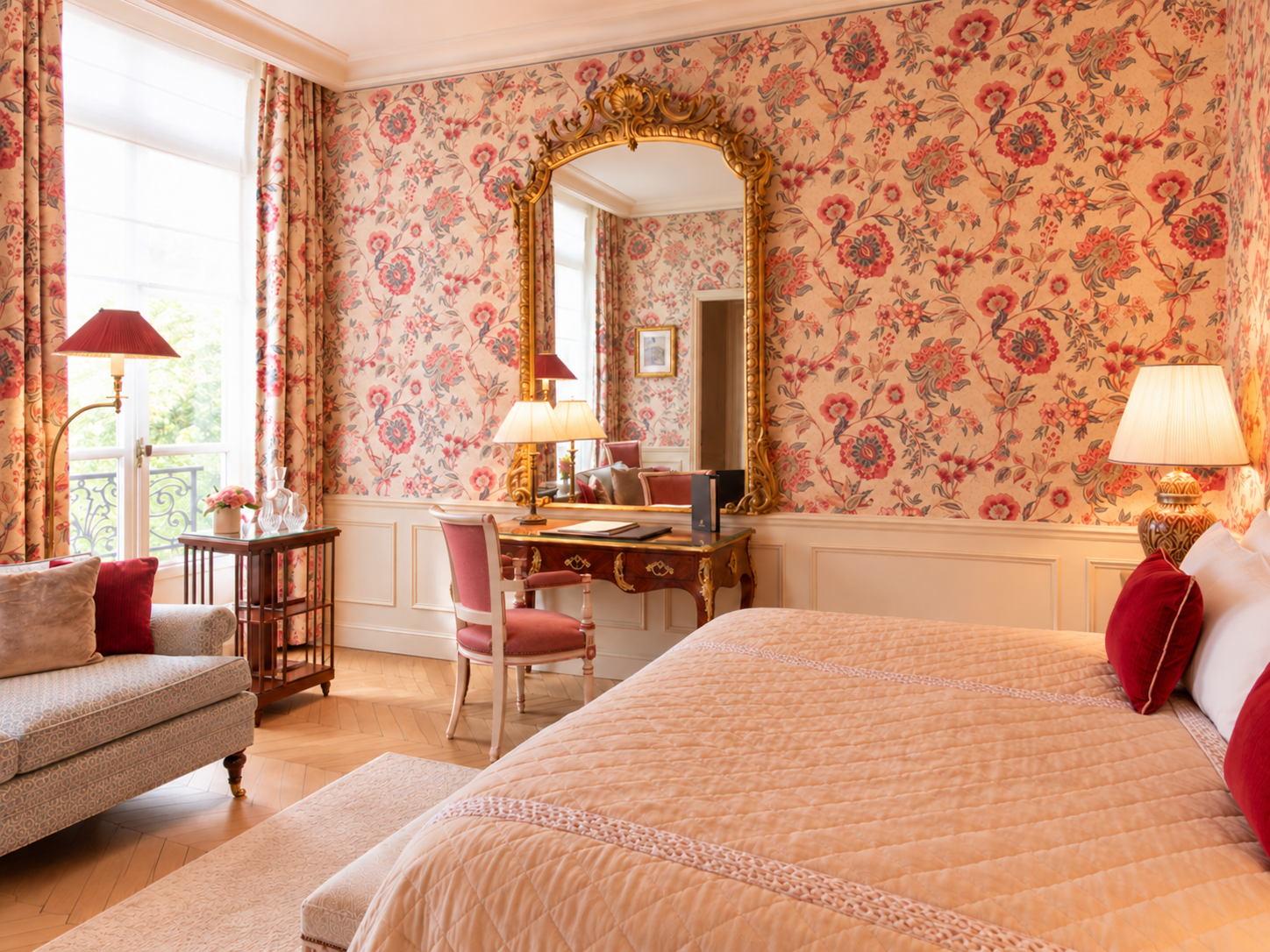
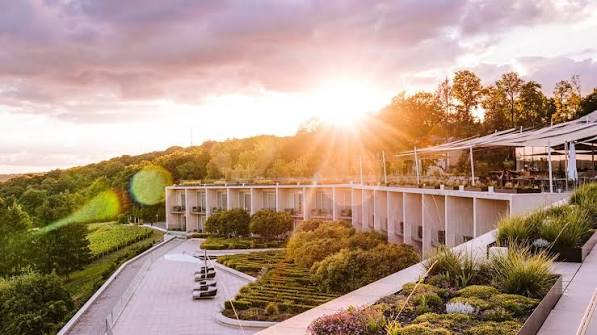
AI-generated photorealistic view.
5-star hotel · Cathedral square · Central Reims
La Caserne Chanzy
A former fire station transformed into a contemporary hotel directly opposite the cathedral. It suits travellers who want the monument at the heart of their stay and an easy return to the hotel between central visits.
Best for: A city break with a memorable location and bookable wellness time.
Facilities: Contemporary rooms and suites, restaurant and bar, valet parking, fitness facilities and a spa with hydromassage pool, sauna and hammam.
A cathedral view depends on the room category. Spa access requires advance reservation and is charged separately according to current conditions; children under 12 are not admitted.
4-star hotel · Place Drouet d’Erlon · Near Reims Centre station
Continental Hôtel
A central hotel in a nineteenth-century building with individually styled rooms and a practical location for train arrivals. It works well for a stay focused on walking between the station, Boulingrin and the cathedral quarter.
Best for: Rail travellers and visitors wanting restaurants and city walks close at hand.
Facilities: Air-conditioned rooms, family options, restaurant and bar, fitness facilities and a residents-only wellness area with sauna and bookable massages.
Ask for the room category and access arrangements that suit you. Parking is public and paid, with hotel arrangements to confirm; the wellness area should not be assumed to include a swimming pool.
5-star hotel · Boulevard Henry Vasnier · Champagne-house district
Domaine Les Crayères
A grand estate with classically decorated rooms and suites in a green setting away from the busiest central streets. Its appeal lies in the atmosphere of the house, the grounds and time spent dining at the property.
Best for: A special-occasion stay with a slower rhythm and destination dining.
Facilities: Individually decorated rooms and suites, landscaped grounds, Le Parc restaurant, Brasserie Le Jardin, La Rotonde bar and concierge services.
Reserve dining separately and confirm the room location and access needs. Plan transfers for central sightseeing; this is a different base from a hotel beside the cathedral or station.
5-star hotel · Champillon — approximately 20 minutes from Reims
Royal Champagne Hotel & Spa — Champillon ★★★★★
Perched above the vineyards in Champillon, Royal Champagne Hotel & Spa offers panoramic views across the Marne Valley, spacious rooms and suites, exceptional dining and an extensive spa. Around 20 minutes from central Reims, it is an outstanding choice for travellers who want to combine the city with a luxurious stay in the heart of Champagne country.
A pleasant time to combine the city with a countryside excursion. Keep a warm layer for cellars and a weather alternative for outdoor plans. Check the seasonal restart of tower visits and smaller attractions.
Longer days and popular departures
Summer
Reserve the preferred cellar tour, hotel and special meal in advance. Keep time for shade and rest between walking sections, and do not assume that a cool underground visit removes the need for water on the rest of the day.
Champagne landscapes at work
Autumn
The surrounding vineyards can be especially rewarding, but harvest activity is a working period, not an open invitation to enter every estate. Confirm appointments and allow extra travel time when combining the city with villages.
A shorter heritage and food break
Winter
Plan around open museums, restaurants and confirmed cellar departures. The tower circuit has a winter closure, and daylight is limited for rural outings. Check event dates and hotel demand if visiting during the festive season.
How Long to Spend
A day trip can cover the cathedral and one carefully chosen additional experience, with lunch between them. If including a cellar visit outside the central quarter, calculate the transfer first and keep the rest of the route compact.
Two nights allow a complete central day and a second day around Saint-Remi and the Champagne houses. Three nights make room for a vineyard excursion or a slower pace. More time is useful if you want specialist tastings, but it should add variety rather than a queue of similar appointments.
Getting There
The convenient city arrival
Reims Centre station
Check the destination printed on your ticket. Reims Centre is well placed for the central hotel and restaurant district, and can make a car-free stay straightforward. Your final walk depends on luggage and the hotel location.
The current Grand Reims Mobilités network links Gare Centre with Opéra-Cathédrale by tram and bus. Use the live journey planner for your arrival date, especially if coming late or on a Sunday.
Some high-speed services use Champagne-Ardenne TGV rather than Reims Centre. Allow for the onward transfer when comparing fares and arrival times; an earlier train arrival does not automatically mean an earlier hotel check-in.
The operator currently lists tram T2 towards the centre. Check the last service or arrange a taxi if needed, and tell any pre-booked driver the exact station name.
Road travel is useful for village visits and rural accommodation. For a city stay, drive to the chosen parking once and use walking, trams, buses or taxis between visits.
If your day includes tastings, plan a non-drinking driver or a professional transfer. Ask the hotel for its actual parking entrance and any valet procedure before following navigation into the central streets.
Getting Around & Parking
For a day visit, consider the operator’s current park-and-ride options: Thillois, Neufchâtel, Hôpital Debré and Belges. Entry and exit rules matter: keep a valid transport ticket and follow the instructions for opening the exit barrier.
The current P+R guidance specifies a 2.10 m entry-height barrier and notes that SMS tickets and Presto subscriptions cannot activate the exit. Check the latest conditions and route before choosing a site, particularly while local stops are being reorganised.
Station-area paid parking provides another option. EFFIA lists covered Clairmarais P1 and open-air P2 with different vehicle-height limits. Compare the actual entrance and walking route to your hotel; ask central hotels about their own parking or partner arrangements.
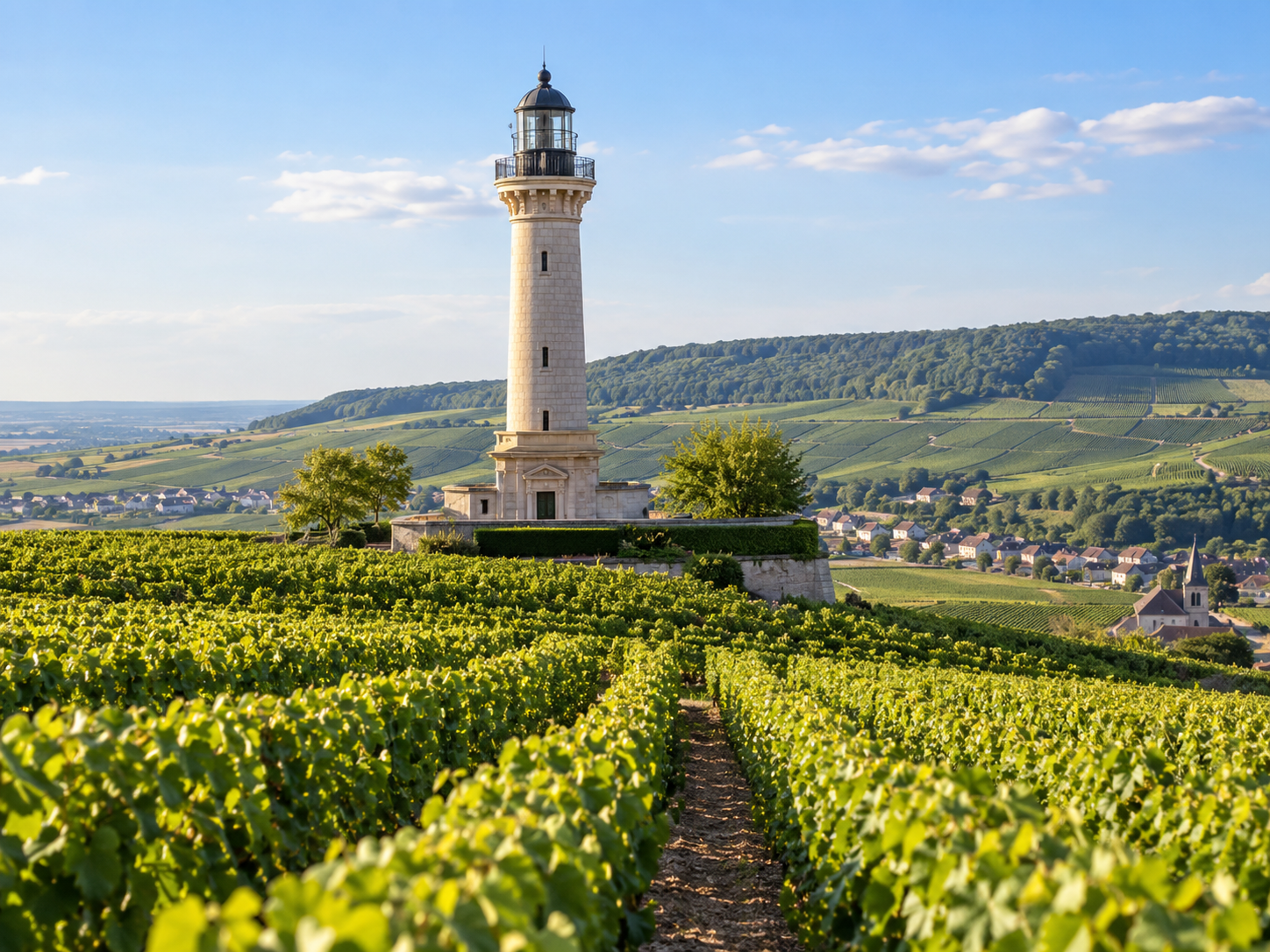
The lighthouse and vineyard museum offer a useful introduction to the surrounding wine country, with a very different setting from the urban cellars. Choose it when you want to understand the landscape as well as the finished Champagne.
Confirm seasonal opening and the facilities suitable for your group. Arrange the return journey in advance; a village outing is easier with a car, driver or organised excursion than with improvised connections.
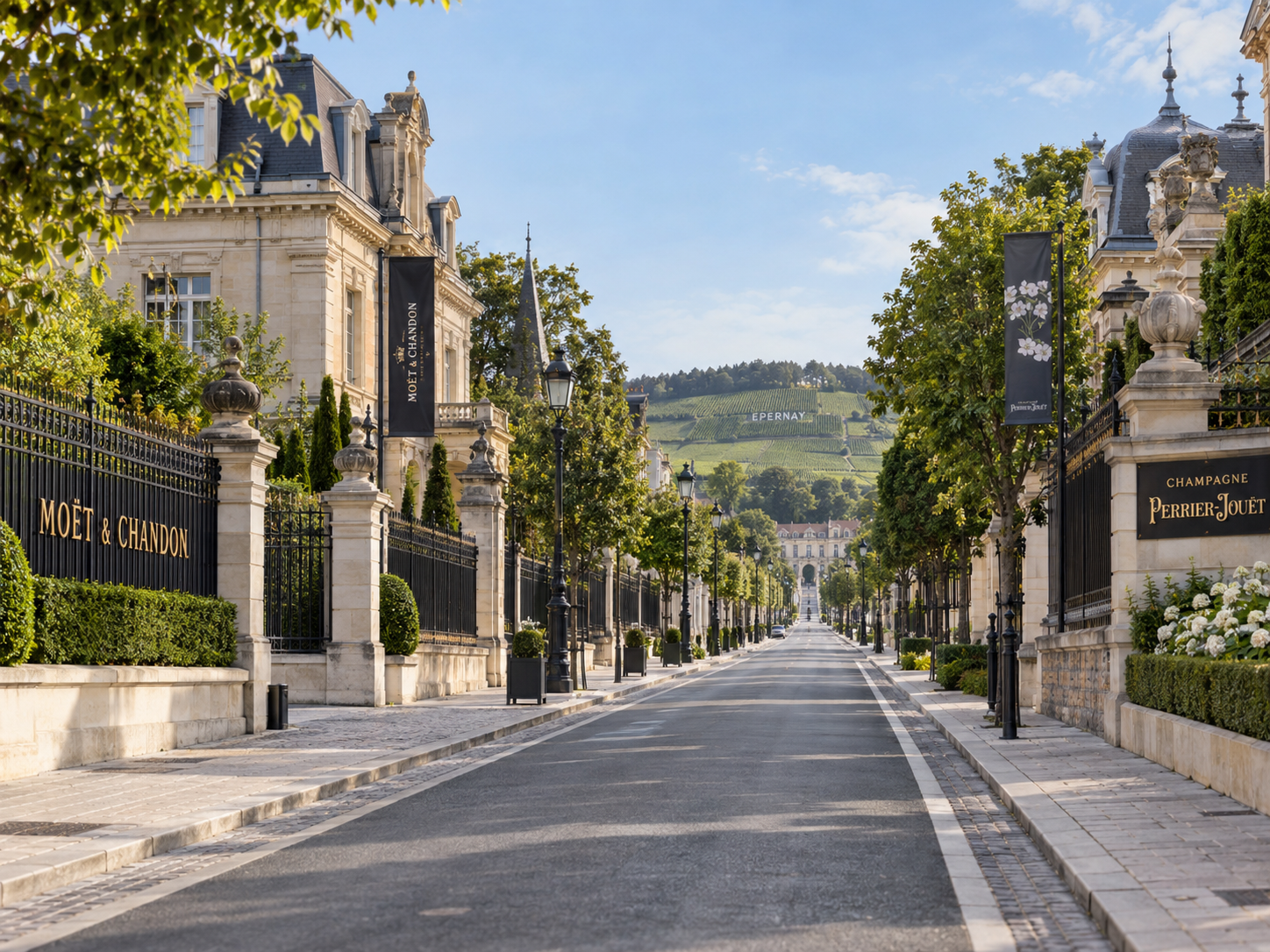
Épernay adds a different concentration of Champagne houses and grand façades. The avenue is close to its station, making the town a possible rail-based extension when the current timetable fits.
Give the outing its own day if you want a house visit and an unhurried lunch. Avoid booking another series of tastings simply because they are available; choose an experience that adds something to your Reims visit.
The village associated with Dom Pérignon offers traditional streets, an abbey-church visit and a countryside change of pace. A guided walk can provide context beyond the familiar name.
Combine it with a coherent village route and a confirmed transport plan. Keep church access and any tasting as separate checks, and leave time to enjoy the setting without rushing between bookings.
Begin in the cathedral quarter, taking time for the exterior and interior. Add the Carnegie area or a short central walk, then have lunch before your main afternoon reservation.
Choose either a cellar visit with a planned transfer or a central history route around the Forum, Porte de Mars and Boulingrin. Leave a margin before the train instead of treating every available hour as visiting time.
Group the stops geographically
Two days: city and Champagne district
Use day one for the cathedral, Art Deco streets and central market area. On day two, head towards Saint-Remi and Saint-Nicaise for the museum or basilica setting and one booked house visit.
Fit lunch into the second day before fixing the cellar time. If choosing Villa Demoiselle too, check its actual departure schedule and keep a break between indoor visits.
Choose one clear direction
Three days: add the countryside
Keep two days for Reims, then devote the third to Verzenay and a nearby village route, or to Épernay with a carefully planned Hautvillers extension. Choose the option that matches your transport and interests.
A driver-led day can simplify tastings; a rail-based Épernay day can remain focused on the town. Do not turn a countryside excursion into a succession of names with no time to explore them.
Accessibility & Practical Advice
At the October 2026 review, the Palais du Tau remains closed for works and announces reopening in 2027. The Musée des Beaux-Arts is also closed for renovation. Confirm reopening directly before including either interior in a booked itinerary.
The cathedral’s ground-level visit and its tower circuit have different access conditions. Ask about the appropriate entrance and visitor aids for mobility or sensory needs; the 249-step tower route is not an accessible alternative to the interior.
Cellar routes can involve stairs, low light and cool temperatures. Discuss access needs directly with the house before booking, and ask about arrangements for children or non-drinkers. A famous name alone does not tell you whether the visit will suit your group.
Use current transport information rather than old bus numbers in hotel descriptions or printed guides. Grand Reims Mobilités has updated route names, and some stops are affected by autumn 2026 works. Check the return connection as carefully as the outward journey.
FWP Insider Advice
Our preferred first stay gives one day to the central city and another to Saint-Remi and the Champagne houses. This reduces repeated transfers and allows the different parts of Reims to feel like places to explore, rather than gaps between appointments.
Book the exact room category if the cathedral view is important at La Caserne Chanzy. At Les Crayères, leave time for the estate itself and arrange city-centre transfers; at the Continental, the station and central dining district are the practical strengths.
Choose a tasting for the story and format you want. A first-time visitor may gain more from one clear guided introduction than from several premium flights with little time to absorb them. Leave space for food, architecture and conversation.
Frequently Asked Questions
Can I visit Reims as a day trip?
Yes. Prioritise the cathedral and one additional experience, allowing for transfers if the cellar visit is outside the central quarter.
Which railway station should I choose?
Reims Centre is convenient for the city. Champagne-Ardenne TGV at Bezannes requires an onward transfer; compare the full journey to your hotel.
Is the Palais du Tau open?
No at our October 2026 review. The official site announces reopening in 2027; confirm the date before planning an interior visit.
Do I need to book Champagne cellars?
Book ahead for your preferred language, time and format. Confirm access, children’s arrangements and non-drinking options directly.
When is the Boulingrin market?
The municipal schedule lists Wednesday, Friday and Saturday markets, plus a Friday late-afternoon organic market. Check current arrangements for your date.
Are the cathedral towers accessible?
The guided circuit includes 249 steps and is not wheelchair accessible. It also has seasonal and weather-related restrictions.
Is Reims interesting without drinking Champagne?
Yes. Cathedral heritage, Roman remains, Art Deco architecture, museums, markets and the surrounding villages offer a varied visit.
Plan Your Stay
France. Well Planned.
Discover Reims with time for both the city and Champagne.
We plan. You choose. You book.
We help you choose the right hotel, match visits to your interests and organise a balanced Champagne stay with clear transport and booking arrangements.
Last reviewed: 4 October 2026. Practical information, schedules and services may change. Use the linked operators to confirm your dates. Travel times in this guide are planning estimates, not timetables.
Destination imagery is an AI-generated editorial illustration. Hotel images are AI-generated photorealistic views based on real official reference photographs and are labelled accordingly. They illustrate atmosphere and do not guarantee a particular room, view or current furnishing. Confirm these details directly with the hotel.