Medieval streets above the Rance, with time for the river below
Explore half-timbered streets, a ducal castle and a lively river port, then slow down along the towpath to Léhon. Dinan is at its best when you plan for both levels of the town and leave room to wander.
Best stay1–2 nightsAdd a night for the Rance valley
First visitTown & river portAllow for the steep Jerzual
Best dayThursday marketArrive before the lunchtime rush
Getting aroundWalk & local busCheck the return from the port
Dinan is not just a collection of picturesque façades. Its upper town, defensive walls and castle look down towards a port that once connected the town to the wider world. Moving between those two settings is central to the visit.
For a comfortable first stay, explore the upper town before descending to the river. Keep enough energy for the return, or plan a bus or taxi. An overnight stay gives you quieter streets after the busiest hours and space for a proper dinner; a second day opens up Léhon and the river landscape.
Where to Go & What to See
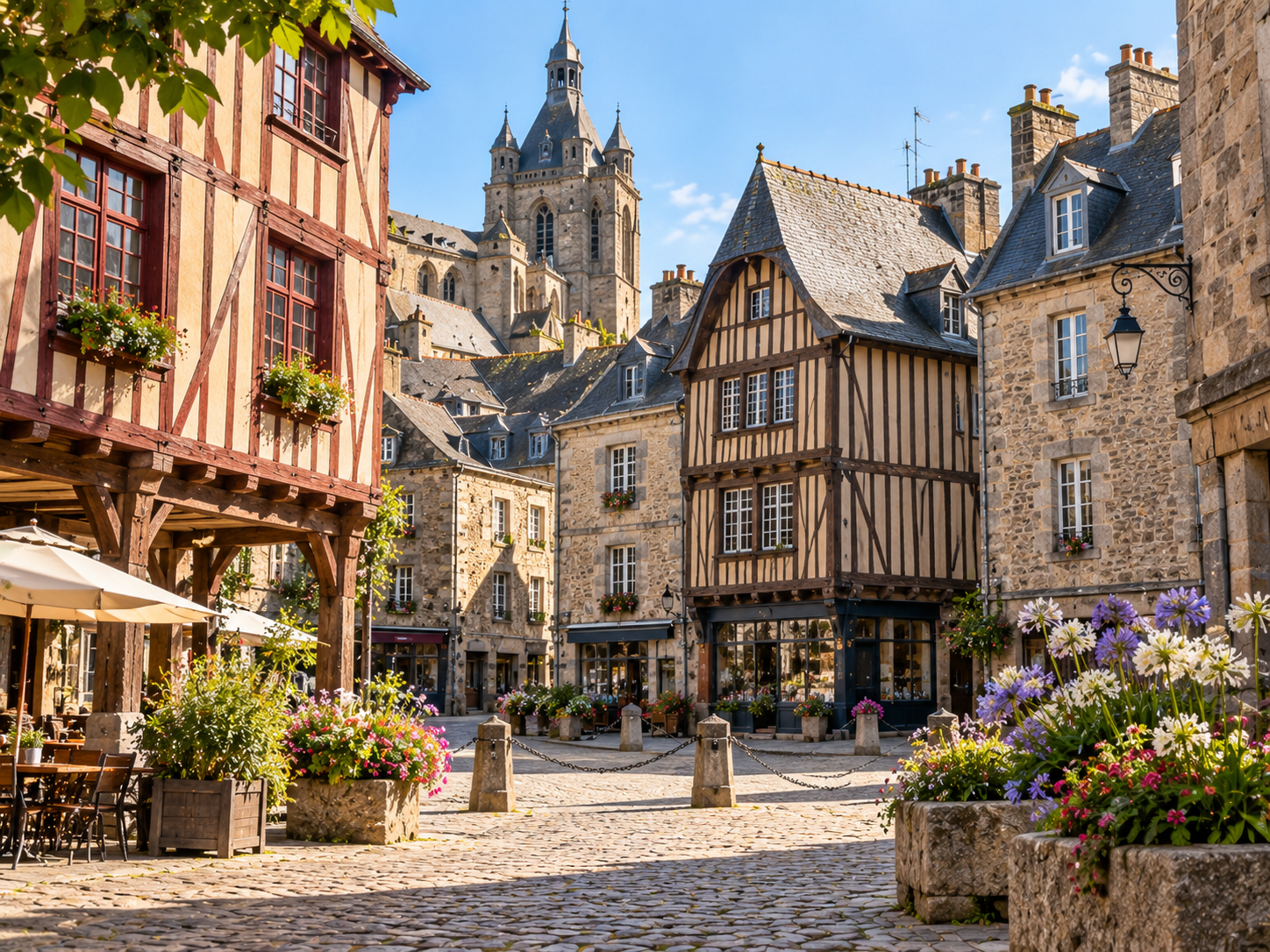
AI-generated photorealistic view.
Squares, timber houses & small streets
The historic upper town
Begin around the central squares and take a loose route through the streets near the clock tower, the Apport and the Place des Merciers. Look up at the timber framing and changing rooflines, then pause at street level for shops and cafés.
A compact walking route works better than trying to visit every building. The tourist office’s Vieux Dinan circuit gives useful orientation, but add time for shopping, visits and the climb between town and port.
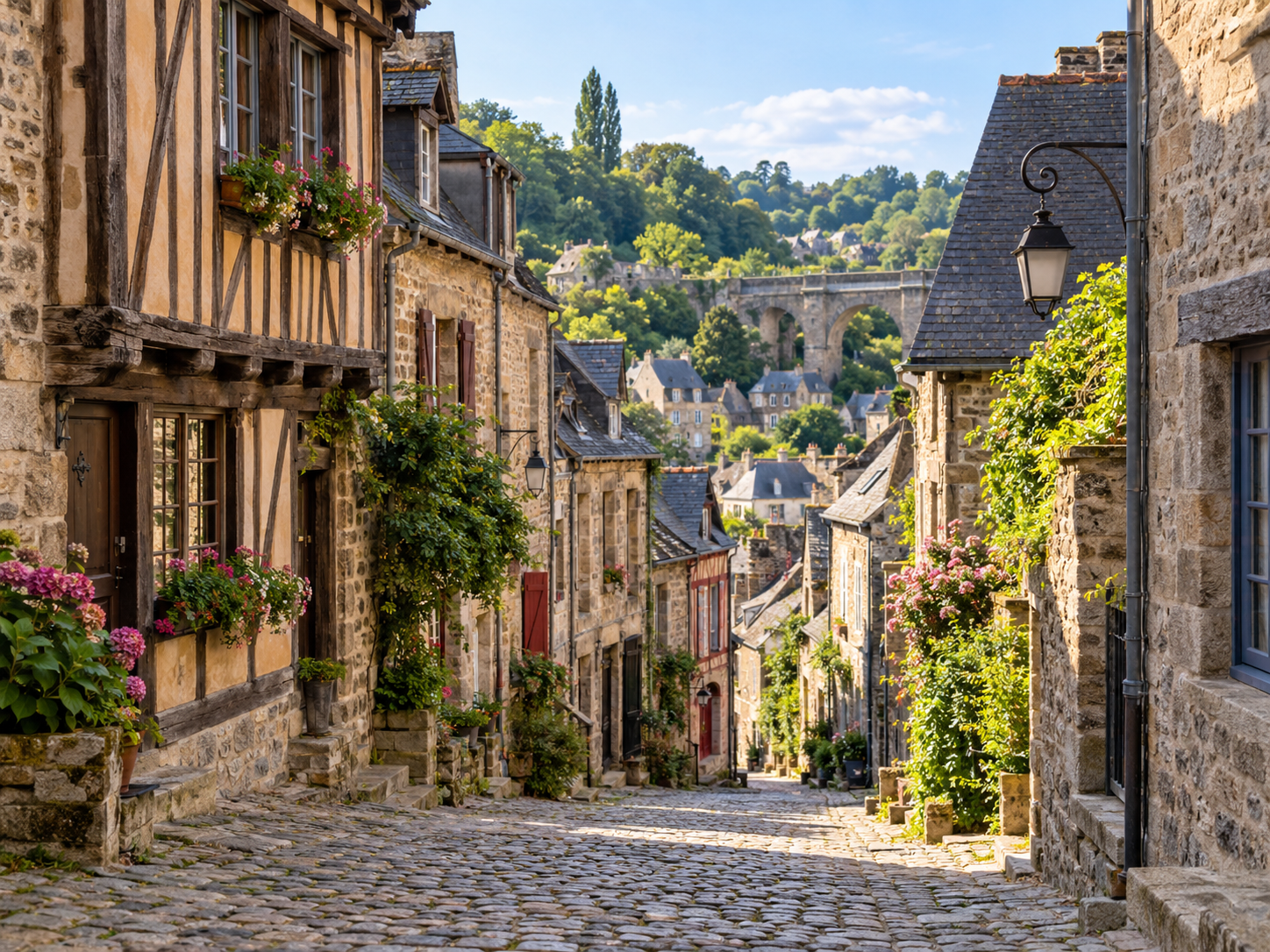
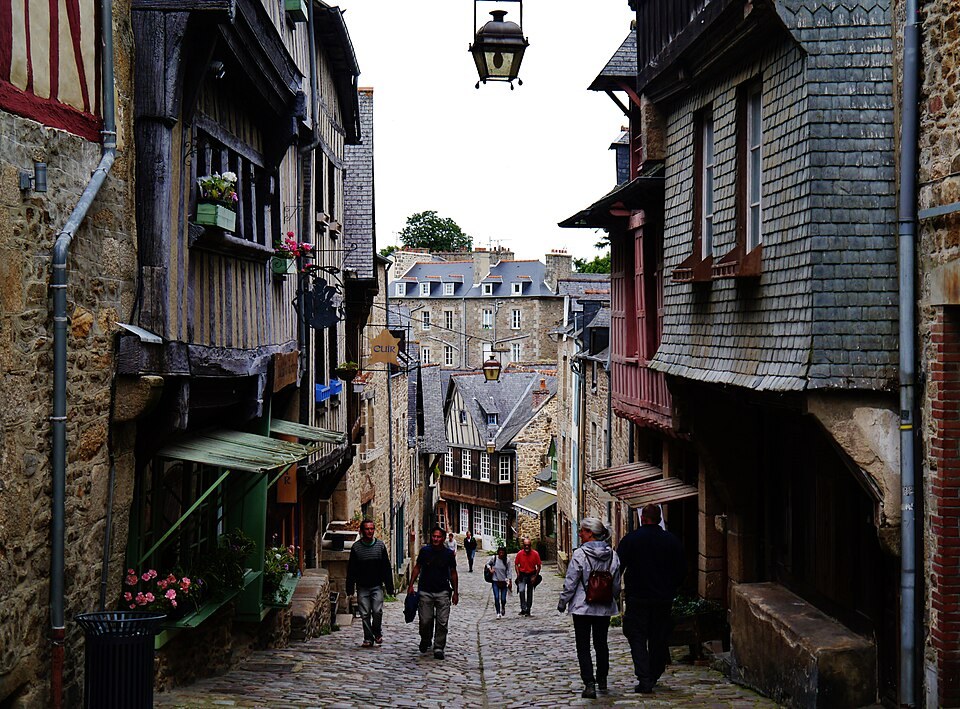
This is the atmospheric descent of cobbles, old houses and artisan workshops that connects the upper town with the river. Walk slowly, looking into open studios without assuming every workshop keeps the same hours.
The route is steep, uneven and can be slippery when wet. Descending is not automatically easy for every visitor. Choose a different transfer if needed and decide how you will return before reaching the bottom.
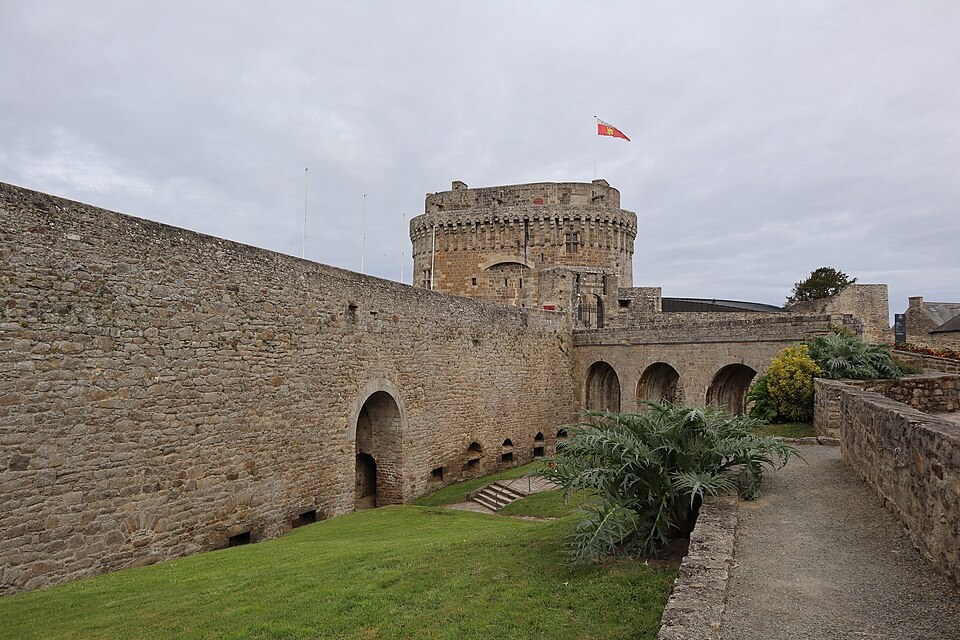
The castle adds substance to the medieval town visit, combining a princely residence with the story of its defensive architecture. Make it your main paid monument if you prefer a fuller historic visit to a quick climb for a view.
Consult the current seasonal calendar: autumn and winter opening differs from summer. The route includes stairs and upper floors without a lift, so discuss mobility needs directly. Allow time for interpretation rather than rushing through to the terrace.
Photo: René Hourdry · CC0. Resized, compressed; display crop.
A panorama for those comfortable with stairs
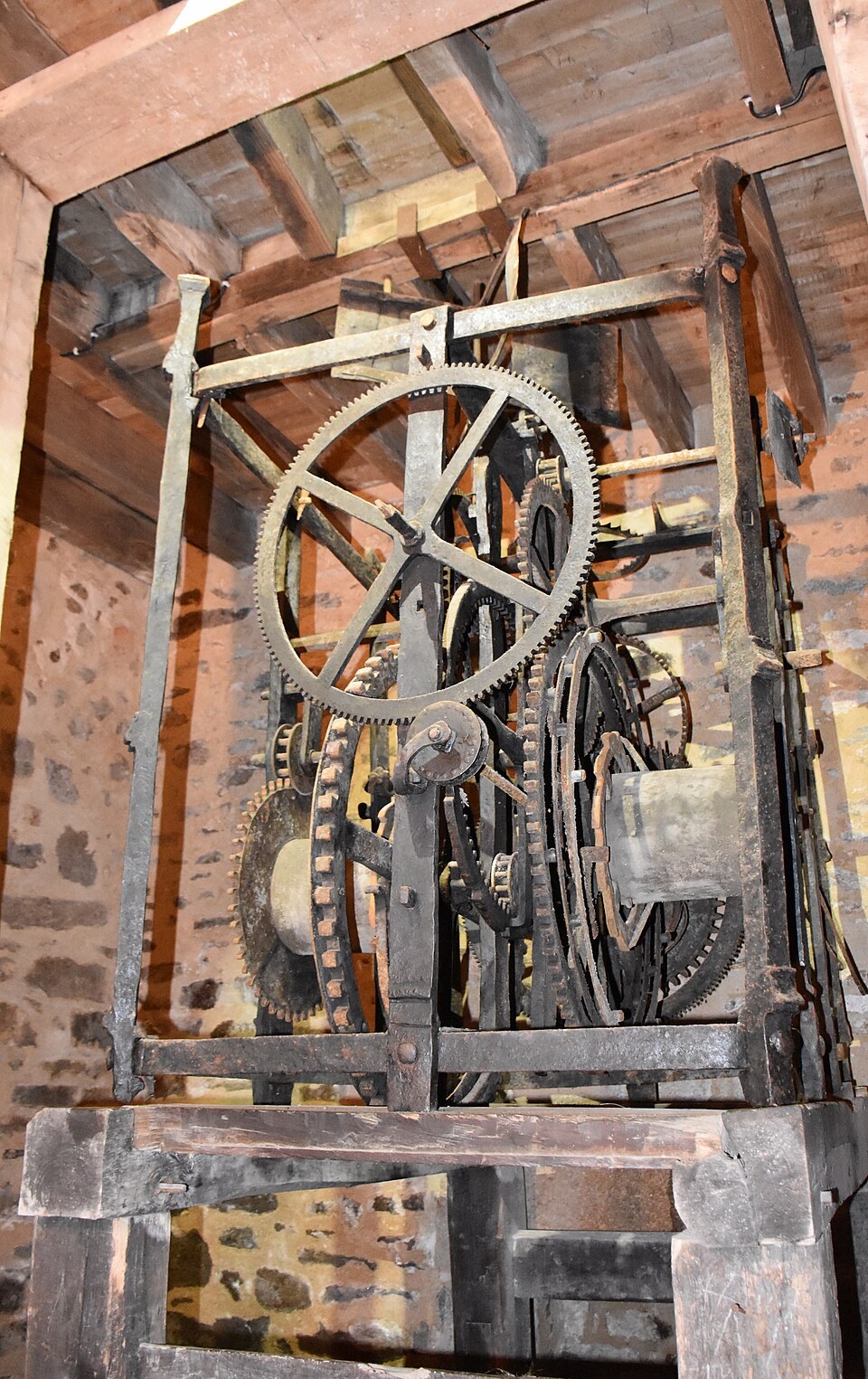
Tour de l’Horloge
The clock tower gives a different view over the roofscape of the upper town. It is a compact visit with a climb, best chosen when you have clear weather and enough energy.
The tower is seasonal and is not suitable for wheelchair access or for everyone with walking difficulties or vertigo. Visitor numbers are limited inside; check the current opening day rather than relying on the castle’s schedule.
The basilica brings together Romanesque and Gothic features and contains the memorial holding Bertrand du Guesclin’s heart. Step inside respectfully, then spend time around the square and the nearby garden viewpoint.
This corner is a good pause between the busy shopping streets and the descent to the river. Religious services take priority over sightseeing; check access arrangements if you need a particular entrance.
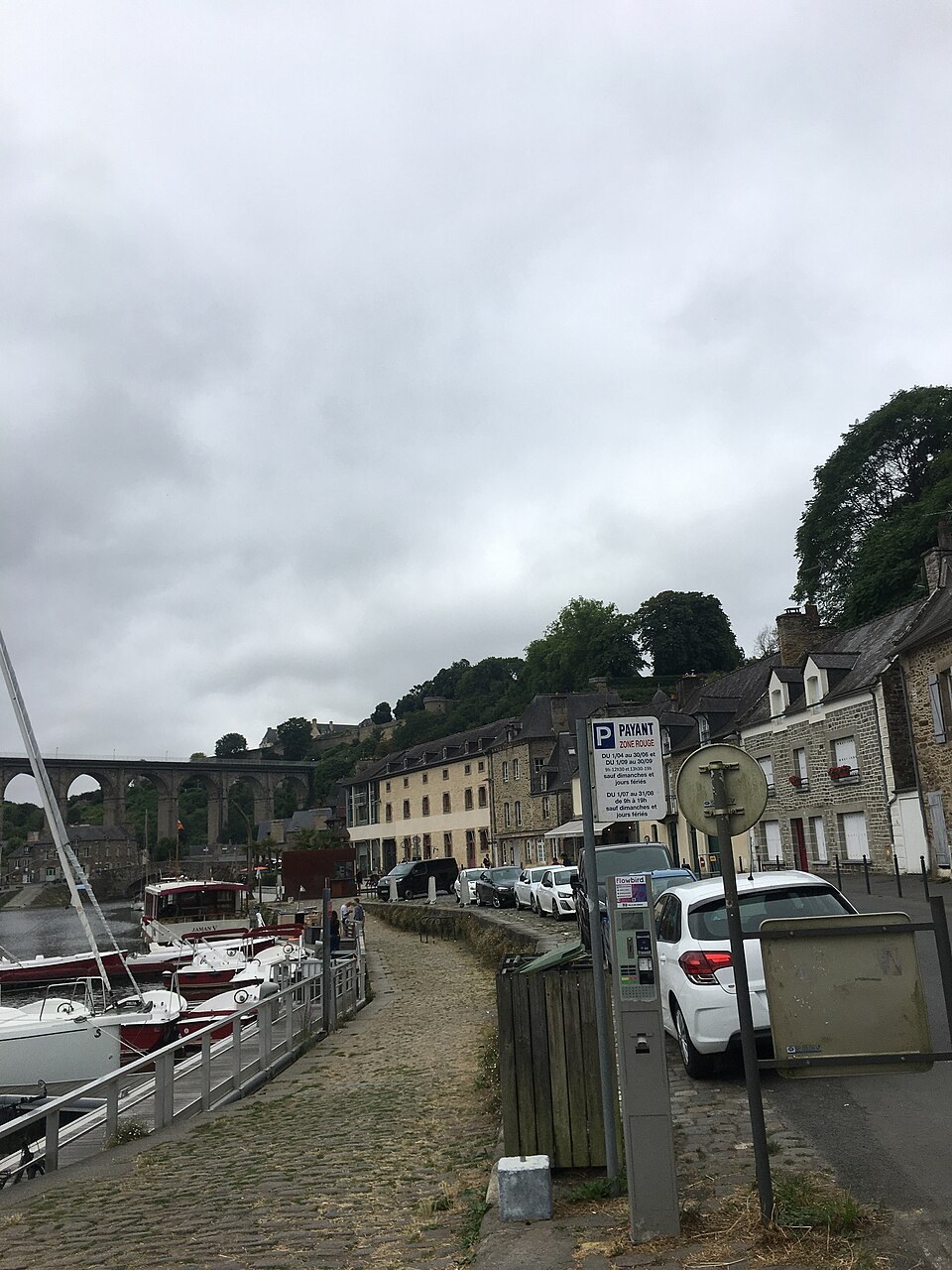
At the port, the pace changes from enclosed streets to water, bridges and the towpath. Stay for a coffee or lunch, then decide whether you want a short riverside stroll or the longer walk towards Léhon.
Léhon’s Saint-Magloire abbey is a worthwhile destination in its own right. Some lower areas and gardens are accessible, while upper rooms are not; confirm the spaces open on your date. Plan the return instead of assuming a circular walk.
A seasonal outing on the Jaman V offers another way to experience the Rance and the approach towards Léhon. Let the operator’s current route and departure programme determine how it fits into your day.
Published durations vary between listings, so confirm the exact sailing when booking. Canal conditions, season and boarding arrangements matter; request assistance in advance rather than assuming every departure will suit your mobility needs.
The riverside route towards Léhon gives you space after the enclosed streets. Start with an out-and-back distance that suits your group, leaving time for the abbey or a café if open.
Shared paths require care around walkers, cyclists and children. Surface conditions can change after rain. If hiring a bicycle, check the return time, route and equipment before leaving the rental point.
The house-museum of Yvonne Jean-Haffen at La Grande-Vigne offers an intimate artist’s setting in season. Its published 2026 public season ended on 27 September; check future openings rather than assuming an autumn walk-in visit.
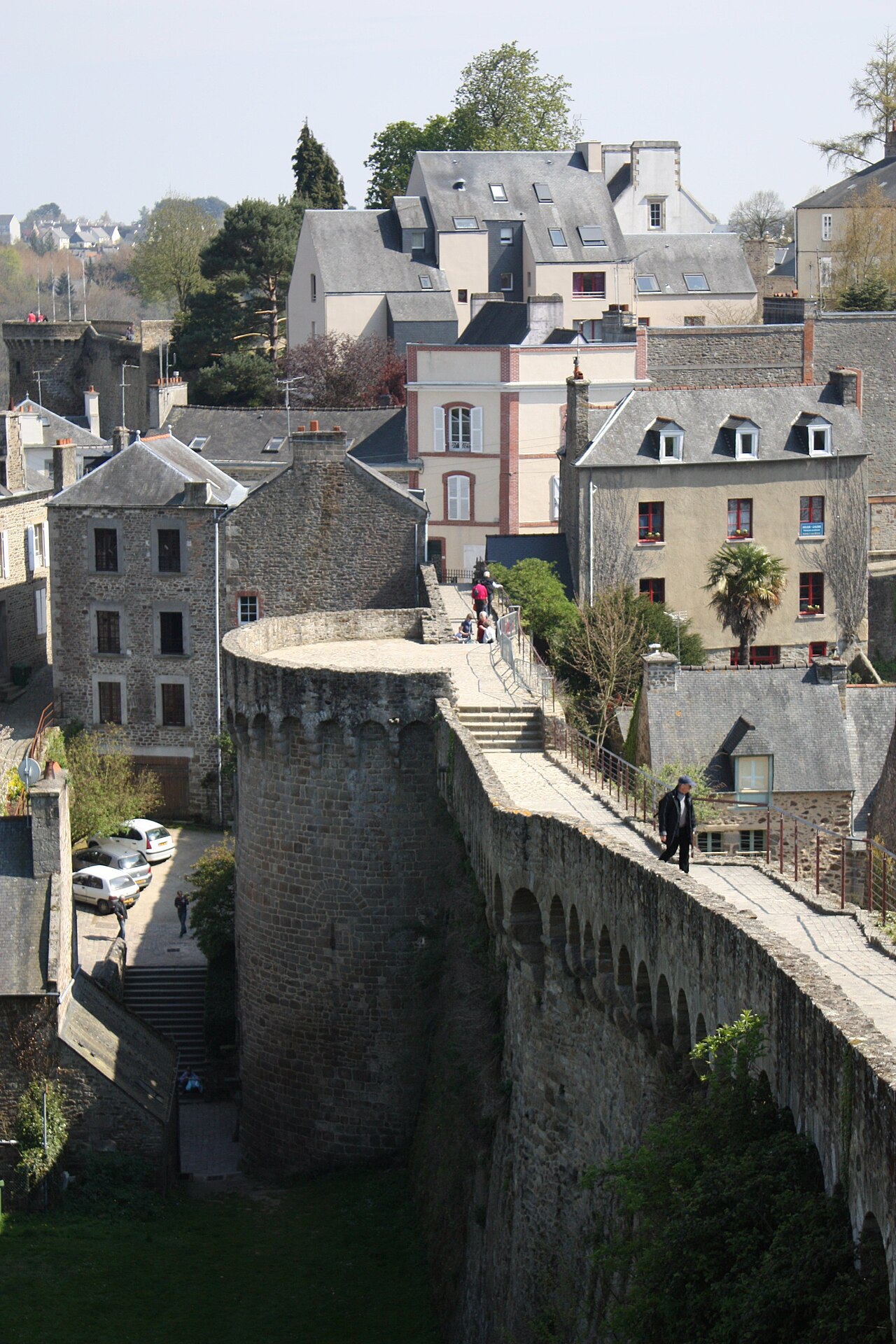
The restored northern ramparts provide another heritage option, with a newly opened section described in the destination’s 2026 guide. Ask locally which sections are open and what steps or restrictions apply.
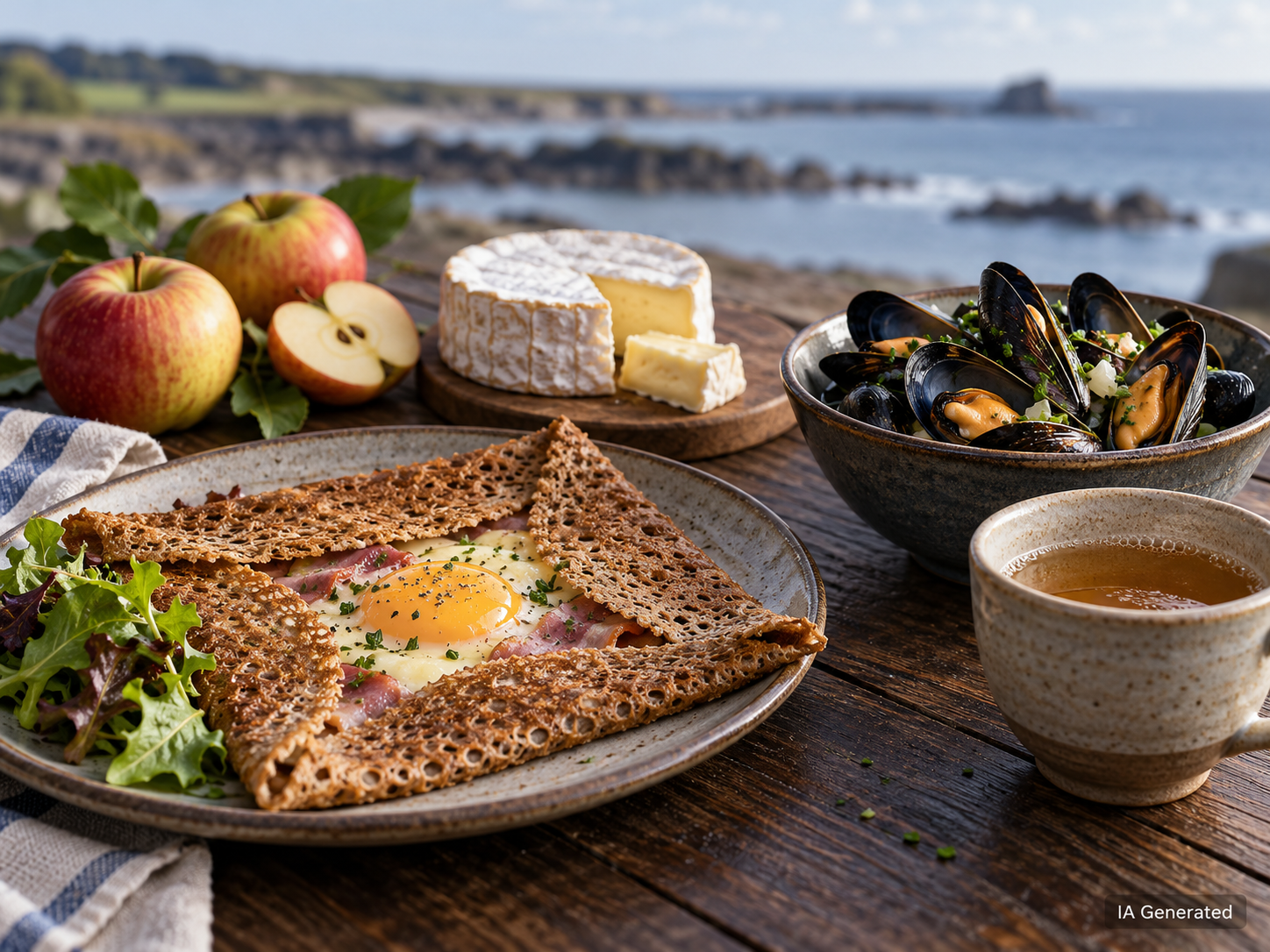
IA Generated — regional food illustration; not a photograph of a named restaurant, dish or market.
Place Duguesclin & Place du Champ-Clos
Thursday morning market
Dinan’s main weekly market takes place on Thursday morning across these central squares. Make it the beginning of the day, then continue into the old streets with time for lunch.
The squares are subject to early parking restrictions on market day. Do not leave the car there overnight without checking signs, and choose another car park if arriving for the market itself.
IA Generated — regional food illustration; not a photograph of a named restaurant, dish or market.
Work with your actual travel day
A food-shopping morning without the market
If Thursday does not fit, use the centre’s food shops and a planned lunch instead of reshaping the entire trip around one market. Ask your accommodation which local shops are open that morning.
Buy modestly if you are walking down to the port. Chilled produce belongs in proper storage, not in a bag carried through an afternoon of monuments and steep streets.
Where to Eat
IA Generated — regional food illustration; not a photograph of a named restaurant, dish or market.
Rue de la Poissonnerie
Crêperie Ahna
A family-run address in the historic centre, between the clock-tower area and the Jerzual, with galettes and crêpes among its specialities. It is a natural fit for a relaxed lunch in the upper town.
Check current service days and reserve when visiting at a busy time. Ask directly about dietary requirements and preparation rather than relying on the name of a dish.
IA Generated — regional food illustration; not a photograph of a named restaurant, dish or market.
Rue Sainte-Claire
Le Cantorbery
A more considered meal in a historic building, with French cooking and seasonal ingredients. The setting suits an evening when you can linger rather than watch the time for a train connection.
Reserve ahead and request ground-floor seating if stairs are an issue. Confirm the current menu, opening days and any special dietary needs when booking.
For a four- or five-star stay, the choice here is deliberately focused: a riverside hotel at Dinan’s port and a separate luxury coastal extension in Dinard. They serve different itineraries. A coastal hotel is not a substitute for a walkable upper-town address.
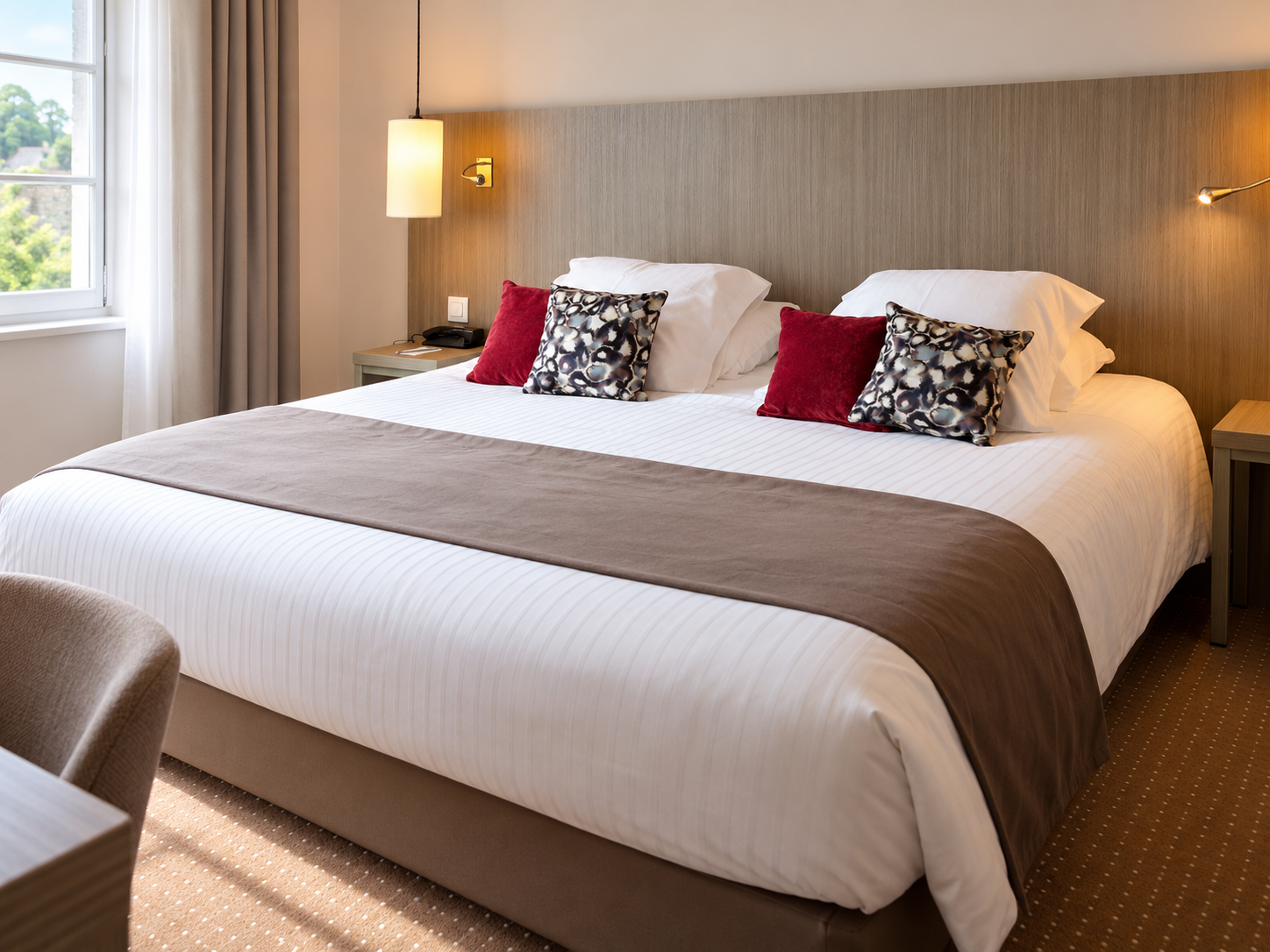
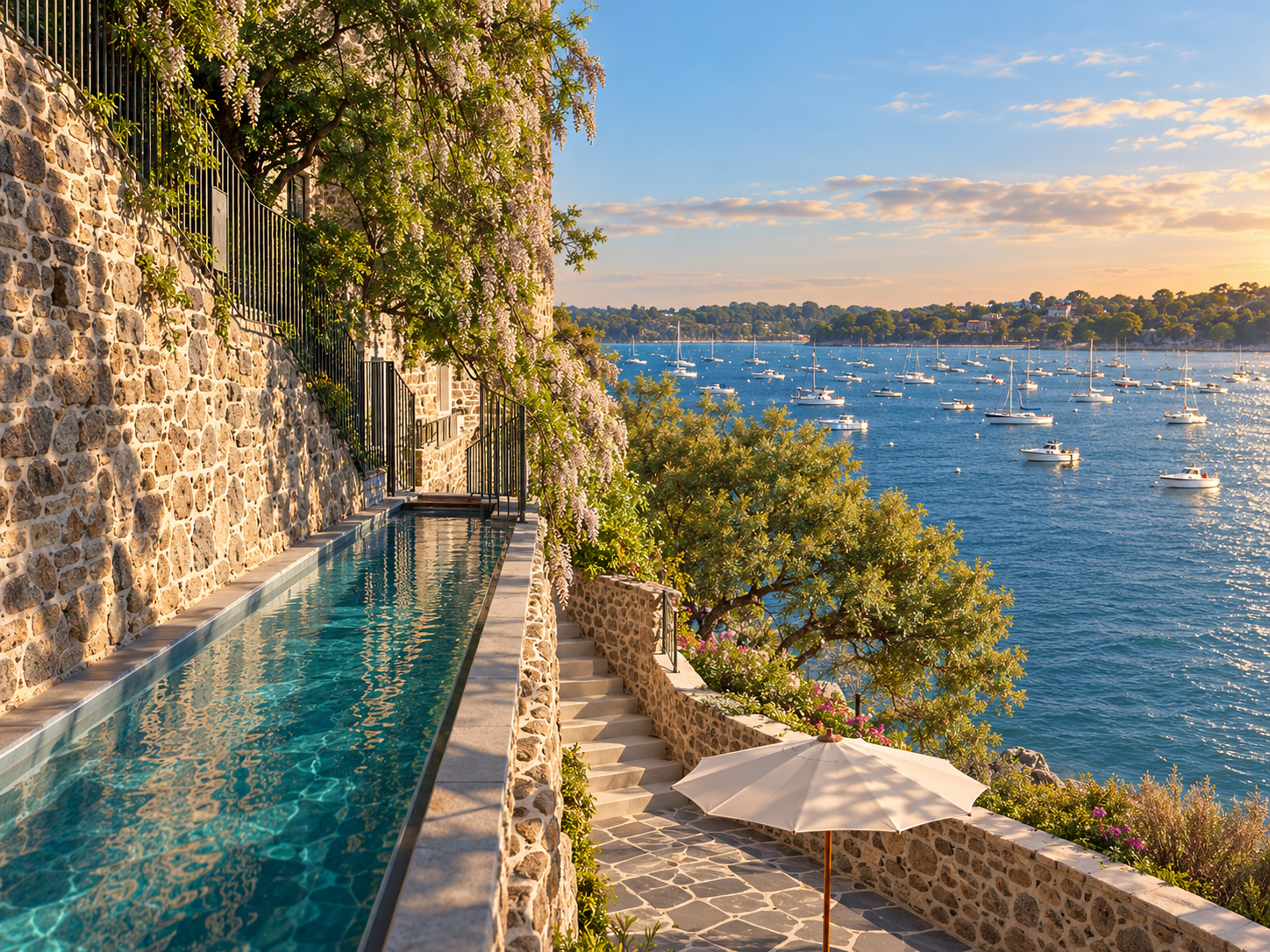
AI-generated photorealistic view.
4-star hotel · Lanvallay · Dinan river port
Mercure Dinan Port Le Jerzual
A practical riverside base on the Lanvallay side of the port, below Dinan’s upper town. The setting works well for a stay centred on the Rance, with the historic streets visited as a separate uphill outing.
Best for: Travellers arriving by car and guests who prefer a riverside setting with leisure facilities.
Facilities: Air-conditioned rooms, bar, seasonal heated outdoor pool, whirlpool, fitness space and private parking. Confirm seasonal opening and access arrangements directly.
The port and upper town are on different levels. Plan the climb or a transport alternative before dinner; the hotel states that pets are not accepted.
5-star hotel · Dinard · separate coastal extension
Castelbrac
A sea-facing hotel in Dinard for travellers extending a Dinan itinerary to the coast. This is a separate overnight stage requiring a road transfer, with time reserved for the hotel and waterfront rather than repeated trips to Dinan.
Best for: A special coastal night paired with a Dinan visit, especially for couples seeking sea views.
Facilities: Heated lap pool, solarium, spa treatments, bar and the Pourquoi Pas restaurant. Sea-view room layouts and terraces vary by category.
Confirm room access, parking, treatment reservations and inclusions. If planning dinner at Pourquoi Pas, discuss dietary needs before booking: its menu is centred on fish and seafood.
A rewarding time for town walks, gardens and the start of the river-visiting season. Check attraction reopening dates and bring shoes that can handle wet cobbles.
Summer
The widest choice of visitor activities, with busier streets and seasonal traffic restrictions. Start early, reserve the meals you care about and avoid using the car for repeated short movements through the centre.
Autumn
Good for a slower stay with cafés and heritage visits, but opening days become more selective. The clock tower, castle and house-museum do not share the same calendar. Verify each planned stop.
Winter
Plan around the atmosphere of the town, food and a modest walking programme. Some major attractions and river outings close seasonally; choose accommodation and restaurants with confirmed opening rather than assuming summer services continue.
How Long to Spend
Half a day gives you an introduction to the upper town, but adding the port, a monument and a proper meal is more comfortable over a full day. The elevation change makes distance alone a poor measure of how tiring the visit will be.
One night allows a relaxed dinner and a quieter morning. Two nights give a city day and a river or Léhon day. For a broader Rance and Emerald Coast trip, add nights or change base, keeping travel days distinct from the time you want to spend exploring Dinan.
Getting There
Regional connections to Dinan
By train
Dinan is served by regional rail connections through Dol-de-Bretagne or Lamballe, with onward links to the wider network. Check the complete journey for your date, including any replacement buses or connection time.
The station serves the upper-town side. If staying at the port, arrange the final transfer with luggage rather than relying on an improvised walk down steep streets.
Ask your accommodation whether to approach the upper town or the port side. A navigation shortcut through the medieval centre may be unsuitable during pedestrian periods or market restrictions.
A car is useful for rural Rance stops and onward touring, but once parked, most upper-town sightseeing is better done on foot. Check the hotel’s unloading and parking instructions before arrival.
Dinamo & regional services
By local bus
The Dinamo network can help connect the centre, port and nearby places, alongside regional BreizhGo services. Use the current timetable and confirm evening, Sunday and holiday operation.
Coastal summer shuttles are seasonal, not a year-round solution. The published 2026 Dinamo summer service ran in July and August; verify the next season’s programme before building a route around it.
Choose parking according to the part of Dinan you are visiting. Upper-town car parks include Hôtel de Ville, Centre Historique, Duguesclin and Thiers; peripheral park-and-walk options can avoid circulating through the busiest streets. Consult current signage for tariffs and duration.
Thursday market restrictions affect Place Duguesclin and Place du Champ-Clos. Seasonal pedestrianisation and events can also change access. Arrange hotel unloading in advance and do not assume a street open on one visit will be open on another.
For the port, plan a separate arrival or use local transport. Parking below the town does not remove the steep climb to the monuments above. A bus or taxi can make a mixed town-and-port day much more comfortable.
Give the abbey and village time rather than simply turning around at the end of the towpath. A walk there and a planned bus or taxi return can work well for a second day, subject to the current service.
Saint-Malo brings the ramparts to an entirely different maritime setting. Give it its own day and plan around tides if an island or fort visit is part of the programme.
A Dinard stay adds seaside promenades and a sea-facing hotel to a Dinan itinerary. Treat the transfer as a change of setting, with time for the coast, instead of repeatedly commuting back for every meal.
Start in the upper town with the basilica area, squares and timber-framed streets. Choose either the castle or clock tower, then have lunch before descending towards the port if the route suits your group.
Spend the later afternoon by the river. Return by the route or transport you have already chosen. If mobility is limited, explore the two levels as separate visits rather than forcing the Jerzual into the day.
A heritage day and a river day
Two days: Dinan & Léhon
Use the first day for the upper town and one substantial monument. On the second, start at the port, follow the towpath towards Léhon and visit the abbey spaces that are open.
Choose a boat outing instead of part of the walk if that better suits your group. Check departures and return transport before committing to both a cruise and a long riverside route.
A slower regional stay
Three days: add the Rance or coast
Keep the Dinan and Léhon days, then add Saint-Malo or a Dinard coastal stage. Make one place the focus of the third day, with a proper meal and time to walk.
If staying at Castelbrac, use the coastal night for the hotel and sea views. If staying at the Mercure by Dinan’s port, balance excursions with an easy riverside evening.
Accessibility & Practical Advice
Cobblestones, slopes and steps are central to Dinan’s layout. Comfortable footwear matters, and a short route with pauses can be more enjoyable than a complete circuit. Wet stone makes the steep Jerzual particularly demanding.
The clock tower is not wheelchair accessible. The castle includes stairs and upper levels without a lift. The Yvonne Jean-Haffen house-museum is also inaccessible to wheelchair users, with a steep approach even on the alternative landscaped path. Confirm arrangements before booking a specific visit.
The towpath is gentler than the town slopes but is still an outdoor shared route. Check surface conditions, keep children close near water and locks, and do not assume every café or toilet will be open outside the main season.
For accommodation, ask about the exact room, lift access, parking and the route to restaurants. A hotel at the port and a hotel in the upper town offer different practical experiences even when both are described as being in Dinan.
FWP Insider Advice
Our preferred plan starts with the upper town and ends by the river. That makes the change of setting feel natural, while leaving the return as an explicit transport decision rather than an unwelcome surprise.
Do not fill a single day with the castle, clock tower, house-museum, river cruise and Léhon. Choose one major interior visit, one longer walk and a good meal; the town’s atmosphere needs time between appointments.
Thursday is attractive for the market, but the quiet of an ordinary morning also has value. Choose the day that fits your wider route, then build around what is open instead of chasing a rigid list.
Frequently Asked Questions
Is one day enough for Dinan?
One full day covers the upper town, a chosen monument and the port at a reasonable pace. Stay two nights if you also want Léhon and a slower river day.
Is the walk from the port steep?
Yes. Rue du Petit-Fort and Rue du Jerzual form a steep cobbled route between the port and upper town. Plan an alternative transfer if slopes or uneven paving are difficult.
Can I visit Dinan without a car?
Yes, with regional rail, walking and current local bus or taxi connections. Plan the transfer to a port hotel and check services before extending into the countryside.
When is the main market?
Thursday morning, around Place Duguesclin and Place du Champ-Clos. Parking restrictions apply before the market begins; check signs and choose another parking area.
Can I visit the castle and clock tower year-round?
They have separate seasonal calendars. Check both official pages for your date; do not assume that one being open means the other is also open.
Is Léhon walkable from Dinan?
It is a popular extension along the river towpath from the port. Allow time for the village and abbey, check conditions and decide whether to walk back or use available transport.
Is Castelbrac in Dinan?
No. Castelbrac is in Dinard on the coast. It is included as a separate five-star coastal extension; it requires a road transfer and is not a walkable Dinan base.
Plan Your Stay
France. Well Planned.
Make room for both the medieval town and the river.
We plan. You choose. You book.
We help you choose a practical base, balance heritage visits with slower walks, and build a Dinan stay that fits your pace and onward route.
Last reviewed: 4 October 2026. Practical information, schedules and services may change. Use the linked operators to confirm your dates. Travel times in this guide are planning estimates, not timetables.
Destination imagery is an AI-generated editorial illustration. Hotel images are AI-generated photorealistic views based on real official reference photographs and are labelled accordingly. They illustrate atmosphere and do not guarantee a particular room, view or current furnishing. Confirm these details directly with the hotel.